How Could You, Sarah?

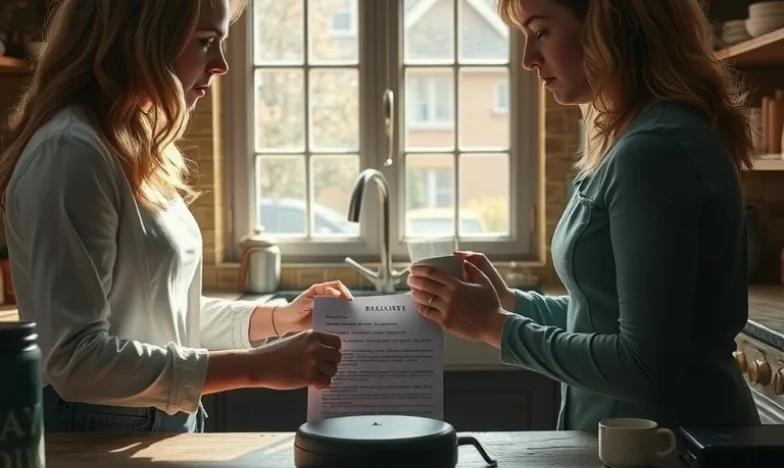
“How could you, Sarah?!” I screamed, my voice echoing off the faded wallpaper of our childhood kitchen. The crumpled letter trembled in my fist, the solicitor’s logo glaring up at me like an accusation. My heart pounded so loudly I could barely hear her reply.
Sarah didn’t flinch. She set her mug of tea down with a clink, her hands steady, her face a mask of exhaustion rather than guilt. “I signed it, Alice. What else was I supposed to do? The house needs to be sold. We can’t keep living in the past.”
I stared at her, barely recognising the woman in front of me. My older sister, the one who used to braid my hair and sneak me biscuits after Mum had said no. Now she was the one tearing apart the last thing we had left of Mum and Dad. “You could have talked to me first. You could have waited.”
She shrugged, her eyes flicking away. “You’re never here. You’re always in London, busy with your job. Someone had to make a decision.”
I wanted to scream again, to throw something, but my legs gave way and I slumped into the nearest chair. The kitchen smelled of old tea and damp, the same as it had when we were kids, but now it felt cold and unfamiliar. “It’s not just a house, Sarah. It’s our home. It’s all we have left.”
Sarah’s lips tightened. “It’s bricks and mortar, Alice. We can’t afford to keep it. The roof leaks, the boiler’s on its last legs, and the council tax is killing me. I can’t do it alone.”
I pressed my hands to my face, trying to hold back tears. “You should have told me. We could have figured something out together.”
She sighed, her shoulders slumping. “You say that, but you’re never here. You left me to deal with everything after Mum died. The funeral, the bills, clearing out Dad’s things. I was alone, Alice. You just sent money and excuses.”
That stung more than I wanted to admit. I’d always told myself I was helping by sending what I could, but deep down I knew I’d run away. London was my escape, my chance to start over, but it meant leaving Sarah behind to pick up the pieces. “I’m sorry,” I whispered, my voice cracking. “I didn’t mean to leave you with all of it.”
She looked at me then, really looked, and for a moment I saw my sister again, not the stranger who’d signed away our home. “I know you didn’t. But it doesn’t change anything. The house has to go.”
We sat in silence, the only sound the ticking of the old clock above the cooker. I remembered how Dad used to wind it every Sunday, how Mum would hum as she made tea. All gone now, just echoes in an empty house.
“Where will you go?” I asked finally, my voice barely above a whisper.
Sarah shrugged again, but this time her bravado faltered. “I’ll find somewhere. Maybe a flat in town. I can’t stay here, not on my own.”
I wanted to offer her a place with me in London, but the thought of sharing my tiny flat, of bringing all this pain into my carefully constructed new life, made me hesitate. “You could come to London,” I said, but even I could hear the lack of conviction in my voice.
She smiled sadly. “You don’t want that, Alice. You’ve got your own life now.”
I felt the distance between us widen, a chasm I didn’t know how to cross. “I just wish you’d told me. I wish we could have decided together.”
Sarah reached across the table, her hand hovering over mine. “I’m sorry, too. I just… I couldn’t do it anymore. I needed to move on.”
The letter lay between us, a symbol of everything we’d lost. I thought of all the Christmases spent in this kitchen, the arguments and laughter, the secrets whispered under the stairs. How could a piece of paper erase all that?
As the afternoon light faded, I realised there was nothing left to say. The house would be sold, the memories packed away in boxes or lost forever. All that remained was the fragile thread of sisterhood, stretched thin but not yet broken.
I stood up, my legs unsteady. “I’ll help you clear out. We’ll do it together, this time.”
Sarah nodded, tears glistening in her eyes. “Thank you, Alice.”
We worked in silence, sorting through decades of family life. Old photos, Mum’s recipe books, Dad’s battered toolbox. Each item a reminder of what we’d shared, and what we were about to lose.
As we packed the last box, I looked around the empty rooms, my heart aching. “Do you think we’ll ever feel at home again?” I asked, my voice trembling.
Sarah squeezed my hand. “Maybe not in a place. But maybe, if we try, in each other.”
I nodded, unsure but hopeful. As we closed the door for the last time, I wondered aloud, “Is it possible to forgive, even when the person who hurt you is the one you love most?”
What would you do if your own family betrayed you, not out of malice, but out of desperation? Would you forgive, or would you walk away?