When Truth Knocks Unannounced: A Story of One Meeting That Changed Everything

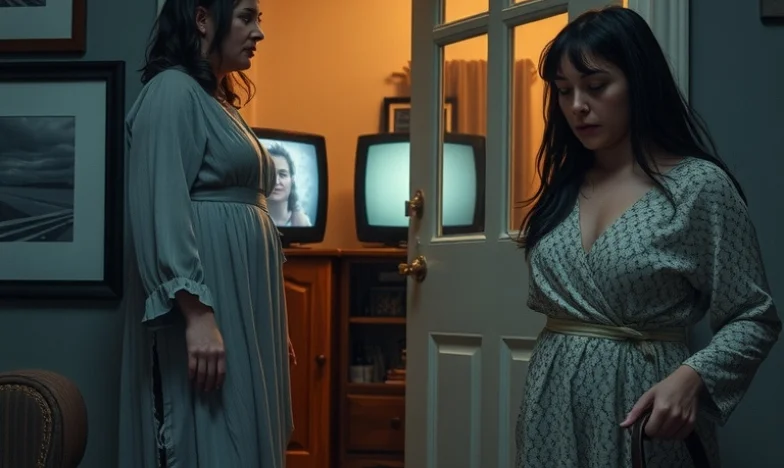
The rain battered the windows with a relentless fury, and I sat curled up on the faded sofa, the television droning on in the background. My eyelids drooped, heavy with the monotony of another grey afternoon in Sheffield. I barely registered the sound of the doorbell at first, but then it came again—insistent, sharp, slicing through the fog of my half-sleep. I jolted upright, heart thudding, and fumbled with my dressing gown as I shuffled towards the door.
“Alright, alright, I’m coming!” I called, voice cracking with irritation and a hint of fear. Who could possibly be calling at this hour? My mum always rang before popping round, and my brother, Tom, never bothered with visits unless he needed something. I peered through the peephole, but all I could see was a blurred silhouette, hunched against the rain.
I hesitated, hand trembling on the latch. Something in my gut twisted—a warning, perhaps, or just the echo of too many lonely evenings. Still, I opened the door.
Standing on my doorstep was a woman I didn’t recognise. She was soaked through, hair plastered to her cheeks, clutching a battered satchel to her chest. Her eyes, a piercing blue, locked onto mine with a desperation that made me step back.
“Can I help you?” I managed, voice barely above a whisper.
She hesitated, glancing over her shoulder as if she expected someone to drag her away. “Are you Katherine Evans?”
I nodded, wary. “Yes. Who are you?”
She took a shaky breath. “My name’s Emily. Emily Harris. I… I think we need to talk. It’s about your father.”
The words hit me like a punch to the stomach. My father had died ten years ago, or so I’d been told. The funeral, the endless condolences, the way my mother had shut down completely. I hadn’t spoken his name aloud in years.
“I think you’ve got the wrong person,” I said, trying to close the door, but she wedged her foot in the gap.
“Please, just let me explain. I wouldn’t be here if it wasn’t important.”
Against my better judgement, I let her in. She stood awkwardly in the hallway, dripping onto the carpet, while I fetched a towel and tried to steady my breathing. The television in the lounge was still blaring, but the room felt suddenly silent, as if the house itself was holding its breath.
We sat opposite each other, the coffee table between us like a barrier. Emily wrung her hands, eyes darting around the room, taking in the family photos, the clutter, the evidence of a life lived in quiet routine.
“I’m sorry to barge in like this,” she began, voice trembling. “But I’ve spent months trying to work up the courage. I found your address in some old letters. I… I think we’re sisters.”
The words hung in the air, impossible, absurd. I laughed—a harsh, brittle sound. “That’s not funny. My dad was married to my mum for thirty years. He wasn’t the type.”
She flinched, but pressed on. “I know it’s hard to believe. But I have proof.” She reached into her satchel and pulled out a stack of letters, yellowed with age. She slid them across the table. My hands shook as I picked them up, scanning the familiar handwriting. My father’s handwriting.
The letters were addressed to Emily’s mother, dated from the late eighties. They spoke of love, regret, promises to visit, apologies for missed birthdays. My father’s words, so full of warmth and longing, so different from the distant man I remembered.
I felt the room spin. “Why are you here now?” I whispered.
Emily’s eyes filled with tears. “My mum died last year. She told me everything before she passed. I didn’t know who my father was until then. I just… I needed to know if I had any family left.”
I stared at her, anger and grief warring inside me. “So you just turn up, expecting what? A hug? An apology? My dad’s dead. There’s nothing left to say.”
She shook her head. “I’m not here to ruin your life. I just wanted to meet you. To know if I belonged somewhere.”
I stood up abruptly, knocking my mug to the floor. Tea pooled around my feet, but I barely noticed. “You should go.”
She gathered her things, tears streaming down her face. “I’m sorry. I really am.”
The door closed behind her with a finality that echoed through the house. I sank to the floor, clutching the letters to my chest, sobbing until my throat was raw.
The days that followed were a blur. I couldn’t eat, couldn’t sleep. I kept rereading the letters, searching for some sign that it was all a mistake. But the truth was there, in every line, every word. My father had lived a double life, and I’d been too blind to see it.
I rang my mum, hands shaking. “Mum, did Dad ever… was there ever someone else?”
There was a long pause. “Why are you asking me this, Katherine?”
I told her everything—about Emily, the letters, the visit. Silence stretched between us, heavy and suffocating.
Finally, she spoke. “I always suspected. He was away a lot, always had excuses. But I never wanted to know. I thought if I ignored it, it would go away.”
I felt a surge of anger. “How could you let me believe we were a normal family?”
Her voice broke. “Because I wanted to protect you. I wanted to protect myself. Sometimes, the truth is too painful.”
I hung up, feeling more alone than ever. The next week, Tom came round, oblivious as always. I told him everything, watching his face crumble as the truth sank in.
“So what now?” he asked, voice hollow.
“I don’t know,” I admitted. “But I can’t pretend it didn’t happen.”
He nodded, silent for a long time. “Maybe we should meet her. She’s family, whether we like it or not.”
It took weeks before I worked up the courage to call Emily. We met in a small café on Ecclesall Road, both of us nervous, unsure. She smiled when she saw me, tentative, hopeful.
We talked for hours—about our childhoods, our memories of the man who had shaped us both in different ways. There were tears, laughter, awkward silences. But by the end, something had shifted. The anger was still there, but so was a strange sense of relief. The truth had hurt, but it had also set me free.
Now, months later, Emily is a part of my life. We’re not sisters in the way I imagined, but we’re something new—two women bound by the same scars, learning to forgive, to move forward.
Sometimes I wonder—if the truth had never knocked on my door, would I still be living a lie? Or is it better to know, even when it hurts?