When Will You Put Up That Shelf?

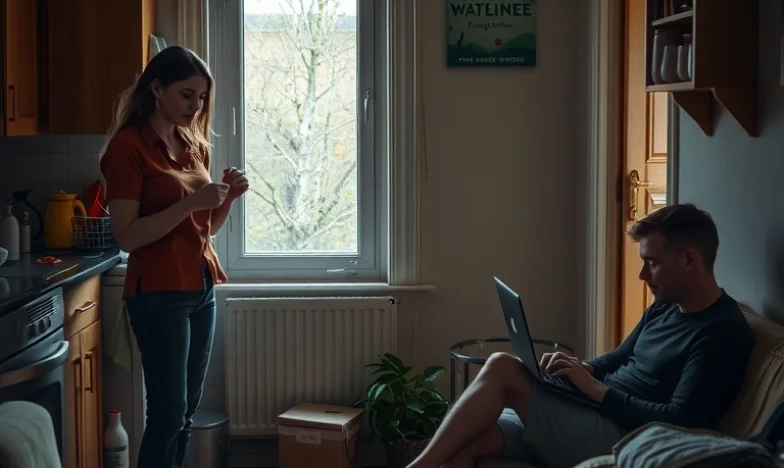
“I’m not trying to start a row, Marek, but when are you actually going to put up that shelf?” My voice echoed off the kitchen tiles, sharper than I intended, but I couldn’t help it. The shelf had been sitting in its cardboard box for weeks, a silent witness to our growing tension. Marek didn’t even look up from his laptop, just muttered, “I said I’ll do it, didn’t I?”
It was Saturday morning, the kind where the sky outside our flat in Manchester was a dull, unbroken grey, and the air inside felt just as heavy. I’d started cleaning after breakfast, wiping down the counters and picking up stray mugs, while Marek settled on the sofa with his laptop, supposedly to check emails but really just scrolling through Facebook. His job as a freelance web designer meant he was always ‘working’, but I knew the difference between work and avoidance.
I tried to keep my voice steady. “You said you’d do it last weekend. And the weekend before.”
He sighed, finally glancing up. “Veronica, I’ll do it after I finish this. Just let me have a bit of peace, yeah?”
I bit my tongue, feeling the familiar sting of frustration. It wasn’t about the shelf. It was about everything that had piled up between us: the unspoken resentments, the little disappointments, the way we’d stopped really talking. I wanted to scream, but instead I just scrubbed harder at a stubborn stain on the hob.
As I cleaned, Marek’s phone pinged. He grinned at the screen, and I caught a glimpse of a photo—Darek, his old mate from uni, grinning with a pint in hand. Marek chuckled, typing a quick reply. I felt a pang of jealousy, not because of Darek, but because Marek could still laugh so easily with someone else.
I tried to distract myself by sorting the recycling, but the shelf loomed in my mind. It was meant to go up in the hallway, a place for our keys and post, a small thing to make our flat feel more like a home. But every time I mentioned it, Marek brushed me off. I wondered if he even wanted to make this place ours, or if he was just passing through.
Later, as I emptied the bin, I heard him on the phone in the living room. “Yeah, mate, I’ll be there. Just got to get through the morning with Veronica on my case.” His laugh was light, but it cut through me. Was I really just a nag to him now?
When he hung up, I stood in the doorway, bin bag in hand. “Going out again?”
He looked guilty for a moment, then shrugged. “Darek’s in town. Haven’t seen him in ages. I’ll be back for dinner.”
I wanted to say, ‘What about the shelf?’ but the words stuck in my throat. Instead, I just nodded, feeling small and petty. He grabbed his jacket and keys, pausing at the door. “Don’t wait up if I’m late.”
The door clicked shut, and I was alone with the silence. I sat on the edge of the bed, staring at the unopened box in the hallway. I thought about calling my mum, but I knew what she’d say: “You’ve got to talk to him, love. Men don’t read minds.”
But every time I tried, it turned into an argument. I didn’t want to be the nagging wife, but I didn’t want to be invisible either.
That afternoon, I wandered into the city centre, letting the drizzle soak through my coat. I watched couples laughing in cafés, families wrangling toddlers, students sprawled on benches. Everyone seemed to have somewhere to go, someone to be with. I felt like a ghost drifting through my own life.
When I got home, Marek still wasn’t back. I reheated some soup, ate it in silence, then curled up on the sofa with a book I couldn’t focus on. My phone buzzed—a message from Marek: “Running late. Don’t wait up.”
I stared at the screen, anger and sadness swirling inside me. I wanted to reply, to tell him how I felt, but what was the point? Instead, I went to bed, listening to the rain tapping against the window.
He came in late, trying to be quiet, but I heard him stumble in the hallway. I pretended to be asleep as he slipped under the covers, smelling of beer and cigarettes. For a moment, I thought he might reach for me, but he just turned away, and soon his breathing slowed.
The next morning, I woke early, the ache in my chest sharper than ever. I made tea, staring out at the grey sky, wondering when we’d stopped being a team. When Marek finally emerged, bleary-eyed, I couldn’t hold it in any longer.
“Marek, can we talk?”
He groaned, rubbing his temples. “Not now, Veronica. My head’s killing me.”
I slammed my mug down, tea sloshing over the rim. “It’s never the right time, is it? Not for the shelf, not for us. Do you even care anymore?”
He stared at me, surprised by my outburst. “Of course I care. I’m just tired, alright?”
“Tired of what? Me? This flat? Us?”
He shook his head, but I saw the flicker of doubt in his eyes. “Don’t be daft. I just… I don’t know. Things have been hard lately.”
I felt tears prick my eyes. “I know. But we can’t keep ignoring it. We need to fix things. Not just the shelf—us.”
He looked away, silent. The clock ticked loudly in the background. Finally, he spoke, his voice soft. “I’m scared, Veronica. What if we can’t?”
I reached for his hand, my own trembling. “We have to try. I don’t want to lose you.”
He squeezed my hand, and for the first time in months, I saw the man I’d fallen in love with. “Alright. I’ll put up the shelf. And then we’ll talk. Properly.”
It wasn’t much, but it was a start. That afternoon, we unpacked the box together, fumbling with screws and instructions, laughing at our mistakes. The shelf went up crooked, but it was ours. As we stood back to admire our handiwork, I felt a glimmer of hope.
Later, as we sat on the sofa, Marek turned to me. “I’m sorry I’ve been distant. Work’s been slow, and I’ve been worried about money. I didn’t want to burden you.”
I squeezed his hand. “We’re in this together. You don’t have to do it alone.”
He nodded, tears in his eyes. “I know. I just forgot for a while.”
We talked long into the night, about our fears, our dreams, the things we’d stopped saying. It wasn’t easy, and it didn’t fix everything, but it was a beginning.
Now, every time I hang my keys on that wonky shelf, I remember that day. How something so small could mean so much. How easy it is to drift apart, and how hard—but necessary—it is to find your way back.
Sometimes I wonder: how many couples are out there, arguing over shelves and bins, when what they really need is to talk? How many of us let the little things become the big things, until it feels too late to fix them?