When I Asked My Mother-in-Law to Watch My Son: The Answer That Changed My Life

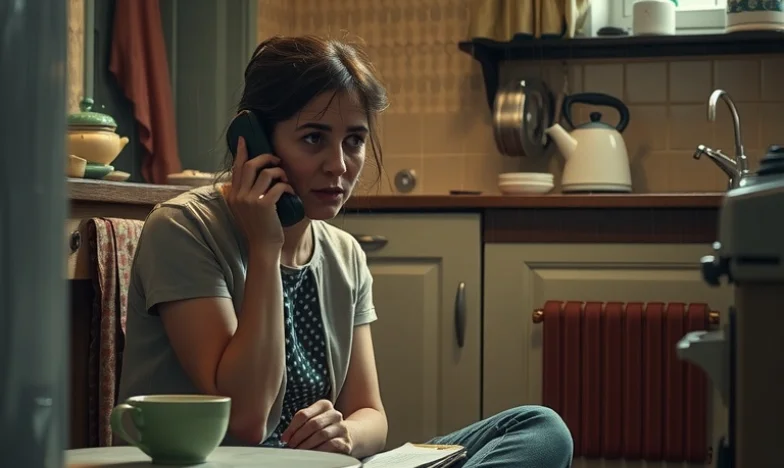
“Mum, please, I just need an hour. I’m at my wits’ end.” My voice trembled as I clutched the phone, my son Jamie wailing in the background, his cries echoing through our cramped terraced house in Manchester. My mother-in-law, Margaret, paused on the other end, her silence stretching out like a chasm. I could almost hear her pursed lips, the way she always did when she disapproved.
“Emily, I’m not a babysitter. You chose to have a child, not me.” Her words landed like a slap. I stared at the peeling wallpaper, feeling the weight of exhaustion pressing down on my shoulders. Jamie’s sobs grew louder, and I pressed the phone tighter to my ear, desperate for some sign of compassion.
“I just need to pop to the GP, Margaret. Jamie’s got a fever, and I can’t take him out in this weather. Please.” My voice cracked, betraying the tears I’d been holding back for days.
She sighed, that long, theatrical sigh she reserved for moments when she wanted to remind me how much I’d inconvenienced her. “I’m sorry, love, but I’ve got my bridge club this afternoon. Besides, you’re his mother. You should manage.”
The line went dead. I stood there, numb, the phone still pressed to my ear. Jamie’s cries faded into a dull ache in my chest. I sank to the floor, knees buckling, and let the tears come. I’d always known Margaret was distant, but I’d hoped—just this once—she might see how much I needed her.
My husband, Tom, worked long hours at the warehouse, barely home before midnight. When he did come home, he was too tired to notice the dark circles under my eyes or the way my hands shook when I made his tea. “Mum’s just old-fashioned,” he’d say, shrugging off my complaints. “She thinks we should do things ourselves.”
But I was drowning. The days blurred together in a haze of nappies, sleepless nights, and endless loneliness. My own mum had passed away when I was sixteen, leaving a hole in my life that Margaret had never tried to fill. I’d hoped marriage would bring me a new family, but instead, it felt like I’d been handed a set of rules I could never quite follow.
That night, after Jamie finally drifted off, I sat at the kitchen table, staring at the cold cup of tea I’d made hours before. The house was silent except for the ticking of the clock and the distant hum of traffic outside. I replayed Margaret’s words over and over, each time feeling the sting anew. Was I really such a burden? Was asking for help too much?
The next morning, Tom found me in the kitchen, eyes red and swollen. “What’s wrong, Em?” he asked, concern flickering across his face for the first time in weeks.
I told him everything—the phone call, the desperation, the way Margaret’s words had cut me to the core. He listened, but when I finished, he just shook his head. “She’s set in her ways. You know what she’s like.”
“But I needed her, Tom. I needed someone.”
He looked away, guilt flickering in his eyes. “I’ll talk to her,” he promised, but I knew he wouldn’t. He never did.
Days turned into weeks. Jamie’s fever broke, but the ache in my chest remained. I stopped calling Margaret, stopped hoping she’d change. Instead, I started reaching out to other mums at the park, women I’d barely spoken to before. We swapped stories, shared tips, laughed about the chaos of motherhood. For the first time, I felt seen.
One afternoon, as Jamie toddled around the swings, I sat with Sarah, a single mum with twins. “It’s hard, isn’t it?” she said, handing me a biscuit. “People think you’re supposed to just cope.”
I nodded, tears prickling at my eyes. “I just wish someone would help, just once.”
She squeezed my hand. “We help each other. That’s how we get through.”
It wasn’t the family I’d imagined, but it was something. Slowly, I built a new support system—a patchwork of friends, neighbours, and kind strangers. I learned to ask for help, not from those who’d let me down, but from those who understood what it meant to struggle.
But the pain of Margaret’s rejection lingered. Every birthday, every holiday, I watched her dote on Tom’s sister’s children, showering them with gifts and affection. Jamie would ask, “Why doesn’t Grandma come to see me, Mummy?” and I’d force a smile, hiding the hurt.
One Christmas, after everyone had left, Tom found me crying in the kitchen. “I’m sorry, Em,” he whispered, pulling me into his arms. “I should have done more.”
I wanted to believe him, but the cracks in our marriage had grown too wide. The resentment festered, poisoning the small moments of happiness we managed to find. I wondered if I was enough—enough for Jamie, enough for Tom, enough for myself.
The final straw came one rainy afternoon. Jamie had fallen and scraped his knee, blood trickling down his leg. I called Tom, begging him to come home early, but he was stuck at work. In desperation, I called Margaret again, my voice shaking. “Please, Margaret. Jamie’s hurt, and I need to take him to A&E. Can you watch him for just an hour?”
She hesitated, then said, “I’m sorry, Emily. I’m not comfortable with that.”
Something inside me snapped. I hung up without another word, the anger burning away the last traces of hope. I realised then that I couldn’t keep waiting for Margaret—or anyone else—to save me. I had to save myself.
That night, I packed a bag and took Jamie to my friend Sarah’s flat. She welcomed us with open arms, no questions asked. Over cups of tea and whispered conversations, I found the courage to make a change. I filed for separation, found a part-time job at the local library, and started building a new life for Jamie and me.
It wasn’t easy. There were days when the loneliness threatened to swallow me whole, when I missed the idea of family more than the reality. But each time Jamie smiled, each time he wrapped his arms around me and said, “I love you, Mummy,” I knew I’d made the right choice.
Margaret never called. Tom visited Jamie on weekends, but the distance between us grew with each passing month. I grieved the family I’d lost, but I celebrated the one I’d built—a family forged in resilience, in kindness, in the quiet strength of women who refused to give up.
Now, as I watch Jamie play in the park, his laughter ringing out across the grass, I wonder: How many of us are waiting for someone to save us, when all along, we have the strength to save ourselves? Would you have done the same? Or would you keep waiting, hoping for someone to change?