The Tin Shine

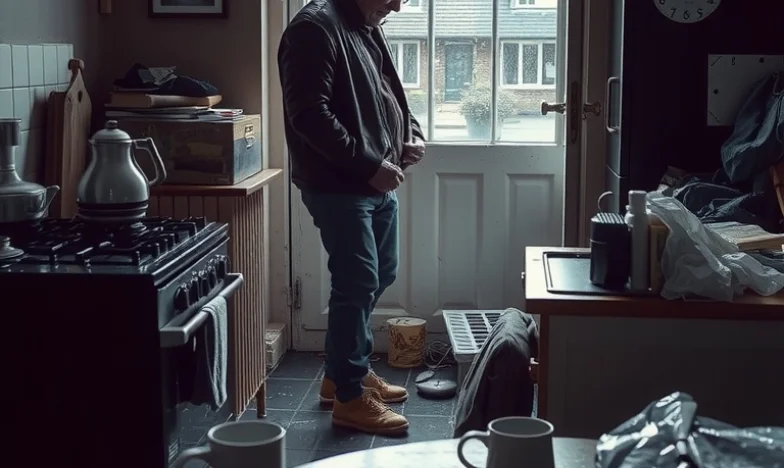
“You’re back, then.” Mum’s voice cut through the hiss of the kettle, sharper than the wind that battered the windows. I stood in the doorway, dripping onto the cracked lino, my hands shoved deep into the pockets of my old leather jacket. The smell of damp and burnt toast filled the kitchen, mingling with the faint tang of bleach. I hadn’t been home in seven years, but nothing had changed. Not really.
I dropped my battered duffel bag by the radiator, hoping the heat would chase away the stink of train stations and cheap cigarettes. “Just for a bit,” I muttered, not meeting her eyes. She didn’t ask why. She never did. Instead, she poured two mugs of strong tea, sliding one across the table without a word. I wrapped my hands around it, letting the warmth seep into my bones.
The silence stretched between us, thick and heavy. I could hear the clock ticking, the distant rumble of lorries on the ring road. Rain battered the window, blurring the view of the grey street outside. I wondered if anyone would recognise me now, if they’d remember the lad who’d left in a blaze of anger and slammed doors.
Mum finally broke the silence. “Your brother’s still at the steelworks. Night shifts, mostly. He’ll be back in the morning.” Her lips pressed into a thin line. “He’s not forgiven you, you know.”
I flinched. “Didn’t expect him to.”
She watched me over the rim of her mug, her eyes sharp and searching. “Why’d you come back, Witek?”
I shrugged, staring at the swirling tea. “Nowhere else to go.”
It was a lie, but it was easier than the truth. The truth was that London had chewed me up and spat me out. The truth was that I’d lost my job, my flat, and most of my friends in a haze of late nights and bad decisions. The truth was that I was tired—tired of running, tired of pretending, tired of the ache that gnawed at my chest every time I thought about home.
The first night back, I lay awake in my childhood bedroom, listening to the rain drum against the window. The wallpaper was peeling, the mattress sagged, and the air was thick with the scent of old books and dust. I stared at the ceiling, tracing the cracks with my eyes, and tried not to think about the last time I’d slept here—the shouting, the slammed door, the look on my brother’s face as I left.
In the morning, I found him in the kitchen, hunched over a bowl of cereal, his hair still damp from the shower. He didn’t look up when I walked in. I poured myself a cup of tea, the silence between us louder than any argument.
He finally spoke, his voice flat. “You’re not staying long, are you?”
I shook my head. “Just until I get back on my feet.”
He snorted. “You said that last time.”
I winced. “I mean it.”
He slammed his spoon down, milk splattering across the table. “You always mean it, Witek. But you never change.”
I wanted to argue, to tell him he was wrong, but the words stuck in my throat. Maybe he was right. Maybe I was just the same screw-up I’d always been.
The days blurred together. I wandered the city, the familiar streets both comforting and suffocating. The steelworks loomed on the horizon, a constant reminder of everything I’d tried to escape. I ran into old mates at the pub, their faces lined and weary. They asked about London, about the life I’d built and lost. I lied, spinning stories of success and adventure, hiding the truth behind a crooked smile.
One night, I found myself at the old playground, the swings creaking in the wind. I sat on the cold metal, staring at the graffiti-scrawled climbing frame, and let the memories wash over me. The fights with my brother, the disappointment in my father’s eyes, the endless pressure to be someone I wasn’t. I’d left to find myself, but all I’d found was emptiness.
Mum tried to bridge the gap, cooking my favourite meals, leaving clean towels on my bed. But the tension lingered, unspoken and unresolved. I caught her watching me sometimes, worry etched deep into her face. I wondered if she saw the cracks, the way I flinched at loud noises, the way I jumped at shadows.
One evening, as I sat in the living room, staring at the flickering telly, she sat beside me. “You’re not well, are you?”
I swallowed hard, the words catching in my throat. “I’m just tired.”
She reached out, her hand warm on my arm. “You can talk to me, you know.”
I shook my head. “You wouldn’t understand.”
She squeezed my arm. “Try me.”
So I told her—about the panic attacks, the sleepless nights, the crushing weight of failure. About the way the city had swallowed me whole, about the friends who’d drifted away, about the jobs that never lasted. I told her about the loneliness, the fear, the shame.
She listened, her eyes shining with tears. “You should see someone, love. Get some help.”
I nodded, not trusting myself to speak.
The next day, I made an appointment at the GP. The waiting room was cold and sterile, the magazines dog-eared and out of date. I sat with my hands clenched in my lap, heart pounding in my chest. When the doctor called my name, I almost bolted. But I forced myself to stand, to walk into the tiny office, to speak the words I’d never said aloud.
“I think I’m depressed.”
The doctor nodded, her voice gentle. “You’re not alone, Witek. There’s help.”
It wasn’t a miracle. The pills made me nauseous, the therapy sessions left me raw and exposed. But slowly, things started to shift. I found a part-time job at the local library, shelving books and chatting with the regulars. I started running in the evenings, the rhythm of my feet on the pavement soothing the chaos in my mind.
My brother thawed, bit by bit. One night, after a few too many pints, he clapped me on the back. “You’re tougher than you look, you know.”
I grinned, the tension easing between us. “Takes one to know one.”
We laughed, the sound strange and unfamiliar, but good.
Mum smiled more, her worry lines softening. She made Sunday roasts, the house filled with the smell of gravy and roast potatoes. We sat around the table, the three of us, and for the first time in years, it felt like home.
But the shadows lingered. Some nights, I lay awake, the weight of the past pressing down on me. I wondered if I’d ever truly belong, if I’d ever be more than the sum of my mistakes.
One rainy afternoon, I stood at the window, watching the city shimmer beneath the clouds. The steelworks glinted in the distance, the tin shine of the rooftops catching the weak sunlight. I thought about leaving again, about starting over somewhere new. But for now, I stayed. For now, I was home.
Sometimes I wonder—can you ever really come back? Or do you just learn to live with the ghosts you left behind?