Shadows Over Sheffield: A Story of Family, Secrets, and Survival

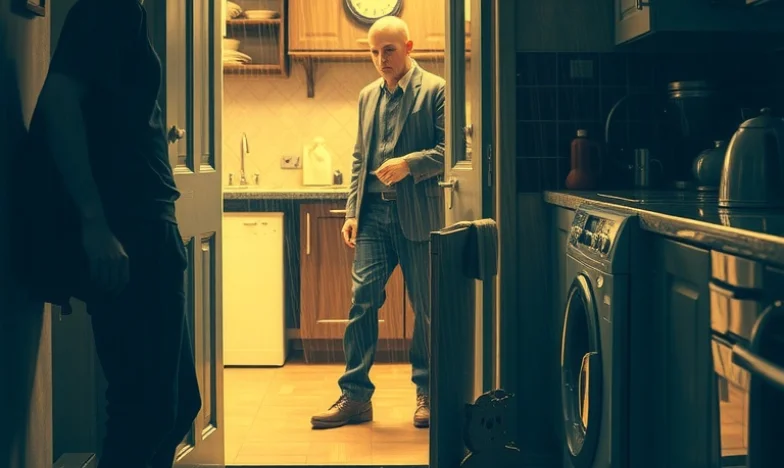
The rain hammered against the window as I pressed my back to the cold kitchen tiles, heart thundering in my chest. My mum’s voice, sharp and trembling, cut through the silence. “Where have you been, Alan? It’s nearly midnight!”
Dad stood in the doorway, shoulders hunched, blood smeared across his knuckles and the collar of his work shirt. He didn’t answer. Instead, he stared at the floor, jaw clenched, the weight of something unspeakable hanging between us. I was sixteen, old enough to know trouble when I saw it, but too young to understand the depths of the darkness that had crept into our home.
Mum’s hands shook as she reached for the kettle, her eyes never leaving Dad. “You’ve been at the pub again, haven’t you?” she whispered, voice cracking. “Or was it something worse this time?”
He finally looked up, eyes red-rimmed and wild. “Leave it, Sue. Just… leave it.”
But she wouldn’t. She never did. “You promised, Alan. After what happened last year, you said you’d stop. For me. For Jamie.”
My name hung in the air like an accusation. I wanted to disappear, to melt into the faded wallpaper and pretend I hadn’t heard any of it. But I couldn’t. Not when Dad’s fists were still clenched, not when Mum’s tears were threatening to spill over.
That night, I lay awake listening to the muffled sounds of their argument, the thud of a fist against the kitchen table, the shattering of a mug. I stared at the ceiling, tracing the cracks with my eyes, wondering how it had all gone so wrong. Once, our house had been filled with laughter, with the smell of Mum’s Sunday roast and the sound of Dad singing along to the radio. Now, it was all shadows and silence.
The next morning, Dad was gone. His boots were missing from the mat, his coat from the hook. Mum sat at the table, eyes swollen, hands wrapped around a mug of cold tea. “He’ll be back,” she said, but her voice was hollow.
I went to school, but my mind wasn’t on my lessons. I kept replaying the night before, the blood, the anger, the fear. My best mate, Callum, nudged me during maths. “You alright, Jamie? You look like you’ve seen a ghost.”
I shrugged. “Just tired, mate.”
He didn’t push, but I could feel his eyes on me all day. At lunch, he pulled me aside. “If you ever need to talk, you know where I am, yeah?”
I nodded, but I didn’t say anything. How could I explain the mess at home, the way my family was falling apart?
When I got back that evening, Dad still wasn’t home. Mum was on the phone, voice low and urgent. “No, I haven’t seen him. If you do, tell him to call me. Please.”
She hung up and looked at me, her face crumpling. “I don’t know what to do, Jamie. I just… I don’t know.”
I hugged her, feeling her shake in my arms. “We’ll get through this, Mum. We always do.”
But I wasn’t sure I believed it.
Days passed. Dad didn’t come back. The police came round, asking questions. Had we seen him? Did we know where he might have gone? Mum lied, said he’d probably gone to stay with his brother in Manchester. I knew that wasn’t true. Uncle Pete hadn’t spoken to Dad in years, not since the fight at Nan’s funeral.
The whispers started at school. People noticed when your dad disappeared, especially in a place like Sheffield, where everyone knew everyone else’s business. Callum stuck by me, but others weren’t so kind. “He’s probably in the nick,” someone sneered in the corridor. I clenched my fists, but I didn’t rise to it. I was too tired.
One night, a week after Dad vanished, I found Mum in the living room, staring at an old photo of the three of us at Blackpool beach. She looked up, eyes shining with tears. “He wasn’t always like this, you know. Your dad. He used to be… happy.”
I sat beside her, taking the photo from her hands. “What happened, Mum?”
She sighed, wiping her eyes. “The factory closed. He lost his job. He tried to find work, but there’s nothing round here anymore. He started drinking, got in with the wrong crowd. I thought I could help him, but…”
Her voice trailed off. I didn’t know what to say. I wanted to hate Dad for what he’d done, for leaving us, but I couldn’t. I remembered the man who’d taught me to ride a bike, who’d cheered the loudest at my football matches. Where had he gone?
A month later, Dad turned up on our doorstep. He looked older, thinner, eyes sunken and haunted. Mum let him in, but the tension was thick. He sat at the table, hands trembling as he spoke. “I’m sorry. I messed up. I just… I didn’t know what else to do.”
Mum’s lips pressed into a thin line. “You can’t keep running away, Alan. We need you. Jamie needs you.”
He looked at me, eyes pleading. “I’ll try, son. I promise.”
I wanted to believe him. I really did. But promises didn’t mean much anymore.
Things got better for a while. Dad found a job at a warehouse, started going to AA meetings. We had dinner together again, laughed at silly things on the telly. But the shadows never really left. Sometimes I’d catch Dad staring out the window, lost in thought. Sometimes I’d hear him crying in the bathroom late at night.
One evening, I came home to find Mum and Dad arguing again. This time, it was about money. The bills were piling up, and Dad’s job barely covered the basics. Mum worked double shifts at the care home, but it wasn’t enough. “We can’t keep living like this, Alan!” she shouted. “We’re drowning!”
Dad slammed his fist on the table. “What do you want me to do, Sue? I’m trying!”
I stormed out, slamming the door behind me. I walked the streets for hours, the cold biting at my skin. I ended up at Callum’s house. His mum let me in, no questions asked. I sat in his room, staring at the posters on his wall, feeling the weight of everything pressing down on me.
“Why does it have to be so hard?” I whispered.
Callum sat beside me, silent for a moment. “You’re not alone, Jamie. Loads of us are struggling. My dad lost his job last year too. It’s not your fault.”
I nodded, but it didn’t make it any easier.
When I got home, Mum was waiting. She hugged me tight, apologising over and over. “I’m sorry, love. I shouldn’t have shouted. I’m just… scared.”
We sat together, talking late into the night. She told me about her dreams, about the life she’d hoped for when she married Dad. “I never thought it’d be like this,” she said softly.
I squeezed her hand. “We’ll get through it, Mum. Somehow.”
But the cracks kept growing. Dad relapsed, missed work, started drinking again. The arguments got worse. One night, he didn’t come home at all. This time, he was gone for good.
Mum broke down, sobbing in my arms. “I can’t do this anymore, Jamie. I just can’t.”
I held her, feeling helpless. I wanted to fix everything, to make it all better, but I couldn’t. I was just a kid, trying to hold my family together while it fell apart around me.
We struggled on. Mum worked herself to the bone, and I got a part-time job at the chippy to help with the bills. I stopped going out with my mates, stopped playing football. Life became a blur of work, school, and worry.
Sometimes, I’d see Dad around town, looking lost and broken. He never looked at me, never tried to talk. I hated him for that, but I also missed him. I missed the way things used to be, before everything went wrong.
Years passed. I finished school, got a job at the same warehouse where Dad had worked. Mum’s health started to fail, worn down by years of stress and exhaustion. I did my best to take care of her, but it was never enough.
One night, as I sat by her hospital bed, she squeezed my hand. “You’re a good lad, Jamie. Don’t let this life break you.”
I promised her I wouldn’t, but I wasn’t sure I could keep that promise.
After she died, I felt completely alone. The house was empty, filled with ghosts and memories. I thought about leaving Sheffield, starting over somewhere new, but I couldn’t bring myself to go. This was my home, for better or worse.
Sometimes, I wonder if things could have been different. If Dad had found help sooner, if Mum hadn’t worked herself into the ground, if I’d spoken up instead of keeping everything bottled inside. But there’s no going back.
Now, I try to help others like us—families struggling to stay afloat, kids trying to hold it all together. I volunteer at the youth centre, listen to their stories, offer what little advice I can. Maybe it’s not much, but it’s something.
I still see Dad sometimes, sitting on a bench in the park, staring at nothing. I don’t know if I’ll ever forgive him, but I hope he finds peace.
Do you ever wonder how many families are fighting battles you can’t see? How many kids are carrying the weight of the world on their shoulders, just trying to survive?