When Love Hurts: Beneath Thirty Years of Marriage

The clock on the wall ticks louder than ever, each second echoing in the hollow silence of our bedroom. I clutch the edge of the duvet, knuckles white, as my eyes fixate on the empty pillow beside me. Mark’s scent still lingers, a cruel reminder of the man I thought I knew. My phone buzzes on the nightstand, but I can’t bring myself to look. It’s probably my sister, Claire, again, asking if I’ve eaten or if I want company. But what I want is impossible: to turn back time, to unhear the words that shattered my world.
It was a Tuesday evening, the kind where rain lashes against the windows and the sky hangs heavy and grey. Mark came home late, his hair damp, his eyes darting away from mine. “We need to talk, Liz,” he said, voice trembling. I remember the way my heart dropped, the way my hands shook as I set down the mug of tea I’d made for him. “I’m leaving,” he whispered, “I’m sorry. I can’t do this anymore.”
I laughed, at first. A brittle, desperate sound. “Don’t be ridiculous, Mark. We’ve got thirty years together. You’re just tired.”
He shook his head, tears brimming in his eyes. “It’s not that. I’ve met someone. Someone from before. Before you.”
The words hung in the air, heavy and poisonous. I felt the ground shift beneath me, as if the very foundation of our home was crumbling. “Who?” I managed to choke out.
He hesitated, then said, “Sophie. Sophie Turner.”
Sophie Turner. The name hit me like a slap. She was the girl from his old village, the one he’d always spoken of with a wistful smile. I’d never thought much of it—everyone has a first love, don’t they? But I never imagined she’d come back into his life, let alone take him from mine.
He packed his things that night. I watched, numb, as he folded shirts and tucked away his shaving kit. “I’m sorry, Liz,” he said again, voice breaking. “I never meant to hurt you.”
I wanted to scream, to throw something, to beg him to stay. But all I could do was sit on the bed, clutching a pillow to my chest, as the man I’d built my life with walked out the door.
The days that followed blurred together. Friends called, neighbours whispered, and my mother sent casseroles I couldn’t stomach. I wandered the house like a ghost, haunted by memories: Mark laughing as he painted the hallway, Mark holding our newborn daughter, Mark dancing with me in the kitchen to some old Elton John song. Each memory was a knife, twisting deeper.
One evening, Claire came over, her arms full of shopping bags. “You can’t just waste away, Liz,” she scolded, unpacking groceries. “You need to eat. You need to get out.”
I snapped, “How would you know what I need? You’ve never been left.”
She flinched, hurt flickering across her face. “I’m just trying to help.”
I sighed, guilt washing over me. “I know. I’m sorry. I just… I don’t know who I am without him.”
Claire hugged me, and for the first time in days, I let myself cry. Not the silent tears I’d shed alone, but great, wracking sobs that left me gasping for breath.
Weeks passed. I returned to work at the library, forcing myself to smile at the regulars. Mrs. Patel, who always borrowed romance novels, squeezed my hand and whispered, “You’re stronger than you think, love.”
But the nights were the worst. Alone in our bed, I replayed every conversation, every argument, searching for the moment it all went wrong. Was it when I took the promotion in London? When we lost the baby? When I stopped wearing makeup, stopped caring about the little things?
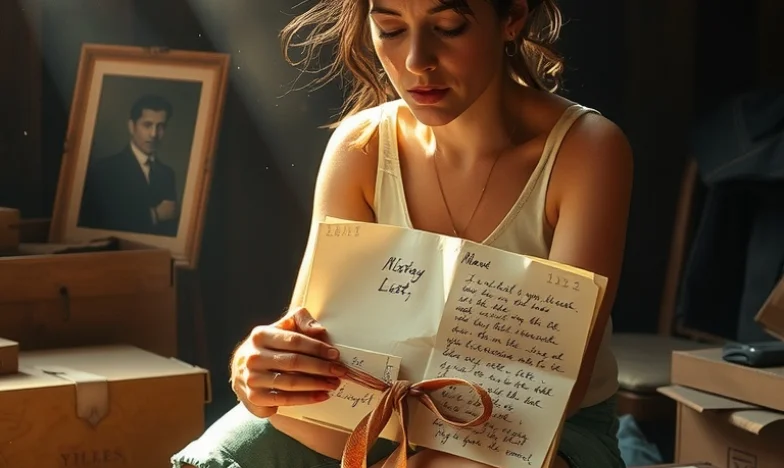
One afternoon, as I sorted through Mark’s old boxes in the attic, I found a stack of letters tied with a faded ribbon. My hands trembled as I untied the knot. The letters were from Sophie, dated years before we’d even met. But as I read, my heart pounded. The last letter was recent—just a few months ago. The words were intimate, familiar. “I never stopped loving you,” she’d written. “I wish things were different.”
Rage flared in my chest. How long had this been going on? Had he ever truly loved me, or was I just a consolation prize?
I confronted Mark the next day, meeting him at a café in town. He looked older, more tired. “Why didn’t you tell me?” I demanded, slamming the letters on the table.
He sighed, rubbing his temples. “I didn’t want to hurt you. I thought I could move on, but I never did. Sophie and I… we reconnected at the reunion last year. It just happened.”
“It just happened?” I spat. “Thirty years, Mark. Thirty years, and you throw it away for a fling?”
“It’s not a fling,” he said quietly. “I love her.”
The words stung more than I expected. I stood, my chair scraping loudly. “I hope she’s worth it.”
I left the café, tears blurring my vision. The world felt colder, harsher. I wandered the streets, past the bakery where Mark used to buy me croissants, past the park where we’d taken our daughter to feed the ducks. Everywhere I looked, there were ghosts of our life together.
That night, I sat in the kitchen, staring at the clock. Midnight. I poured myself a glass of wine, then another. The house was too quiet, too empty. I scrolled through old photos on my phone—holidays in Cornwall, Christmas mornings, birthdays. In every picture, Mark’s arm was around me, his smile wide and genuine. Was it all a lie?
The next morning, I woke with a pounding headache and a sense of resolve. I couldn’t keep living in the past. I needed answers—not just about Mark, but about myself.
I started therapy, something I’d always dismissed as unnecessary. My therapist, Dr. Evans, was gentle but firm. “You’ve spent your life taking care of others, Liz. It’s time to take care of yourself.”
I joined a book club, started volunteering at the animal shelter, reconnected with old friends. Slowly, I began to rediscover the parts of myself I’d lost. I laughed again, real laughter, not the brittle sound that had haunted me since Mark left.
One evening, as I walked home from the shelter, I bumped into Sophie. She looked nervous, her eyes darting away from mine. “Liz, I’m so sorry,” she whispered. “I never meant to hurt you.”
I wanted to hate her, to scream at her. But all I felt was exhaustion. “You got what you wanted,” I said quietly. “I hope you’re happy.”
She shook her head. “It’s not that simple. Mark… he’s not the man I remembered. People change.”
I nodded, understanding more than I cared to admit. We stood in silence, two women bound by the same man, both broken in different ways.
Months passed. The pain dulled, replaced by a quiet strength. I redecorated the house, painted the bedroom a soft blue, bought new bedding. I started running in the mornings, the cold air clearing my mind. I even went on a date—just one, with a kind man named Peter from the book club. It didn’t lead anywhere, but it made me realise I could start again.
On the anniversary of our wedding, I lit a candle and sat in the garden, watching the stars. I thought of Mark, of the life we’d built and lost. I thought of the woman I’d become—stronger, wiser, still standing.
Sometimes, late at night, I still wonder where I went wrong. But I’m learning that some questions have no answers. Life is messy, love is complicated, and sometimes, the only way forward is to let go.
So I ask you, as I sit here in the quiet of my new life: Have you ever had to rebuild yourself from the ashes of betrayal? How do you find the strength to trust again, when everything you believed in has been shattered?