A Mother’s Truth: What Really Happened When David Left

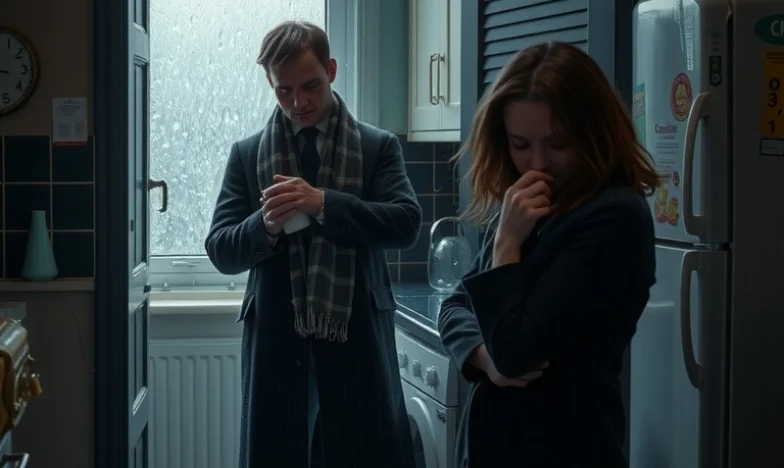
“You’re making a scene, Emily. Again.” David’s voice was cold, almost rehearsed, as he stood in the kitchen doorway, arms folded, his eyes darting to the clock above the fridge. I could hear the rain hammering against the window, the grey Sheffield sky pressing in on us. I clutched the mug in my hands, knuckles white, trying to steady my breathing.
“I’m not making a scene, David. I’m asking for the truth. Where were you last night?” My voice trembled, but I forced myself to meet his gaze. He looked away, jaw clenched, and I knew—just as I’d known for months—that the truth was something he’d never willingly give me.
He grabbed his coat, the one his mother Linda had bought him for his birthday, and muttered, “I’m late for work.” The door slammed behind him, leaving me alone with the silence, the echo of his absence louder than any argument.
I remember the first time I met Linda. She’d swept into our tiny flat with a basket of homemade scones and a smile that didn’t quite reach her eyes. “David’s always been so generous, so thoughtful,” she’d said, her gaze flicking over the mismatched furniture, the peeling wallpaper. “He deserves the best, you know.”
I’d laughed then, nervous, eager to please. But over the years, her words became a refrain, a subtle reminder that I was never quite enough. When David and I moved into the semi-detached on Abbeydale Road, Linda’s visits became more frequent. She’d bring casseroles, advice, and stories about David’s childhood—how he’d given his last pound to a homeless man, how he’d always put others first. I listened, biting my tongue, while the truth of our marriage unravelled behind closed doors.
The truth was, David had changed. Or maybe I had. The long hours at the office, the missed dinners, the way he’d flinch when I reached for his hand. I tried to talk to him, to bridge the growing distance, but he’d retreat further, hiding behind work, behind Linda, behind the image of the perfect son.
It was a Tuesday when everything finally broke. I’d found a text on his phone—nothing explicit, just a string of late-night messages to a woman named Sophie. My heart pounded as I confronted him, the words tumbling out in a rush. He denied it, of course. Said I was paranoid, jealous, making things up. Linda arrived an hour later, summoned by David’s call. She sat across from me, her lips pursed, her eyes hard.
“Emily, you need to stop this. You’re upsetting David. He’s under so much pressure at work. You should be supporting him, not accusing him.”
I stared at her, the weight of her judgement pressing down on me. “I just want the truth, Linda. That’s all.”
She shook her head, disappointment etched into every line of her face. “You’re not the woman I thought you were.”
After that, things moved quickly. David packed a bag, said he needed space. Linda helped him find a flat, just a few streets away from her own. She told everyone—her friends, our neighbours, even the vicar at St. Mary’s—that David was the victim, that I’d driven him away with my suspicions and my temper.
I was left with the house, the bills, and our daughter, Grace. She was only six, too young to understand why Daddy didn’t come home anymore. I tried to shield her from the worst of it, but she saw the tears, heard the arguments, felt the tension that lingered in every room.
One evening, as I tucked her into bed, she whispered, “Mummy, did I do something wrong? Is that why Daddy left?”
My heart broke. I hugged her tight, fighting back tears. “No, darling. None of this is your fault. Sometimes grown-ups make mistakes. Sometimes they forget how to be kind.”
The weeks blurred into months. I went back to work at the library, juggling shifts and school runs, trying to keep everything afloat. Linda would collect Grace on weekends, her smile brittle, her words clipped. She never missed an opportunity to remind me of my failures—how the house was untidy, how Grace’s hair wasn’t brushed properly, how David was thriving without me.
I heard the rumours, of course. The whispers at the school gates, the sympathetic looks from neighbours. “Poor David,” they’d say. “Such a shame about Emily. She always seemed so… intense.”
I wanted to scream, to tell them what really happened. How David had lied, how Linda had twisted the truth, how I’d been left to pick up the pieces. But I stayed silent, swallowing my anger, my grief, my shame.
One afternoon, as I was shelving books at work, Sophie walked in. She was younger than me, prettier, her hair perfectly styled, her clothes immaculate. She smiled, polite but distant, and asked for a book on parenting. I froze, the words catching in my throat. Did she know who I was? Did she care?
That night, I lay awake, replaying every moment, every conversation, every lie. I thought about leaving Sheffield, starting over somewhere new. But Grace needed stability, needed her friends, her school, her routines. So I stayed, enduring the whispers, the pitying glances, the constant reminders of my failure.
Christmas came, cold and grey. David sent a card, signed “Best wishes, David.” No mention of love, of family, of the years we’d shared. Linda sent a gift for Grace—a pink jumper, two sizes too small. There was no note for me.
On New Year’s Eve, I sat alone in the living room, watching the fireworks through the window. Grace was asleep upstairs, her breathing soft and steady. I thought about the life I’d imagined, the promises we’d made, the future that had slipped through my fingers.
The next morning, I found a letter from Linda on the doormat. She wrote that she hoped I’d find peace, that she forgave me for hurting David, that she’d pray for me. I tore it up, the words ringing hollow in my ears.
I started therapy, desperate to make sense of everything. My therapist, Sarah, listened as I poured out my heart—the loneliness, the betrayal, the anger that simmered just beneath the surface.
“You’ve been carrying this alone for too long, Emily,” she said gently. “It’s time to let go of what others think. What do you want?”
I didn’t know. I wanted to be heard, to be believed, to reclaim my story from the lies and half-truths that had defined it for so long.
One evening, as I walked Grace home from school, she slipped her hand into mine. “Mummy, are you happy?”
I looked at her, really looked at her—the freckles on her nose, the hope in her eyes. “I’m getting there, sweetheart. I’m getting there.”
Slowly, I started to rebuild. I joined a book club, made new friends, found moments of joy in the everyday chaos. I learned to trust myself again, to believe that I was enough.
David moved on, started a new family with Sophie. Linda stopped calling, her silence a relief and a wound all at once. I still saw them at school events, their smiles tight, their eyes avoiding mine. But I held my head high, refusing to let their version of the story define me.
Sometimes, late at night, I wonder what would have happened if I’d fought harder, if I’d stayed silent, if I’d been the woman Linda wanted me to be. But then I remember the truth—the real truth, not the one they told everyone else. I remember the pain, the lies, the strength it took to walk away.
So I ask you, reading this now—how many stories do we never hear, how many truths are buried beneath the surface? And when will we finally start listening to the voices that have been silenced for far too long?