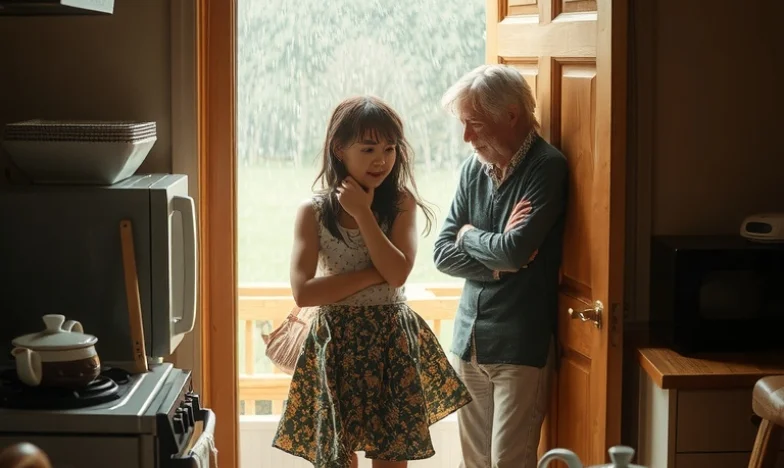
An Unexpected Visit… and the Truth I Never Wanted to Know

The kettle whistled, shrill and insistent, as I stared at the rain streaking the kitchen window. It was half past six, and the house was quiet except for the distant hum of the telly in the lounge, where Peter, my husband, was dozing off. I’d just set out the mugs for tea when the doorbell rang—sharp, urgent, out of place on a Tuesday evening. My heart gave a little jump. Who could it be at this hour?
I wiped my hands on my apron and hurried to the door, glancing at the clock. Zuzanna, my daughter, never came round unannounced, not since she’d married Tom and moved to that new-build in Croydon. I opened the door to find her standing there, rain-soaked, hair plastered to her cheeks, eyes red-rimmed. She looked so much like the little girl who’d run home after falling off her bike, desperate for comfort, that for a moment I forgot she was thirty-two, a mother herself.
“Mum, can I come in?” Her voice trembled, and she clutched her bag to her chest like a lifeline.
“Of course, love. What’s happened?”
She stepped inside, shivering, and I wrapped my arms around her. She smelled of wet wool and tears. Peter shuffled in, rubbing his eyes. “Everything alright, Suze?”
She shook her head, unable to speak. I led her to the kitchen, sat her down, and poured her tea, hands shaking. The silence stretched, heavy and awkward, until finally she whispered, “I can’t go home tonight.”
Peter and I exchanged a look. “Is it Tom?” I asked, careful, gentle.
She nodded, tears spilling over. “He’s not who you think he is, Mum. I… I can’t pretend anymore.”
The words hung in the air, thick with implication. My mind raced—affair, money troubles, drinking? Tom had always seemed steady, if a bit dull. Fourteen years older than Zuzanna, but reliable. He worked in insurance, wore sensible shoes, never raised his voice. I’d never questioned her choice, not really. She’d been so young, but he had a flat, a job, a plan. What more could a mother want for her daughter?
But now, as Zuzanna sobbed into her tea, I realised how little I truly knew. “Tell us, love,” Peter said, his voice soft. “Whatever it is, we’ll help.”
She took a shaky breath. “He’s… controlling. It started small. He’d check my phone, ask where I was going, who I was seeing. Then he started criticising everything—my clothes, my friends, even how I raised the kids. I thought it was just stress, but it’s got worse. He shouts, throws things. Last week, he… he grabbed me.”
My stomach lurched. “Oh, darling.”
“I didn’t want to worry you. I thought I could fix it. But tonight, he lost it over nothing. The kids were scared. I had to get out.”
Peter’s face darkened. “He laid hands on you?”
She nodded, eyes downcast. “I’m sorry, Dad.”
“Don’t you dare apologise,” I said, voice trembling with anger and fear. “You did the right thing coming here.”
The rest of the evening passed in a blur. We made up the spare room, called her best friend to check on the children—safe at a neighbour’s for now. Zuzanna cried herself to sleep, and I sat beside her, stroking her hair, heart breaking. I’d always believed our family was safe, ordinary, untouched by the sort of drama you read about in the papers. But now, the truth pressed in on me: I’d missed the signs. I’d been so proud of her independence, her marriage, her home. I’d never asked if she was happy.
Peter was furious, pacing the kitchen, muttering about going round to Tom’s. I stopped him. “We need to think, Peter. This isn’t about us. It’s about Zuzanna and the kids.”
He slumped into a chair, head in his hands. “How could we not have known?”
I didn’t have an answer. The next morning, Zuzanna looked fragile, but determined. “I need to go back for the kids,” she said. “I can’t leave them there.”
“We’ll go with you,” I insisted. “You’re not facing him alone.”
The drive to Croydon was tense. Zuzanna stared out the window, silent. Peter gripped the wheel so hard his knuckles whitened. When we arrived, Tom was waiting at the door, arms folded, jaw clenched. The children peered from behind him, eyes wide.
“Come to collect your things, have you?” Tom sneered. “Bringing backup?”
Zuzanna’s voice was steady. “I’m taking the kids. We’re staying with Mum and Dad.”
He laughed, cold and bitter. “You think you can just walk out? After everything I’ve done for you?”
Peter stepped forward. “Let her pass, Tom. This isn’t a discussion.”
For a moment, I thought Tom would lash out. But he stepped aside, muttering under his breath. Zuzanna gathered the children, packed a few bags, and we left. The relief was palpable, but fear lingered. What if he came after her? What if he tried to take the kids?
Back home, we called a solicitor, arranged for Zuzanna to see a counsellor, notified the school. The days blurred together—meetings, phone calls, tears. The children clung to Zuzanna, afraid to sleep alone. I tried to keep things normal—fish fingers for tea, cartoons after school—but the tension never fully lifted.
One evening, as I tucked my granddaughter into bed, she whispered, “Is Daddy angry with us?”
I swallowed hard. “No, sweetheart. Mummy just wants everyone to be safe.”
But the questions haunted me. Had I failed as a mother? Should I have seen the signs? I replayed every conversation, every visit, searching for clues. Zuzanna had always been private, self-sufficient. I’d mistaken her silence for strength.
Peter struggled too. He blamed himself, said he should have intervened sooner. We argued—about Tom, about what to do next, about our own mistakes. The house felt crowded, tense, but also alive in a way it hadn’t for years. We were a family again, united by crisis.
Zuzanna began to heal, slowly. She found a job at the local library, enrolled the kids in a new school. She laughed more, slept better. But the scars lingered—flinches at sudden noises, nightmares, moments of doubt. I tried to be patient, supportive, but sometimes I resented Tom for shattering our peace, for making us question everything.
One afternoon, Zuzanna sat with me in the garden, watching the children play. “I’m sorry, Mum. I should have told you sooner.”
I squeezed her hand. “You did what you had to do. I’m just glad you’re safe.”
She looked at me, eyes shining with tears. “Do you think I’ll ever trust anyone again?”
I didn’t know. But I promised to stand by her, whatever came next.
Now, months later, our lives are quieter, steadier. The children are thriving, Zuzanna is stronger, and Peter and I have learned to listen more, judge less. But sometimes, late at night, I wonder—how many other families are hiding secrets behind closed doors? How many mothers, like me, believe their children are safe, only to discover the truth too late?
Did I do enough? Could I have saved her sooner? Or is it enough, in the end, just to be there when it matters most?
What would you have done, if it were your daughter at the door, asking for help? Would you have seen the signs, or would you, like me, have missed them until it was almost too late?