Scars Beneath the Surface: A Mother’s Reckoning

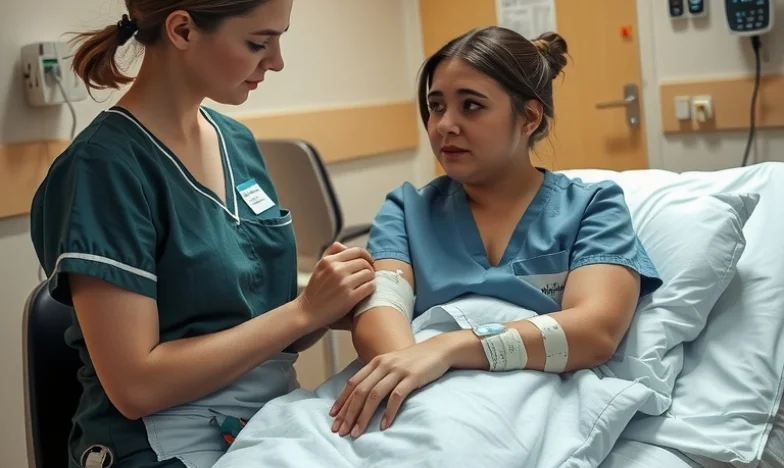
The smell of burnt flesh clung to my nostrils long after I left the hospital. I remember the sterile white of the A&E, the way Lily’s hand trembled in mine, her face pale and streaked with tears. The nurse’s voice was gentle but firm: “She’s in shock. We’ll need to keep her for observation.”
I didn’t scream. I didn’t shout at anyone. I just nodded, numb, and stroked Lily’s hair as she drifted in and out of sleep. My ex-husband, Mark, wasn’t there. He was the reason Lily had been in that workshop in the first place. She’d wanted to help him fix the old motorbike, eager to impress, desperate for his approval. Instead, she’d ended up with second-degree burns down her left arm and across her side, the result of a careless spill of boiling coolant.
Three hours later, as I sat by Lily’s bedside, my phone began to vibrate. One call, then another, then a relentless stream. Fifty missed calls, all from Mark’s family. I stared at the screen, my hands shaking. Not one of them had been at the hospital. Not one had called to ask how Lily was. But now, suddenly, they were desperate to reach me.
I could hear the echo of Mark’s mother’s voice in my head, sharp and dismissive: “It was just an accident, love. Kids heal.” But I knew better. I’d seen the blisters, the raw red skin, the way Lily flinched when the nurse changed her dressings. I’d heard her whisper, “Mum, does it hurt to die?”
The next morning, Mark finally arrived. He looked haggard, guilt etched deep into his features. He hovered at the door, unsure if he was welcome. I didn’t say a word. I just looked at him, and he looked away.
“Is she…?” he started, but his voice cracked.
“She’s sleeping,” I replied, my tone flat. “The doctors say she’ll need weeks to heal. Maybe longer.”
He nodded, eyes fixed on the floor. “I’m sorry, Emma. I should’ve—”
I cut him off. “You should’ve watched her. She’s fifteen, Mark. She’s not a mechanic. She’s your daughter.”
He flinched, but I didn’t care. I’d spent too many years swallowing my anger, smoothing things over for Lily’s sake. Not this time.
Later, as Lily woke, she reached for me, her voice hoarse. “Mum, can I go home soon?”
“Soon, darling,” I soothed, brushing her hair from her forehead. “We’ll get you home and comfortable. I promise.”
Mark tried to approach her, but Lily turned her face away. The rejection stung him, I could tell. He lingered for a moment, then left the room, shoulders slumped.
The days blurred together. Lily’s pain was constant, her sleep fitful. I watched her struggle with the simplest things—buttoning her pyjamas, brushing her teeth. Each time she winced, I felt a fresh wave of fury at Mark, at myself, at the whole damned situation.
The calls from his family didn’t stop. Eventually, I answered one. Mark’s sister, Helen, launched straight in: “Emma, you’re blowing this out of proportion. Accidents happen. Lily’s a tough girl.”
I bit back my rage. “She’s a child, Helen. She trusted her father to keep her safe. He failed.”
Helen tutted. “You always were dramatic. Maybe if you weren’t so overprotective, she’d be more resilient.”
I hung up. My hands shook so badly I nearly dropped the phone. I wanted to scream, to smash something, but I couldn’t. Lily needed me calm.
A week later, Lily was discharged. The doctors gave us a list of instructions—dressings to change, creams to apply, signs of infection to watch for. At home, I set up a little nest for her on the sofa, surrounded by pillows and her favourite books. She tried to smile, but her eyes were haunted.
One evening, as I changed her bandages, she whispered, “Mum, do you think Dad blames me?”
My heart broke. “No, sweetheart. None of this is your fault.”
She looked away. “He hasn’t called.”
I swallowed hard. “He’s… dealing with things in his own way.”
She nodded, silent tears slipping down her cheeks. I held her close, careful not to touch her burns.
The next day, Mark showed up at the door. He looked worse than before, unshaven and hollow-eyed. He held out a bag of Lily’s favourite sweets, but she barely glanced at him.
“Can I talk to her?” he asked, voice barely above a whisper.
I hesitated, then nodded. I watched from the kitchen as he sat beside her, fumbling for words.
“I’m so sorry, Lil,” he said, voice thick with emotion. “I should’ve been more careful. I never wanted you to get hurt.”
She stared at her hands, silent.
He tried again. “I miss you, you know. I miss us.”
She looked up, her eyes hard. “You weren’t there when I needed you.”
He flinched, tears welling in his eyes. “I know. I’m sorry.”
After he left, Lily curled up beside me. “Mum, why do grown-ups always say sorry after it’s too late?”
I had no answer. I just held her, wishing I could take away her pain.
The weeks passed. Lily’s burns began to heal, but the scars—both physical and emotional—remained. She refused to visit her father, refused to answer his calls. Mark’s family continued to blame me, accusing me of poisoning Lily against him. They didn’t see the nights I spent soothing her nightmares, the hours I spent coaxing her to eat, the endless appointments with doctors and therapists.
One afternoon, Helen turned up at my door, uninvited. She barged in, her voice sharp. “You’re making this worse, Emma. Mark’s falling apart. Lily needs her father.”
I stood my ground. “Lily needs to feel safe. Right now, she doesn’t. That’s not my fault.”
Helen scoffed. “You always did like playing the martyr.”
I closed the door in her face. My hands shook, but I refused to let her see.
That night, Lily asked, “Mum, will I always look like this?”
I brushed her hair back, tears pricking my eyes. “You’re beautiful, Lily. Scars or not.”
She looked unconvinced. “People stare.”
“Let them,” I said fiercely. “You survived. That’s what matters.”
But I knew it wasn’t that simple. The world is cruel to girls who don’t fit its narrow moulds. I worried for her, for the battles she’d have to fight.
Months passed. Lily grew stronger, braver. She started seeing a counsellor, slowly opening up about the accident, about her father, about the pressure to be perfect. Mark tried to rebuild their relationship, but the trust was gone. He apologised, again and again, but Lily kept her distance.
One evening, as we sat watching the rain streak down the window, Lily turned to me. “Mum, do you think Dad ever really saw me? Or was I just someone to impress?”
I didn’t know how to answer. I thought of all the times I’d tried to bridge the gap between them, all the times I’d made excuses for Mark’s absence, his carelessness. I wondered if I’d done Lily a disservice, shielding her from the truth.
Now, as I watch her trace the scars on her arm, I wonder: how do we forgive those who hurt us, even when they didn’t mean to? And how do we move forward, carrying the weight of what’s been lost?
Would you have done anything differently? Or is this just what it means to be a parent—to love, to hurt, and to hope, even when the world feels impossibly broken?