Less Wealth, More Virtue – A Life in Harmony and Peace

The kettle screamed in the cramped kitchen, steam curling into the cold air as I stared at the faded wallpaper, my hands trembling around a chipped mug. “You always did like to hide in here, didn’t you, Ellie?” My eldest brother, Simon, stood in the doorway, his voice sharp as the November wind rattling the windowpanes. I didn’t look up. Instead, I watched the tea swirl, remembering how Mum used to say a good brew could mend anything. But not this. Not today.
Mum had died just before dawn, her breath fading like the last glow of an oil lamp. She left us nothing but this dilapidated house on the edge of Sheffield, a few battered photo albums, and the memory of hands that never stopped working. The funeral was as plain as her life: a handful of neighbours, a vicar with a thin voice, and the three of us—Simon, Mark, and me—standing awkwardly in borrowed black coats.
Afterwards, we gathered in the front room, the air thick with grief and something older, more bitter. Simon paced by the fireplace, his shoes scuffing the threadbare rug. Mark, the middle brother, sat hunched on the sofa, picking at a loose thread on his cuff. I perched on the edge of Mum’s old armchair, the springs creaking beneath me.
Simon broke the silence first. “So, what now? We can’t all stay here.”
Mark snorted. “No one wants to stay here, mate. Place is falling apart.”
I bristled. “It was good enough for Mum.”
Simon shot me a look. “She had no choice, Ellie. None of us did. But we do now. We sell, split what little there is, and move on.”
The words hung in the air, heavy and final. I wanted to argue, to say that this house was more than bricks and mortar, that it was the last piece of her we had. But I saw the exhaustion in their faces, the years of struggle etched deep. We’d all been running on empty for so long.
That night, I lay awake in my childhood bedroom, listening to the wind whistle through the cracks in the window. I remembered Mum’s stories—how she’d grown up with nothing, how she’d worked two jobs to keep us fed, how she’d taught us that kindness mattered more than money. I wondered if we’d learned anything at all.
The next morning, Mark found me in the garden, clearing dead leaves from the path. “You alright?” he asked, voice softer than usual.
I shrugged. “Just thinking.”
He crouched beside me, hands buried in his coat pockets. “Simon’s right, you know. We can’t keep this place. None of us can afford it.”
I looked at the tangled rosebushes, remembering how Mum used to prune them every spring. “It’s not about the house. It’s about what we’re losing.”
Mark sighed. “We lost her, El. The rest… it’s just stuff.”
But it wasn’t just stuff. It was the kitchen table where we’d done our homework, the creaky stairs we’d raced up as kids, the faded curtains Mum had sewn herself. It was every sacrifice she’d made, every quiet act of love.
That afternoon, Simon called a family meeting. We sat around the kitchen table, the same one Mum had scrubbed every night. “We need to be practical,” he said, spreading out a stack of papers. “There’s barely enough here to cover the funeral costs. If we sell, we might each get a few grand. It’s not much, but it’s something.”
Mark nodded, eyes fixed on the table. I felt a surge of anger. “Is that all she was worth to you? A few grand?”
Simon’s jaw tightened. “Don’t start, Ellie. We all loved her. But love doesn’t pay the bills.”
“No, but it should count for something,” I shot back. “She gave up everything for us. Doesn’t that mean anything?”
Mark slammed his fist on the table. “Stop it! Both of you. This isn’t what she would’ve wanted.”
We fell silent, the only sound the ticking of the old clock on the wall. I thought of all the times Mum had broken up our fights, her voice gentle but firm. “Family’s all you’ve got in the end,” she used to say. “Look after each other.”
But we hadn’t. Not really. Simon had moved to London years ago, chasing a job that kept him away for months at a time. Mark drifted from one temp job to another, never settling. And me—I stayed, looking after Mum as her health faded, resenting them both for leaving, even as I told myself I understood.
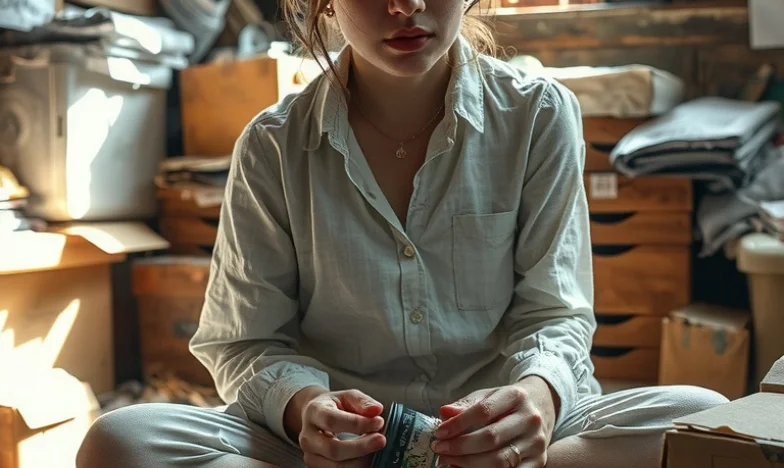
That night, I found myself in the attic, surrounded by boxes of old letters and photographs. I opened a battered tin and found a letter in Mum’s shaky handwriting:
“My dearest Ellie,
If you’re reading this, I’m gone. I know things haven’t been easy, and I’m sorry for all the times I couldn’t give you more. But I hope you remember that love is worth more than anything money can buy. Look after your brothers. Don’t let this house—or anything else—come between you. You’re stronger together than apart.
All my love,
Mum”
I pressed the letter to my chest, tears streaming down my face. For the first time since she died, I let myself grieve—not just for her, but for the family we used to be.
The next morning, I called Simon and Mark into the living room. “I found something,” I said, handing them the letter. As they read, I watched their faces soften, the anger and resentment melting away.
Simon cleared his throat. “She was right. We’ve been acting like strangers.”
Mark nodded. “Maybe we can do better. For her.”
We spent the rest of the day sorting through Mum’s things, sharing stories and memories. We laughed about the time she chased a fox out of the garden with a broom, cried over the faded photos of birthdays and Christmases past. For the first time in years, we felt like a family again.
In the end, we decided to sell the house, but not before taking one last family photo in the garden, beneath the rosebushes Mum had loved so much. We each took something small to remember her by—Simon the old clock, Mark her favourite mug, and me the letter.
As I locked the door for the last time, I felt a strange sense of peace. We hadn’t inherited wealth, but we’d found something more valuable: forgiveness, understanding, and the strength to move forward together.
Now, as I sit in my tiny flat, the letter framed on my bedside table, I wonder: In a world that measures worth by what you own, is it possible to live a life rich in virtue instead? Or is that just another story we tell ourselves to make sense of what we’ve lost?
What do you think? Is it better to have a life full of things, or a life full of love? Would you have chosen differently?