A Stranger Among My Own – Martha’s Story from a Kentish Village

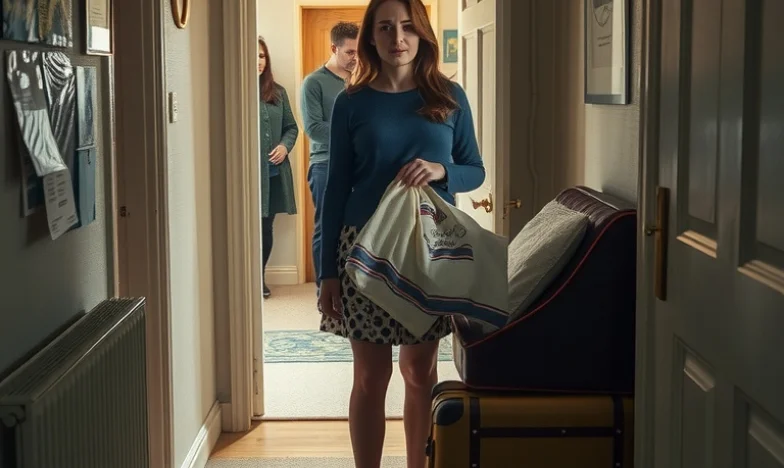
“You’re back, then.” Mum’s voice cut through the stillness of the hallway, sharp as the November wind that had chased me all the way from the train station. I stood there, suitcase in hand, the familiar scent of damp earth and roast potatoes drifting from the kitchen, and yet I felt as if I’d stumbled into someone else’s life. My brother, Tom, barely glanced up from his phone, his lips pressed into a thin line. Dad, as always, was out in the shed, tinkering with his tools, avoiding the house whenever he could.
I’d left this village in Kent five years ago, desperate to escape the smallness, the gossip, the way everyone seemed to know your business before you did. London had been a whirlwind—fast, loud, anonymous. But when the redundancy letter came, and my flatmate announced she was moving in with her boyfriend, I’d had nowhere else to go. I told myself it was temporary, just until I found my feet again. But as I stood in the hallway, the weight of my family’s silence pressing in, I wondered if I’d made a terrible mistake.
Mum busied herself with the dinner, clattering pans and muttering under her breath. “You can put your things in your old room,” she said, not looking at me. I hesitated at the foot of the stairs, the faded carpet worn thinner than I remembered. My room was just as I’d left it—posters peeling from the walls, the bedspread still patterned with bluebells. But the air felt stale, as if the room itself resented my return.
That first night, I lay awake listening to the house creak and settle, every sound magnified in the darkness. I heard Tom’s laughter drifting up from the living room, the low murmur of Dad’s voice as he came in late, the clink of bottles. No one came to say goodnight. I pressed my face into the pillow and tried not to cry.
The days blurred together. I tried to help around the house, but Mum bristled at my every attempt. “I’ve managed fine without you,” she snapped when I offered to cook. Tom ignored me, disappearing with his mates or locking himself in his room with his music blaring. Dad was a ghost, slipping in and out, his eyes sliding past me as if I were a stranger.
One afternoon, I found Mum in the garden, her hands deep in the soil. “Mum, can we talk?” I ventured, my voice trembling. She didn’t look up. “What’s there to talk about, Martha? You made your choice.”
“I didn’t mean to hurt anyone,” I said, swallowing the lump in my throat. “I just needed…something different.”
She wiped her hands on her apron, finally meeting my gaze. Her eyes were tired, rimmed with red. “You left us, Martha. You left me to pick up the pieces. Your father’s never been the same. Tom—he’s angry, you know. He won’t say it, but he is.”
I wanted to protest, to explain that I’d left because I couldn’t breathe here, because the village felt like a cage. But the words stuck in my throat. Instead, I turned away, the sting of rejection burning in my chest.
The village hadn’t changed. Mrs. Jenkins still peered through her net curtains, her dog barking at every passerby. The pub was full of the same faces, their laughter turning to whispers as I walked in. I ordered a half pint, trying to ignore the way people stared. “Back for good, are you?” the landlord asked, his tone too casual. I forced a smile. “Just for a bit.”
I bumped into Emily, my old school friend, outside the Co-op. She hugged me, but there was a distance in her eyes. “We all thought you’d never come back,” she said. “London must’ve been amazing.”
“It was,” I replied, but the lie tasted bitter. “But it’s good to see you.”
She nodded, shifting her shopping bags. “Well, if you fancy a catch-up, you know where I am.”
But I didn’t call her. I couldn’t bear the thought of explaining myself, of admitting that I’d failed.
The weeks dragged on. I applied for jobs in Maidstone and Canterbury, but the rejections piled up. Mum grew more impatient, her sighs louder, her glances sharper. One evening, as we sat in silence over dinner, Tom slammed his fork down. “Why are you even here, Martha? You don’t belong here anymore.”
Mum gasped, but I saw the flicker of agreement in her eyes. Dad stared at his plate. I felt the ground shift beneath me, the last thread of hope snapping. “I’m trying, Tom,” I whispered. “I’m trying to fit in.”
He shook his head. “You never wanted to be part of this family. You think you’re better than us.”
“That’s not true!” I cried, but my voice sounded weak, even to me. I pushed my chair back and fled to my room, the walls closing in around me.
That night, I packed my suitcase. I couldn’t stay where I wasn’t wanted. But as I zipped it shut, Mum appeared in the doorway. “Where will you go?” she asked, her voice soft for the first time.
“I don’t know,” I admitted. “But I can’t stay here, Mum. Not like this.”
She sat on the edge of the bed, her hands twisting in her lap. “I’m sorry, Martha. I just… I didn’t know how to have you back. I was angry. Still am, I suppose. But I don’t want you to go.”
Tears spilled down my cheeks. “I feel like a stranger in my own family. Like I don’t belong anywhere.”
She reached for my hand, her grip warm and trembling. “Maybe we both need to try harder. Maybe we can find a way back to each other.”
In the weeks that followed, things didn’t magically get better. There were still arguments, still long silences. But sometimes, Mum would ask me to help with the baking, or Dad would invite me to the shed to hold a spanner. Tom thawed, bit by bit, until one evening he knocked on my door and asked if I wanted to watch the football with him. It wasn’t much, but it was something.
I still felt like an outsider, sometimes. The village was slow to forgive, and the job hunt was brutal. But I began to carve out a space for myself, volunteering at the library, joining the book club. I learned that coming home isn’t about picking up where you left off—it’s about building something new from the ruins of what was lost.
Now, as I stand in the garden, the first snowflakes drifting down, I wonder if I’ll ever truly belong here again. Or maybe belonging isn’t about fitting in, but about finding the courage to be yourself, even among those who know you best.
Do we ever stop being strangers to our own families, or is that just the price we pay for growing up and changing? What would you do if you felt like an outsider in your own home?