Everything Will Go My Way: Halina’s Story of Sacrifice and Secrets

“You’re not listening to me, Mum!” My daughter, Susan, slammed the kitchen drawer so hard the cutlery rattled. I flinched, dropping a stitch, but kept my voice steady. “I am listening, love. But you know as well as I do, money doesn’t grow on trees.”
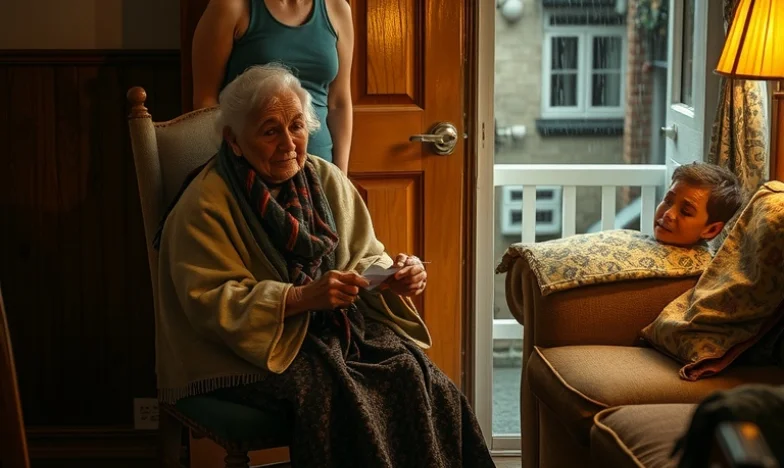
Jamie, my grandson, was sprawled on the battered sofa, his chest rising and falling in the gentle rhythm of sleep. I watched him, my heart swelling with pride and fear. He was only eight, but already so clever, so sensitive. I’d done everything for him, for all of them, really. But Susan, my only child, never seemed to see it that way.
“Mum, you’re always saving, always counting pennies. But what’s the point if we’re all miserable?” Susan’s voice trembled, and I could see the exhaustion in her eyes. She worked long hours at the hospital, barely scraping by as a single mum. I tried to help, but my way was not her way.
I remembered the early days with Jan, my late husband. We’d arrived in Birmingham with nothing but a battered suitcase and hope. Jan worked at the foundry, I cleaned houses. Every penny was precious. I learned to stretch a pound until it squeaked, to make a meal from scraps, to mend and patch and never waste a thing. It was how we survived. It was how I’d kept us afloat when Jan got sick, and how I’d managed after he died.
But Susan had grown up in a different world. She wanted more for Jamie, more than I could ever give. She wanted him to have new trainers, not the ones I’d found at the charity shop. She wanted him to go on school trips, to fit in, to be happy. I wanted that too, but I couldn’t help feeling that she was missing the point.
One evening, as rain lashed the windows, Susan burst in, soaked to the bone. “Mum, I’ve had enough. I can’t keep doing this. I can’t keep asking you for help.”
I set aside my knitting and stood, my knees aching. “You don’t have to ask, love. We’re family. We look after each other.”
She shook her head, tears streaming down her face. “But at what cost? You never let me forget how much you’ve done. You never let me make my own choices.”
Her words stung. I wanted to protest, to tell her I only wanted the best for her and Jamie. But deep down, I knew she was right. I’d always been in control, always insisted on doing things my way. It was how I coped, how I made sense of a world that had never given me anything for free.
That night, after Susan had gone to bed, I sat in the dark, listening to the rain. My thoughts drifted back to Jan, to the promises we’d made to each other. I’d promised to keep the family together, to protect Susan, no matter what. But had I kept her too close? Had I smothered her with my love, my fear, my need to control?
The next morning, Jamie padded into the kitchen, rubbing his eyes. “Gran, can we have pancakes?”
I smiled, ruffling his hair. “Of course, love. But we’ll have to use what we’ve got.”
He grinned, and for a moment, all my worries melted away. But as I watched him eat, I saw the holes in his jumper, the scuffed shoes. I felt a pang of guilt. Was I doing enough? Was I doing too much?
Later that week, Susan came home with a letter from Jamie’s school. “He’s been offered a place on the science trip to London. He’s desperate to go, Mum. But it’s £120. I can’t afford it.”
I felt the old panic rise in my chest. £120 was more than I spent on food in a month. But Jamie’s eyes were shining with hope. “Please, Gran?”
I hesitated. I could dip into my savings, but that money was for emergencies. For the boiler, for the funeral, for the things no one wanted to think about. But how could I say no?
That night, I lay awake, staring at the ceiling. I thought about all the sacrifices I’d made, all the things I’d gone without. I thought about Susan, about how hard she worked, how much she resented my interference. I thought about Jamie, about the world he was growing up in, so different from the one I’d known.
In the morning, I made my decision. I handed Susan the money, every last note trembling in my hand. “For Jamie,” I said. “He deserves it.”
Susan hugged me, her shoulders shaking. “Thank you, Mum. I’m sorry for what I said.”
I held her tight, tears prickling my eyes. “It’s all right, love. We do what we have to for family.”
But even as I said it, I wondered if I’d done the right thing. Had I helped, or had I just made things worse? Was I teaching Jamie to rely on me, to expect the world to bend to his wishes? Or was I giving him the chance I’d never had?
A week later, Susan came home late, her face pale. “Mum, I lost my job.”
The words hit me like a blow. I tried to stay calm, to reassure her, but inside I was terrified. How would we manage? How would we keep the house, pay the bills, feed Jamie?
For the first time in my life, I felt helpless. My savings were gone, my strength was failing. I couldn’t protect them anymore.
Susan sat beside me, her hand in mine. “We’ll get through this, Mum. Together.”
I nodded, but I wasn’t sure I believed her. I’d always been the strong one, the one who held everything together. Now, I was the one falling apart.
As the weeks passed, things got worse. The bills piled up, the food ran low. Jamie grew quieter, more withdrawn. Susan grew thinner, her eyes haunted. I tried to keep busy, to knit and clean and cook, but nothing seemed to help.
One evening, as I sat in my rocking chair, I heard Susan and Jamie arguing in the next room.
“I don’t want to go to school, Mum. The other kids laugh at me. They say we’re poor.”
Susan’s voice was tired, defeated. “I know it’s hard, love. But we have to keep going.”
I wanted to go to them, to comfort Jamie, to tell him it would all be all right. But I couldn’t find the words. For the first time, I realised that my way wasn’t working. That all my thrift and sacrifice hadn’t saved us from pain, from loss, from the harshness of the world.
That night, I sat alone in the dark, my knitting forgotten in my lap. I thought about Jan, about Susan, about Jamie. I thought about all the choices I’d made, all the things I’d given up. I wondered if it had all been worth it.
The next morning, I called Susan into the kitchen. “Love, I think it’s time we asked for help.”
She looked at me, surprised. “From who?”
“From the council, from the food bank, from anyone who’ll listen. We can’t do this on our own anymore.”
Susan nodded, tears in her eyes. “Thank you, Mum.”
It wasn’t easy, swallowing my pride. But as we filled out the forms, as we queued at the food bank, I realised that sometimes, strength means letting go. That sometimes, the bravest thing you can do is admit you need help.
Now, as I sit in my rocking chair, watching Jamie sleep, I wonder what the future holds. I wonder if I’ve done right by my family, if I’ve given them what they need. I wonder if, after all these years, I can finally let go of control and trust that things will work out.
Did I do the right thing? Or did I just make things harder for everyone? What would you have done, in my place?