Trapped Between Generations: Living with My Ageing Mother at 53

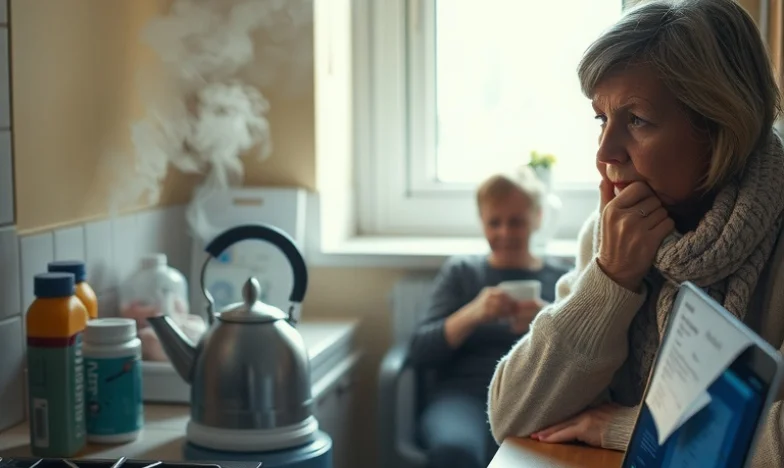
“Mum, please, you can’t keep leaving the gas on. You could burn the house down!” My voice echoed through the cramped kitchen, trembling with a mixture of fear and frustration. She looked up at me, her watery blue eyes wide, the kettle whistling shrilly behind her. “I’m not daft, Sarah. I know what I’m doing,” she snapped, but her hands shook as she reached for her tea cup. I wanted to scream. Instead, I turned away, pressing my palms hard against the cold countertop, willing myself not to cry.
I’m fifty-three years old, and my life has become a series of alarms: the beep of Mum’s pillbox, the shrill ring of her emergency pendant, the constant ping of my work emails. I work from home now, not because I want to, but because I have to. Mum can’t be left alone for long. She’s eighty, stubborn as ever, and fiercely independent in her mind, but her body and memory betray her daily.
I never imagined this would be my life. I used to dream of travelling, of finally having time for myself once the kids left home. But here I am, trapped in the same semi-detached in Stockport I grew up in, watching my mother fade by inches. My friends talk about cruises and grandkids; I talk about incontinence pads and GP appointments.
It wasn’t always like this. Mum was a force of nature once—sharp-tongued, quick-witted, the sort of woman who could silence a room with a single look. She raised me and my brother, Tom, on her own after Dad left. She worked nights at the hospital, cooked every meal from scratch, and still found time to volunteer at the church. I admired her, feared her, loved her. Now, I barely recognise her.
Tom lives in Bristol. He calls once a week, always with the same questions: “How’s Mum? Are you coping? Let me know if you need anything.” But he never offers to come up, never suggests taking Mum for a weekend. His life is busy—two kids, a demanding job, a wife who doesn’t get on with Mum. I try not to resent him, but sometimes, late at night, I do.
Last Thursday, I found Mum in the garden, barefoot and shivering, muttering about the cat she hasn’t owned in twenty years. I wrapped her in a blanket and led her inside, my heart pounding. “You can’t go wandering off, Mum. You could have fallen.” She looked at me, confused. “Where’s your father? He said he’d be home for tea.” I swallowed hard. “Dad’s gone, Mum. He’s been gone a long time.” She stared at me, and for a moment, I saw the old fire in her eyes. “Don’t talk to me like I’m stupid, Sarah.”
The guilt is relentless. I feel guilty for snapping at her, for wishing I could leave, for resenting the way my life has shrunk to the size of this house. I feel guilty for not being more patient, for not loving her enough, for not being enough. My friends say I’m a saint, but I don’t feel like one. I feel like a prisoner.
Work is my only escape, but even that is slipping away. My boss, Helen, tries to be understanding, but I see the irritation in her emails. “Can you join the call at 10?” “Sorry, Mum’s got a doctor’s appointment.” “Can you finish the report by Friday?” “Sorry, I was up all night with Mum.” I’m terrified I’ll lose my job, but I can’t afford to quit. The bills don’t stop just because your life does.
Sometimes, I fantasise about running away. Just packing a bag and disappearing—maybe to the Lake District, or Cornwall, somewhere with wide skies and no responsibilities. But then I see Mum, frail and lost, and I know I can’t. Who else would look after her? The council carers come twice a day, but they’re rushed, overworked, and underpaid. They do their best, but it’s not enough. It’s never enough.
We used to argue about everything—politics, the neighbours, what to watch on telly. Now, our arguments are about whether she’s taken her pills, whether she’s eaten, whether she remembers my name. Some days, she’s lucid, almost herself. Other days, she’s a stranger, looking at me with suspicion. “You’re not my daughter,” she hissed once, her voice trembling. “You’re trying to steal my house.” I laughed it off, but it hurt. God, it hurt.
I miss my children. They’re grown now—Emily’s in London, working for a tech start-up, and Jack’s at uni in Manchester. They visit when they can, but their lives are busy, and I don’t want to burden them. I want them to remember their gran as she was, not as she is now. Sometimes, I wonder if they’ll end up doing this for me one day. The thought terrifies me.
Last month, I tried to talk to Tom about putting Mum in a care home. He went quiet, then said, “She’d hate that, Sarah. You know she would.” I wanted to scream. “So what am I supposed to do, Tom? Watch her waste away until one of us dies?” He sighed. “I don’t know. I wish I could help more.” But he never does.
The house is full of ghosts. Dad’s old chair, still in the corner. Mum’s knitting basket, untouched for years. The smell of lavender and disinfectant. Every room holds a memory—some sweet, some bitter. I feel like I’m drowning in them.
One night, after Mum had finally fallen asleep, I sat in the dark kitchen, nursing a cold cup of tea. The silence was heavy, pressing in on me. I thought about calling Tom, or Emily, or anyone, just to hear another voice. But I didn’t. Instead, I cried—quiet, hopeless tears. I’m so tired. Tired of being strong, tired of pretending I’m coping, tired of being invisible.
Mum’s health is getting worse. She’s fallen twice this year, and each time, I’ve been terrified she won’t get back up. The doctors talk about dementia, about “managing expectations.” I nod and smile, but inside, I’m screaming. How do you manage the slow loss of someone you love? How do you grieve for someone who’s still alive?
Sometimes, I catch glimpses of the old Mum—a sharp comment, a wry smile, a squeeze of my hand. Those moments keep me going. But they’re getting rarer. Most days, she’s confused, frightened, angry. And I’m the only one here to bear the brunt of it.
I know I’m not alone. There are thousands of people like me—caught between ageing parents and adult children, juggling work and care, drowning in guilt and exhaustion. But it feels lonely. The government talks about “support for carers,” but it’s all paperwork and waiting lists. The real support comes from the neighbour who pops in with a casserole, or the friend who sends a text at midnight: “Thinking of you.”
I don’t know how much longer I can do this. I love my mother, but I’m losing myself. Every day, I wonder: is it selfish to want a life of my own? Is it wrong to wish for freedom, even as I watch her fade?
If you’re reading this, and you’ve been here too, tell me—how do you cope? How do you keep going when every day feels like a battle you can’t win? Am I a terrible daughter for wanting more than this?