From Love of Food to a Fight for Life: How Our Shared Passion Nearly Destroyed Us

“You’re killing yourselves, you know.”
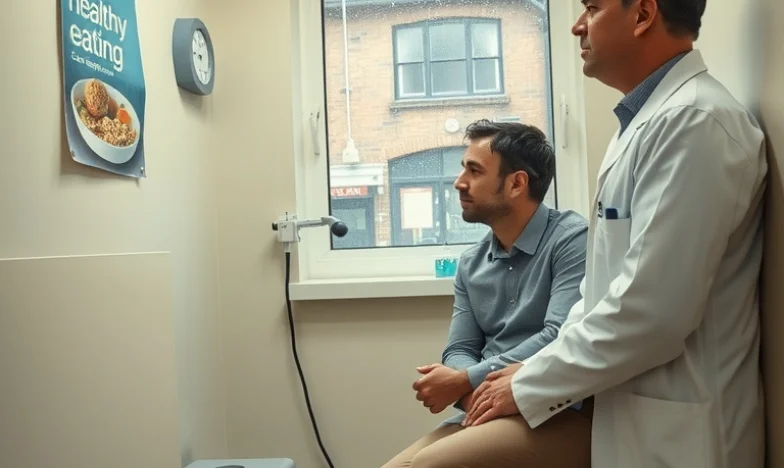
The words hung in the sterile air of Dr Patel’s surgery, slicing through the silence like a scalpel. Michał squeezed my hand, his palm clammy, and I stared at the faded NHS poster about healthy eating on the wall, unable to meet the doctor’s eyes. I could hear the faint hum of traffic outside, the world carrying on as if nothing had changed, but inside that tiny room in Hackney, everything was different now.
I’d always loved food. It was how Michał and I first bonded, back in uni—sharing chips on the steps outside the library, laughing over late-night takeaways, our breath fogging in the cold London air. Food was comfort, celebration, even apology. When we moved in together, our kitchen became our sanctuary: a place of midnight pancakes, experimental curries, and endless cups of sugary tea. We joked that we were soulmates because we both thought pineapple on pizza was a crime.
But somewhere along the way, our passion became a prison. The weight crept on, slowly at first, then all at once. I started avoiding mirrors. Michał’s snoring grew louder, and he’d wake up gasping for breath. We stopped going out as much, preferring the safety of our sofa and the glow of the telly. Our friends drifted away, tired of our excuses. My mum would call and ask, “Are you eating properly, love?” and I’d lie, saying we were fine.
The truth was, we weren’t fine. We were tired all the time, snapping at each other over stupid things—whose turn it was to do the washing up, whether we should order Chinese or Indian. Our flat was cluttered with takeaway boxes and empty bottles of Coke. I felt ashamed, but I didn’t know how to stop. Food was the only thing that made me feel better, even as it made everything worse.
It was Michał who collapsed first. One minute he was laughing at some daft meme on his phone, the next he was clutching his chest, his face grey. I called 999, my hands shaking so badly I could barely dial. The paramedics were kind, but their eyes were full of pity. At the hospital, after hours of waiting and tests, Dr Patel sat us down and told us the truth: Michał was pre-diabetic, his blood pressure sky-high. I wasn’t much better. “If you don’t change, you won’t see forty,” she said, her voice gentle but firm.
We left the hospital in silence, the weight of her words pressing down on us. That night, I lay awake, listening to Michał’s uneven breathing, and wondered how we’d let it get this bad. I thought about my dad, gone at fifty-two from a heart attack, and felt a cold knot of fear in my stomach. I didn’t want to lose Michał. I didn’t want to lose myself.
The next morning, I tried to talk to him. “We have to do something, Mich. We can’t keep going like this.”
He stared at the ceiling, his eyes red. “I know. But what if we can’t?”
I wanted to reassure him, but I was just as scared. We’d tried diets before—Slimming World, keto, even that weird cabbage soup thing. We always gave up after a week, defeated by cravings and the lure of Just Eat. But this time felt different. This time, it was life or death.
We started small. Swapped white bread for wholemeal, cut down on sugar in our tea. I downloaded a calorie-counting app, and Michał grumbled but played along. We went for walks in Victoria Park, shuffling awkwardly past joggers in Lycra. The first week was hell. I was hungry all the time, irritable and snappy. Michał snapped back, and we had our worst row yet—shouting at each other in the middle of Tesco because he wanted to buy a family-sized bag of crisps.
“Why are you always on at me?” he yelled, his voice echoing down the aisle. “It’s not just my fault!”
I burst into tears, right there between the baked beans and the pasta. An old lady gave me a sympathetic look, but I wanted the ground to swallow me up. We left without buying anything, walking home in silence.
That night, we barely spoke. I lay in bed, staring at the ceiling, wondering if our relationship could survive this. Food had always been our thing—what were we without it? I missed the easy laughter, the shared indulgence. Now, every meal felt like a battle.
But slowly, things began to change. We found new rituals—making homemade soups together, experimenting with spices instead of sauces. Michał discovered he liked roasted vegetables; I learned to love porridge with berries instead of sugar. We still had bad days—nights when the cravings were so strong I could barely think, when Michał would sulk and refuse to eat anything green. But we kept going, one day at a time.
My mum noticed first. “You look brighter, love,” she said on FaceTime, her eyes crinkling with pride. “I’m proud of you.”
It wasn’t all smooth sailing. There were setbacks—Michał’s birthday, when we caved and ordered pizza, then felt sick with guilt. Christmas with my family, where every meal was a minefield of temptation and well-meaning relatives urging us to “just have a bit, it’s only once a year.” We argued, sometimes bitterly. Michał accused me of being obsessed; I accused him of not caring enough. There were nights I cried myself to sleep, convinced we were doomed.
But there were victories, too. The first time Michał’s blood sugar came back normal. The day I fit into a dress I hadn’t worn since uni. The morning we went for a jog—well, more of a shuffle—and made it all the way around the park without stopping. We started seeing friends again, tentatively at first, then with growing confidence. Some didn’t understand, but others cheered us on.
One evening, after a particularly tough day at work, Michał came home with a bag of doughnuts. He looked at me, guilt written all over his face. “I just… I needed something, you know?”
I took a deep breath. “Let’s have one. Just one. And then we move on.”
We sat on the sofa, sharing a single doughnut, laughing at how ridiculous we must look. It wasn’t about never eating treats again—it was about not letting them control us.
The hardest part wasn’t the food. It was facing the reasons we’d let ourselves get this way—the loneliness, the stress, the fear of not being enough. We started talking, really talking, for the first time in years. About our hopes, our worries, the things we wanted from life. We realised we’d been using food to fill a void, to paper over cracks we were too scared to face.
It’s been a year now since that day in Dr Patel’s office. We’re not perfect—far from it. There are still days when I want nothing more than to order a greasy kebab and forget about calories. But we’re healthier, happier, and closer than we’ve ever been. We’ve learned that love isn’t just about sharing the good times—it’s about fighting through the hard ones, together.
Sometimes I wonder: if we hadn’t been forced to change, would we have survived? Would we have drifted apart, lost in our own shame and pain? Or was this the wake-up call we needed to finally start living?
Do you think it’s possible to rebuild a relationship when your greatest comfort becomes your greatest threat? Or are some habits just too hard to break? I’d love to know what you think.