The Night I Found Mum Stealing from the Allotment

The wind howled through the narrow alleyways of our estate, rattling the loose slats on the garden fences. I remember gripping my torch tighter, boots crunching on the frost-bitten grass as I made my way to the allotment. It was nearly midnight, and I’d only come out because Mrs. Patel from number 14 had rung me, whispering about someone lurking near the sheds. “It’s not safe, Jamie,” she’d said, voice trembling. “You know what happened last winter.”
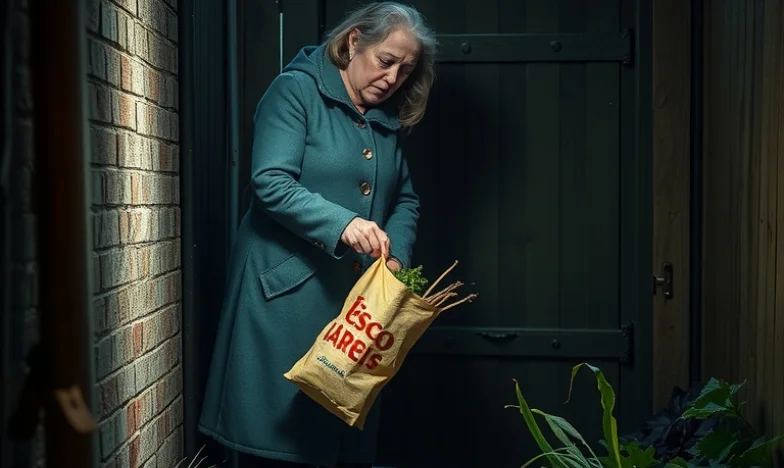
I’d expected to find some local kids, maybe a fox, but not this. Not her. Not my own mother, hunched over in the moonlight, her thin frame wrapped in Dad’s old coat, hands trembling as she stuffed potatoes and carrots into a faded Tesco bag. For a moment, I thought I was dreaming. My breath caught in my throat, and I stood frozen, the torchlight trembling in my hand.
“Mum?” I whispered, barely believing it. She spun round, eyes wide, cheeks streaked with tears. The bag slipped from her grasp, spilling carrots onto the muddy ground.
“Jamie, love, I—” she stammered, voice cracking. “I didn’t want you to see me like this.”
I stared at her, the cold biting through my jumper, my mind racing. My mother, the woman who’d always made sure I had a hot meal, who’d worked double shifts at the care home, now reduced to stealing from the very allotment she’d helped plant last spring. I felt anger, shame, and a deep, aching sadness all at once.
“What are you doing?” I managed, my voice harsher than I intended. “You can’t— Mum, you can’t just take things. What if someone saw you?”
She wiped her nose on her sleeve, looking smaller than I’d ever seen her. “I lost my job, Jamie. They cut my hours, then let me go. I’ve been trying to make ends meet, but the bills… the heating… I didn’t want to worry you.”
I knelt beside her, the torch casting long shadows over the rows of cabbages and leeks. “Why didn’t you tell me? We could’ve figured something out. You didn’t have to do this.”
She shook her head, tears spilling freely now. “I’m your mum. I’m supposed to look after you, not the other way round. I thought I could manage. I just needed a bit to get us through the week.”
The silence between us was heavy, broken only by the distant hum of traffic from the ring road. I remembered the times she’d gone without so I could have seconds at dinner, the way she’d patched my school trousers instead of buying new ones. Pride, I realised, was a heavy burden.
I helped her gather the scattered vegetables, my hands numb from the cold. “Come on, let’s go home. We’ll sort this out together.”
But as we left the allotment, I saw a figure standing by the gate. Mrs. Patel, wrapped in her dressing gown, arms folded tight against the chill. Her eyes flicked from me to Mum, taking in the bag of vegetables, the shame on our faces.
“I’m sorry, Mrs. Patel,” Mum whispered, voice barely audible. “I didn’t mean any harm.”
Mrs. Patel’s expression softened. She stepped forward, placing a gentle hand on Mum’s arm. “We all struggle, love. No shame in asking for help. Next time, just knock on my door, yes?”
Mum nodded, tears streaming down her cheeks. Mrs. Patel turned to me. “Jamie, take her home. I’ll say nothing. But promise me—no more sneaking about in the cold.”
That night, I sat with Mum at the kitchen table, the bag of vegetables between us. The heating was off, the flat colder than ever. I made us both a cup of tea, watching her hands shake as she wrapped them around the mug.
“I’m sorry, Jamie,” she said again, voice barely above a whisper. “I just didn’t want you to see me like this. I didn’t want anyone to know.”
I reached across the table, taking her hand in mine. “We’ll get through this, Mum. Together. No more secrets.”
The days that followed were a blur of phone calls, job centre appointments, and awkward conversations with neighbours who’d heard whispers of what happened. Some offered help—a bag of groceries, a warm coat, a kind word. Others looked away, embarrassed or judgmental. But the worst was the silence from my older brother, Tom, who hadn’t spoken to Mum in months. He’d left for London years ago, chasing a better life, and rarely called. When I rang him, desperate for support, he answered with a sigh.
“Jamie, I can’t just drop everything. I’ve got my own problems. Mum’s always been stubborn. She’ll sort herself out.”
I wanted to scream at him, to make him understand the weight of what I’d seen. But the words stuck in my throat. Instead, I hung up, feeling more alone than ever.
Mum tried to put on a brave face, but I saw the cracks. She spent hours staring out the window, flinching whenever the post arrived, dreading another bill. I picked up extra shifts at the pub, but it was never enough. The food bank became a lifeline, though Mum hated going. “It’s not charity,” I told her. “It’s community.”
One afternoon, as I was leaving for work, I found her sitting on the sofa, clutching a letter. Her hands shook as she handed it to me. “They’re cutting my benefits, Jamie. I don’t know what to do.”
I read the letter, anger boiling inside me. How could they do this? How could they expect people to survive on so little? I wanted to march down to the council office and demand answers, but I knew it wouldn’t change anything.
That evening, I sat with Mum in the dark, the only light coming from the streetlamp outside. “We’ll get through this,” I said, though I wasn’t sure I believed it. “We always do.”
Weeks passed. Christmas came and went, quiet and cold. Tom sent a card, but no money. Mrs. Patel brought over a tin of Quality Street and a homemade curry. “You’re not alone,” she said, pressing my hand. “We look after our own.”
Slowly, things began to change. Mum found a part-time job at the library, shelving books for minimum wage. It wasn’t much, but it gave her purpose. I saved what I could, and together we managed. The shame faded, replaced by a quiet resilience.
One spring morning, as we walked past the allotment, Mum paused, looking at the rows of new shoots pushing through the soil. “I never thought I’d be the one taking,” she said softly. “All my life, I tried to give.”
I squeezed her hand. “Sometimes, we all need help. There’s no shame in that.”
She smiled, tears glistening in her eyes. “Thank you, Jamie. For not giving up on me.”
Now, years later, I still think about that night. About the choices we make when we’re desperate, the pride that keeps us silent, and the kindness that can change everything. I wonder how many others are out there, struggling in silence, too proud or too ashamed to ask for help. Would you have done the same as Mrs. Patel? Or would you have turned away?
Sometimes I ask myself: how many of us are just one bad week away from making the same choice Mum did? And what would you do, if it was your own family?