The White House on Willow Lane

The rain hammered the windows with a fury that matched the ache in my chest. I was halfway through my second cup of tea, the telly murmuring some nonsense in the background, when I heard the knock. Not the polite, tentative tap of a neighbour, but a desperate, frantic pounding that made my heart leap into my throat. I set my mug down, hands trembling, and hurried to the door, the old floorboards creaking beneath my slippers.
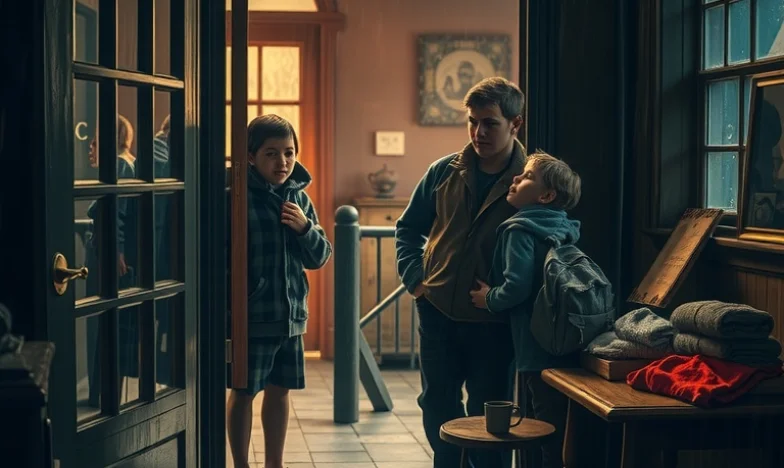
When I opened it, the wind nearly tore the handle from my grip. There, huddled together on the porch, were three boys. The eldest couldn’t have been more than twelve, his jaw set in a way that told me he’d seen too much for his age. The middle one clung to his brother’s sleeve, his eyes wide and haunted. The youngest, barely seven, was sobbing quietly, his small fists clenched around a battered rucksack.
“Please, miss,” the eldest said, voice cracking. “We’ve nowhere else to go.”
I stared at them, my mind racing. I’d been alone in this house on Willow Lane since David died, the silence pressing in on me like a second skin. I’d sworn I was done with heartbreak, done with opening myself up to pain. But looking at those boys, I saw something I recognised: the raw, desperate need to belong.
“Come in, quickly,” I said, stepping aside. They shuffled past me, dripping water onto the worn carpet. I fetched towels, wrapped them up, and set them by the fire. The youngest flinched when I reached for him, so I knelt down, keeping my voice soft.
“I’m Halina,” I said. “You’re safe here. No one’s going to hurt you.”
They told me their names: Jamie, the eldest; Callum, the middle one; and little Alfie, who barely spoke above a whisper. Their story tumbled out in fits and starts. Their mum had vanished months ago, their dad in prison. They’d been shunted from one foster home to another, each worse than the last, until they’d run away. They’d been sleeping rough, stealing scraps, hiding from the police and anyone who might send them back.
I made them beans on toast, the only thing I had in, and watched as they devoured it like they hadn’t eaten in days. That night, I tucked them into the spare room, listening to their soft breathing as I sat on the landing, my heart breaking for them. I knew what the authorities would say, what the neighbours would whisper. But I couldn’t turn them away.
The next morning, I rang social services. The woman on the other end was brisk, almost cold. “You can’t just take in children off the street, Mrs Nowak. There are procedures.”
“I know the procedures,” I snapped. “But they needed help. Are you going to punish me for that?”
There was a pause. “We’ll send someone round.”
The weeks that followed were a blur of meetings, paperwork, and tense visits from social workers. The boys clung to me, terrified they’d be split up again. I fought for them, argued with anyone who’d listen, begged them to let the boys stay together. In the end, they relented. I became their foster carer, my quiet life upended by the chaos of school runs, tantrums, and nightmares.
It wasn’t easy. Jamie was angry, lashing out at the smallest things. Callum wet the bed and hid the sheets, ashamed. Alfie wouldn’t speak, not even to me. The neighbours gossiped, crossing the street when they saw us. “She’s taken in those troublemakers,” I heard one woman mutter at the shops. “As if she hasn’t got enough on her plate.”
But slowly, things changed. Jamie started helping me in the garden, his anger softening into something like trust. Callum brought home drawings from school, proudly sticking them to the fridge. Alfie began to smile, just a little, when I read him stories at night. For the first time since David died, the house felt alive again.
One evening, as I was washing up, Jamie came into the kitchen. He stood there, shifting from foot to foot, before blurting out, “Why did you help us? You didn’t even know us.”
I dried my hands and knelt down so we were eye to eye. “Because everyone deserves a chance, Jamie. Even when the world says otherwise.”
He nodded, biting his lip. “I won’t let you down.”
Years passed. The boys grew, each finding their own way. Jamie excelled at school, determined to prove everyone wrong. Callum discovered a love for music, his room always filled with the sound of his guitar. Alfie, once so silent, became the chattiest of the three, always asking questions, always wanting to help.
But life has a way of testing you when you least expect it. It was a cold January morning when I collapsed in the kitchen, pain searing through my chest. I woke in hospital, tubes in my arms, the sterile smell making me gag. The doctor’s words were a blur: heart attack, stress, recovery. I was terrified, not for myself, but for the boys. What would happen to them if I couldn’t look after them?
Jamie was there when I woke, his face pale and drawn. “You’re going to be alright, Halina,” he said, gripping my hand. “We’ll look after you now.”
He meant it. While I recovered, Jamie took charge, making sure his brothers got to school, cooking meals, keeping the house running. The roles had reversed, and I saw in him a strength I’d never noticed before. One evening, as I sat in my armchair, wrapped in blankets, Jamie knelt beside me.
“I’ve been offered a place at university,” he said, eyes shining. “In London. I want to go, but I don’t want to leave you.”
Tears pricked my eyes. “You have to go, Jamie. You’ve earned it. I’ll be fine, I promise.”
He hugged me, his shoulders shaking. “Thank you, Halina. For everything.”
The house felt emptier after Jamie left, but I knew he was chasing his dreams, just as he should. Callum and Alfie grew more independent, each carving out their own paths. I watched them with pride, knowing I’d done something good, something that mattered.
Years later, on a bright spring morning, there was another knock at the door. I opened it to find Jamie, taller now, his face older but his eyes the same. He smiled, holding out a letter.
“It’s for you,” he said. “I’ve written about you, about what you did for us. They want to publish it. People need to know there’s hope, even when things seem hopeless.”
I read his words, tears streaming down my face. He’d told our story, not just of pain and loss, but of love and second chances. In that moment, I realised that by opening my door all those years ago, I hadn’t just saved three boys. They’d saved me, too.
Now, as I sit by the window, watching the rain fall on Willow Lane, I wonder: How many lives could change if we dared to open our doors, even just once? Would you have done the same?