Shattered Promises, New Beginnings: My Journey to Happiness

“Katherine, it’s over. I want a real family, children. You can’t give me that. I’ve filed for divorce.”
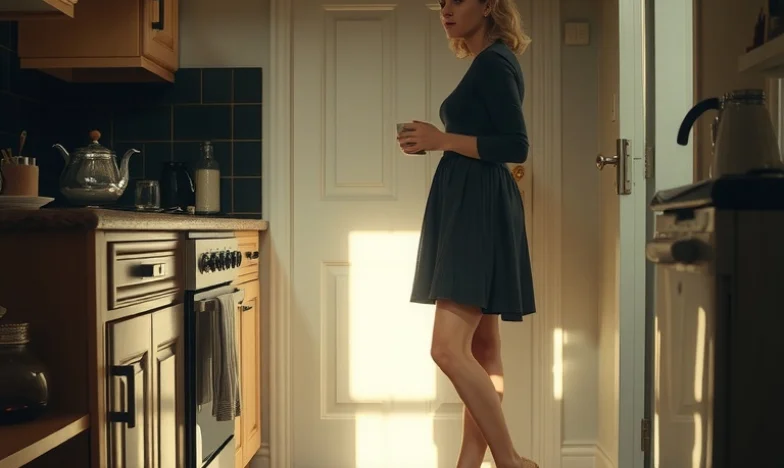
David’s words echoed in our kitchen, cold and final, slicing through the morning silence like a knife. I stood there, clutching my mug, the tea inside forgotten and growing cold, as he continued, “You’ve got three days to pack. When you’re gone, call me. I’ll be staying at Mum’s until I sort out the flat for the baby and her mother. Yes, don’t look so shocked—my new partner is pregnant.”
I stared at him, my mind refusing to process the words. The man I’d loved for twelve years, the man I’d built a life with in this cramped but cosy London flat, was leaving me for someone else—someone who could give him what I couldn’t. Children. A family. I felt the world tilt beneath my feet, the ground no longer solid, the air too thick to breathe.
“David, please—” I managed, my voice trembling. “We can talk about this. We can—”
He shook his head, his jaw set. “There’s nothing to talk about, Katherine. I want a divorce. I want a family. You can’t give me that. I’m sorry.”
He wasn’t sorry. Not really. He was relieved, almost triumphant, as if he’d finally found the courage to say what he’d been thinking for months, maybe years. I watched him gather his things—his phone, his keys, the overnight bag he’d packed without me noticing. He didn’t look back as he left, the door closing with a soft but decisive click.
I sank to the floor, the mug slipping from my hands and shattering on the tiles. The sound jolted me, but I couldn’t move. I sat there, surrounded by shards of porcelain and the bitter scent of spilled tea, and let the tears come. They fell in great, heaving sobs, wracking my body until I was empty, hollowed out by grief and disbelief.
The next three days passed in a blur. I packed my things—clothes, books, the few mementos I couldn’t bear to leave behind. Every item was a reminder of the life I’d lost: the framed photo from our wedding in Cornwall, the silly mug he’d bought me on our first trip to Brighton, the scarf he’d given me for Christmas. I left them all behind. I didn’t want anything that would remind me of him, of us.
On the third day, I called my sister, Emily. She lived in a small flat in Hackney, barely big enough for herself and her cat, but she insisted I come. “You’re not staying in a hotel, Kat. You’re family. We’ll make it work.”
Emily met me at the door, her arms open wide. I collapsed into her embrace, the tears starting anew. She held me, rocking me gently, whispering soothing words until I could breathe again. “He’s a bastard, Kat. You deserve so much better.”
But I didn’t feel like I deserved anything. I felt broken, discarded, unlovable. The diagnosis of infertility had been a blow, but we’d promised to face it together. We’d talked about adoption, about fostering, about building a family in our own way. I thought love would be enough. I was wrong.
The days blurred into weeks. I found a job at a local bookshop, the kind with creaky floorboards and the smell of old paper. It was quiet, peaceful, a refuge from the chaos of my thoughts. I spent my days shelving books, chatting with customers, losing myself in stories that weren’t my own.
One afternoon, as I was stacking a new display, a woman approached me. She was older, with kind eyes and a gentle smile. “Excuse me, love, do you have any recommendations for someone who’s just had their heart broken?”
I laughed, the sound surprising me. “You and me both,” I said, and she smiled, a knowing look in her eyes.
We talked for a while, about books and heartbreak and the strange comfort of strangers. Her name was Margaret, and she came in every week after that, always asking for a new recommendation, always leaving me with a smile or a kind word. She became a fixture in my new life, a reminder that kindness could come from unexpected places.
Emily was my rock. She listened to me cry, raged on my behalf, made me laugh when I thought I’d forgotten how. She dragged me out for walks along the canal, for coffee in tiny cafés, for nights at the pub where we’d drink too much and sing badly at karaoke. Slowly, the pain began to dull, replaced by something like hope.
But the nights were the hardest. Alone in Emily’s spare room, I replayed David’s words over and over, wondering what I could have done differently. Was I not enough? Was love not enough? I thought about the children we’d never have, the family I’d always dreamed of. I mourned not just the loss of my marriage, but the loss of a future I’d built in my mind.
One evening, as I was closing up the shop, Margaret stopped by. She handed me a small, wrapped package. “For you, love. Just a little something.”
Inside was a journal, the cover embossed with gold stars. “Write it all down,” she said. “The pain, the anger, the hope. It helps, trust me.”
I started writing that night. At first, it was just a way to pour out the hurt, to make sense of the chaos inside me. But as the weeks passed, the words changed. I wrote about the small joys—the way the sun set over the city, the laughter of children in the park, the comfort of Emily’s arms around me. I wrote about hope, about new beginnings, about the possibility of happiness.
One Saturday, Emily dragged me to a community event in the park. “You need to get out, Kat. Meet people. Live a little.”
I was reluctant, but she was persistent. The park was filled with families, couples, children running and laughing. It hurt, seeing what I’d lost, but it also reminded me that life went on. I wandered away from the crowd, finding a quiet bench beneath a tree.
A man sat down beside me, his dog flopping at his feet. “Mind if I sit?” he asked, his accent warm and familiar.
“Not at all,” I replied, offering a small smile.
We sat in companionable silence for a while, watching the world go by. Eventually, he spoke. “You look like you’ve had a rough time.”
I laughed, surprised by his honesty. “Is it that obvious?”
He shrugged, smiling. “I’ve been there. Divorce. It’s hell.”
We talked for hours, sharing stories of heartbreak and hope, of dreams lost and found. His name was Tom, and he was kind, funny, and gentle. He didn’t push, didn’t pry, just listened and shared his own pain.
We started meeting for coffee, for walks in the park, for evenings at the pub. There was no pressure, no expectations—just two people finding comfort in each other’s company. For the first time in months, I felt seen, understood, valued.
David called once, months after the divorce was final. He wanted to apologise, to explain. His new partner had left him, taking the baby with her. He was alone, lost, regretful.
“I made a mistake, Kat,” he said, his voice thick with emotion. “I thought I wanted a family, but I didn’t realise what I was giving up.”
I listened, but I didn’t feel anger or bitterness. I felt pity, and a strange sense of closure. “We both made mistakes, David. But we can’t go back.”
I hung up, feeling lighter than I had in years. The past was behind me, the future uncertain but full of possibility.
Tom and I grew closer, our friendship deepening into something more. We talked about everything—our fears, our hopes, our dreams. He didn’t care that I couldn’t have children. “Family isn’t just about blood, Kat. It’s about love, about choosing each other every day.”
We built a life together, slowly, carefully, with laughter and tears and endless cups of tea. I found happiness not in the life I’d planned, but in the life I’d created from the ashes of my old one.
Sometimes, late at night, I think about the road that brought me here—the heartbreak, the pain, the loss. I wonder if I would have found this happiness without it, if I would have discovered my own strength, my own worth.
Do we ever truly heal from a broken heart, or do we simply learn to live with the scars? And is it possible that, in losing everything, we find exactly what we need?