Inheritance or Freedom: We Refuse to Live by Our Father’s Rules Anymore

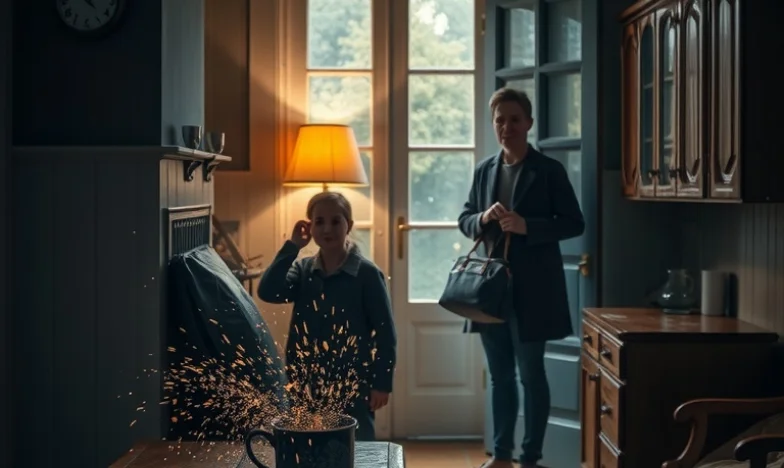
“If you walk out that door, you’ll get nothing. Not a penny, not the house, not even your mother’s jewellery!” Dad’s voice ricocheted off the kitchen tiles, his face red and trembling. My hands shook as I clutched the chipped mug, the one Mum used to drink her morning tea from. My sister, Emily, stood beside me, her jaw set, eyes brimming with tears she refused to let fall.
It hadn’t always been like this. Before Mum died, Dad was strict, yes, but there was a softness to him, a gentleness that surfaced in rare moments—a hand on my shoulder after a bad exam, a quiet word when Emily’s heart was broken. But since the funeral, something inside him had snapped. The man who once tiptoed around our boundaries now bulldozed through them, barking orders, demanding loyalty, and wielding the threat of disinheritance like a weapon.
I remember the first time he said it. It was a week after the funeral, the house still thick with the scent of lilies and stale grief. Emily had wanted to go back to university early, to escape the suffocating silence. Dad blocked the door, voice low and cold: “If you leave now, don’t expect to come back. You’ll get nothing when I’m gone.”
We thought it was the grief talking. We made excuses for him, told ourselves he’d come round. But as the months dragged on, his ultimatums became routine. The house, the savings, Mum’s wedding ring—he dangled them in front of us, snatching them away at the slightest hint of defiance.
“Why are you doing this?” I asked him one night, my voice barely above a whisper. He was sitting in his armchair, the TV flickering in the background, a half-empty bottle of whisky on the table. “We’re your children. We’re all you have left.”
He didn’t look at me. “You’re ungrateful. Both of you. Your mother would be ashamed.”
Emily and I clung to each other in the darkness of our shared bedroom, whispering plans of escape. She wanted to move to Manchester, start fresh, find a job and a flat of her own. I dreamed of travelling, maybe teaching English abroad. But every time we tried to leave, Dad’s threats pulled us back. The house was all we’d ever known. Mum’s garden, the creaky stairs, the faded wallpaper covered in our childhood drawings—it was more than bricks and mortar. It was home.
One evening, after another explosive row, Emily slammed her bedroom door so hard the frame splintered. Dad stormed after her, shouting, “You think you’re so clever, don’t you? You think you can just take what’s mine and walk away?”
She screamed back, “It’s not just yours! Mum wanted us to have this house. She told us so!”
He laughed, a cruel, hollow sound. “She’s gone. I’m the one who decides now.”
I watched them, heart pounding, feeling like a child again, powerless and small. The next morning, Emily packed a bag and left. Dad didn’t try to stop her this time. He just sat at the kitchen table, staring at the wall, muttering under his breath. I found her later, sitting on a bench in the park, her face blotchy and red.
“I can’t do it anymore, Anna,” she said. “I can’t keep living like this, waiting for him to throw us a bone. I’d rather have nothing than let him control me.”
I envied her courage. I went back to the house, the silence heavier than ever. Dad barely spoke to me, except to remind me what I stood to lose if I stepped out of line. I started sleeping with my phone under my pillow, texting Emily late into the night. She found a job at a café, rented a tiny flat with peeling paint and a leaky tap, but she sounded lighter, freer.
The final straw came on a rainy Sunday afternoon. I’d spent the morning cleaning the house, trying to keep the peace. Dad came in, reeking of whisky, and started shouting about the bills, accusing me of wasting his money. I tried to reason with him, but he wouldn’t listen. He grabbed Mum’s photo off the mantelpiece and hurled it across the room. The glass shattered, and something inside me broke too.
I packed a bag and left. The rain soaked through my coat as I walked to Emily’s flat, my heart pounding with fear and relief. She opened the door, pulled me into a hug, and for the first time in months, I felt safe.
We spent the next few weeks rebuilding our lives. We found comfort in small things—cups of tea, old films, laughter that didn’t feel forced. Dad called, left angry voicemails, threatened to cut us off for good. We ignored him. The freedom tasted bittersweet, tinged with guilt and longing for the family we’d lost.
One day, a letter arrived from Dad’s solicitor. He’d changed his will, left everything to a distant cousin we barely knew. Emily and I sat on the sofa, the letter trembling in my hands.
“He really did it,” I whispered. “He’s cut us out.”
Emily shrugged, a sad smile on her lips. “Let him have his house. We have each other.”
Sometimes, late at night, I dream of Mum. She’s in the garden, planting roses, her hands covered in earth. I want to ask her what to do, how to forgive a man who’s supposed to love us. I wonder if she’d be proud of us for choosing freedom over inheritance, for breaking the cycle of control.
Now, as I sit by the window, watching the rain streak down the glass, I ask myself: Was it worth it? Would you give up everything you’ve ever known for a chance to finally breathe? I wonder if anyone else has ever had to choose between a home and their own heart.