Running Away From Home: Why Couldn’t I Help With My Brother?

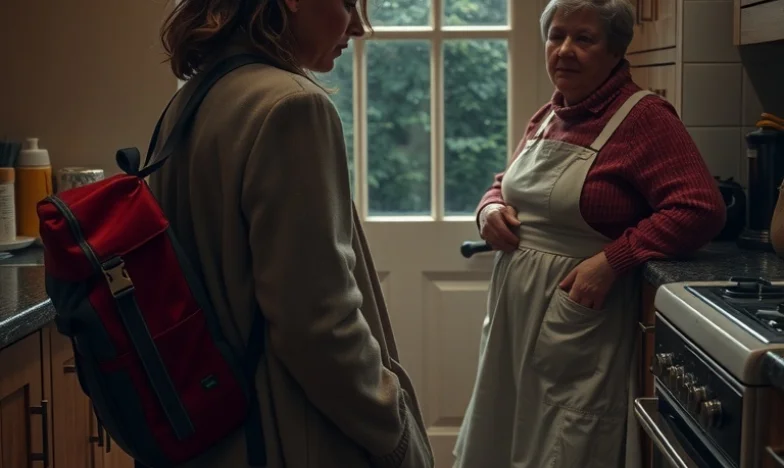
“You’re so bloody selfish, Emily! You think you can just swan off and leave me to deal with everything?” Mum’s voice was shrill, bouncing off the kitchen tiles as I stood there, hands trembling, clutching my rucksack. The clock on the wall ticked louder than ever, counting down the seconds until I finally snapped. Jamie was in the living room, his soft humming barely audible over the storm outside. I could see his silhouette through the frosted glass, rocking gently, lost in his own world.
I wanted to scream back, to tell her how tired I was, how every day felt like I was drowning in responsibility that wasn’t mine. But all I managed was a whisper, “I just need a break, Mum. Please.”
She scoffed, wiping her hands on her faded apron. “A break? From your own family? You think I get a break?”
I stared at her, the lines on her face deeper than I remembered, her eyes red from crying or lack of sleep—probably both. Guilt twisted in my stomach, but anger burned hotter. “I’m not Jamie’s mum. I’m his sister. I have my own life.”
Her face crumpled, and for a moment, I saw the woman she used to be—before Dad left, before Jamie’s diagnosis, before the weight of the world settled on her shoulders. But then her jaw set, and she turned away. “Go on then. Run away. See if I care.”
I left that night. The rain soaked through my coat as I walked to the station, the streetlights blurring through my tears. My phone buzzed with message after message, each one angrier than the last. I blocked her number, but she always found a way—new numbers, emails, even Facebook messages from old friends she’d roped in to guilt-trip me.
I moved into a tiny flat in Manchester with two other girls from college. It was cramped, the heating barely worked, and the walls were thin enough to hear every argument next door. But it was mine. For the first time in years, I could breathe. I got a job at a café, pouring lattes for students and office workers, pretending I was just like them—normal, carefree, unburdened.
But every night, as I lay in bed, I thought of Jamie. His big blue eyes, the way he’d cling to my hand when the world got too loud, the sound of his laughter when I read him his favourite stories. I missed him more than I could say. But I couldn’t go back. Not yet.
Mum’s messages never stopped. Some days, she’d beg me to come home, promising things would be different. Other days, she’d unleash a torrent of abuse—calling me heartless, a traitor, a waste of space. I tried to ignore her, but the words burrowed deep. My friends told me to block her, to move on, but it wasn’t that simple. Family isn’t something you can just switch off.
One afternoon, I was wiping down tables when my phone buzzed with a message from an unknown number. I almost didn’t look, but curiosity got the better of me. It was a photo of Jamie, sitting on the sofa, clutching his favourite toy dinosaur. The message read: “He misses you. But don’t worry, I’ll tell him you don’t care.”
I ran to the staff toilet and cried until my eyes were raw. I wanted to scream, to smash my phone, to run all the way home and hug Jamie until everything was okay. But I didn’t. I wiped my face, took a deep breath, and went back to work.
The weeks turned into months. I started university, studying psychology—maybe trying to understand myself, or Jamie, or even Mum. I made new friends, went to parties, laughed until my sides hurt. But the guilt never left. It sat in my chest like a stone, heavy and cold.
One night, I got a call from my aunt, Mum’s sister. “Emily, love, your mum’s not well. She’s exhausted. Jamie’s been having more meltdowns. She needs help.”
I felt the old panic rise, the urge to drop everything and run home. But I couldn’t. Not after everything. “I can’t, Auntie Sue. I just… I can’t.”
She sighed. “I know, love. But she’s your mum. And Jamie’s your brother.”
I hung up and stared at the ceiling, tears streaming down my face. Was I a terrible person? Was I selfish for wanting my own life? For wanting to be more than just Jamie’s carer?
A few days later, I got another message from Mum. This one was different. No swearing, no threats. Just: “I’m sorry. I miss you. Jamie misses you. Please come home.”
I stared at the screen for ages, my heart pounding. I wanted to believe her, to believe things could change. But I knew better. I’d heard it all before.
I called her, my hands shaking. She answered on the first ring. “Emily?”
“Mum. I can’t come home. Not like before. I need boundaries. I need my own life.”
She was silent for a long time. Then, quietly, “I know. I’m just so tired, love. I don’t know how to do this on my own.”
I swallowed the lump in my throat. “You’re not on your own. There’s help out there. Social services, respite care. You don’t have to do it all yourself.”
She laughed bitterly. “You think they care? They come round, fill in their forms, then bugger off. It’s just us, Emily. It’s always been just us.”
I didn’t know what to say. I wanted to help, but not at the cost of my own sanity. “I’ll visit. I’ll help where I can. But I can’t move back in, Mum. I’m sorry.”
She sniffed. “Alright. I suppose that’s better than nothing.”
I visited that weekend. Jamie ran to me, wrapping his arms around my waist, his face lighting up with a smile I hadn’t seen in months. Mum looked older, thinner, her hair streaked with grey. We sat together, watching Jamie play, the silence heavy but not angry.
That night, as I left, Mum hugged me for the first time in years. “I’m proud of you, you know. Even if I don’t say it.”
I cried all the way back to Manchester. Things weren’t perfect. They never would be. But maybe, just maybe, we could find a new way to be a family—one that didn’t break me in the process.
Sometimes I wonder—how many of us are out there, torn between duty and dreams, guilt and freedom? Is it selfish to want more, or is it just human? Would you have done the same?