Four Pregnant Girls: The Year That Changed Us All

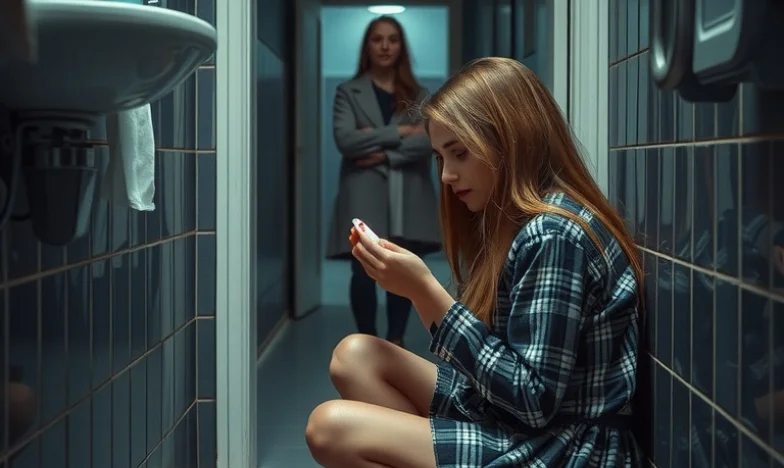
“You’re joking, right?” Sarah’s voice trembled as she stared at the stick in my hand, the two pink lines glaring up at us like a warning. I shook my head, tears blurring my vision, the cold tiles of the bathroom floor pressing into my knees. The echo of the school bell rang out, distant and irrelevant. In that moment, the world had shrunk to the size of that tiny, plastic test.
It was March 1991, and St. Mary’s Comprehensive was as grey and unremarkable as ever, perched on the edge of Sheffield’s council estates. The teachers were tired, the corridors smelled of damp coats and cheap deodorant, and everyone seemed desperate to escape. But for me, Sarah, Emma, and Louise, there was suddenly no escape at all.
I remember the day I told my mum. She was standing at the kitchen sink, hands deep in suds, humming along to Simply Red on the radio. I stood in the doorway, heart pounding, and blurted it out: “Mum, I’m pregnant.” The plate she was holding slipped from her hands and shattered in the sink. She turned, her face pale, eyes wide with disbelief. “You’re sixteen, Rebecca. Sixteen!”
The shouting started then, echoing through the house, drawing my little brother to the top of the stairs. My dad came home later, silent and grim, and the silence between us was worse than any argument. I heard him mutter to my mum that night, “What will the neighbours think?”
At school, it was impossible to hide. My friends tried to shield me at first, but the whispers spread like wildfire. When Emma confided in me that she’d missed her period, I went with her to the clinic. When Louise fainted during PE, the nurse called her mum, and the truth came out. And then Sarah, always the sensible one, broke down in the girls’ loos, clutching her stomach and sobbing, “Me too.”
Four of us. Four girls from the same year, all pregnant within weeks of each other. The teachers called us into the headmistress’s office, her lips pressed into a thin line. “This is a disgrace,” she said, voice trembling with anger. “You’ve brought shame on this school.”
The news spread through the estate like a bad smell. At the corner shop, Mrs. Patel gave me a look of pity mixed with something sharper. At the bus stop, old Mrs. Jenkins shook her head and muttered, “No morals these days.” Even my best mate, Tom, wouldn’t meet my eyes anymore. The boys who’d got us into this mess—well, they vanished, as boys often do, leaving us to face the music alone.
My mum stopped speaking to me except to bark orders or sigh heavily. My dad buried himself in work, coming home later and later. The house felt colder, emptier. I’d lie awake at night, hand on my stomach, wondering what sort of mother I’d be, if I’d ever finish school, if I’d ever be more than the girl who got pregnant at sixteen.
Emma’s parents sent her to stay with her aunt in Manchester, hoping the distance would hide their shame. Louise’s mum threatened to throw her out, but relented when Louise broke down, promising to keep the baby. Sarah’s dad refused to speak to her, and her mum cried every night. We clung to each other, the four of us, meeting in the park after dark, sharing our fears and dreams, trying to make sense of what our lives had become.
One evening, as we sat on the swings, Sarah whispered, “Do you think they’ll ever forgive us?”
Emma shrugged, her eyes red. “I don’t know. I just wish they’d talk to me. I feel invisible.”
Louise, always the fighter, kicked at the gravel. “Sod them. We’ve got each other, haven’t we?”
But even our friendship was strained. We argued over stupid things—who had it worse, whose parents were more cruel, who was more scared. The pressure was relentless. The school offered us a ‘special support group’, but it felt more like punishment, a way to keep us out of sight. We sat in a cramped room with a social worker who spoke to us like we were children, not girls whose lives had been upended.
The summer dragged on. My belly grew, and with it, the stares and whispers. I stopped going out, stopped answering the phone. My GCSEs came and went in a blur of nausea and exhaustion. I barely scraped through, my dreams of university slipping away like water through my fingers.
One night, my mum came into my room, sitting on the edge of my bed. She looked tired, older than I remembered. “I’m sorry, love,” she said quietly. “I just… I don’t know how to help you.”
I burst into tears, the dam finally breaking. “I’m scared, Mum. I don’t know what I’m doing.”
She hugged me then, for the first time in months, and we cried together. It wasn’t a solution, but it was something—a crack of light in the darkness.
Emma came back from Manchester, her baby in tow, pale and thin but determined. Louise’s mum started knitting tiny jumpers, her anger softening into something like acceptance. Sarah’s dad finally spoke to her, awkward and stiff, but it was a start.
We met up again, the four of us, pushing prams through the park, laughing at the absurdity of it all. We were still judged, still whispered about, but we had each other, and our babies, and a stubborn hope that things might get better.
Years later, I look back on that year and wonder how we survived. We were just girls, really, trying to navigate a world that wasn’t ready for us. The shame, the fear, the loneliness—it was overwhelming. But we found strength in each other, in our children, in the small acts of kindness that broke through the judgement.
Sometimes I wonder: if you’d been in our shoes, what would you have done? Would you have forgiven us, or turned away like so many did? And do you think, after all these years, that we deserved the shame—or the chance to prove ourselves?