A Knife Paused at Dinner: When My Son Brought Home More Than a Wife

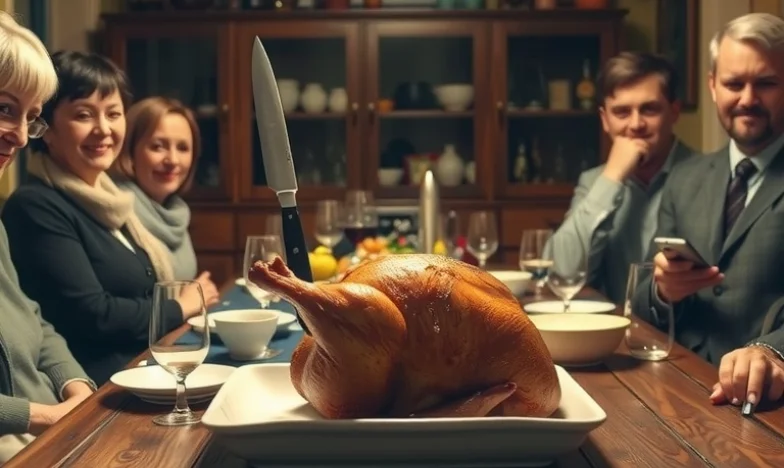
The knife in my hand hovered above the roast chicken, its blade glinting in the yellow kitchen light, when Malrick’s words sliced through the air. “Mum, my wife, her family and I are moving in next month.” His voice was so casual, as if he were reading out the weather report, not detonating a bomb in the middle of our Thursday night dinner.
Carla, his wife, sat opposite me, her smile fixed and confident, like she’d already measured the curtains and picked out the paint for the spare room. Her parents, Alan and Denise, exchanged glances, their hands folded neatly on the table, as if they were guests at a polite tea rather than invaders at my family’s hearth.
I felt the room shrink, the walls pressing in. My hand trembled, the knife poised mid-air, and I forced myself to breathe. “You’re moving in?” I echoed, my voice thinner than I’d meant. “All of you?”
Malrick nodded, his brown eyes earnest, but there was a flicker of something else—guilt, perhaps, or just the stubbornness I’d known since he was a boy. “It’s only for a while, Mum. Until we get on our feet. You know how things are—rents are mad, and we can’t save for a deposit with what we’re paying now.”
Carla’s mother, Denise, chimed in, her tone syrupy. “It’s so generous of you, Helen. We’re ever so grateful. It’ll be lovely, all of us together.”
I looked at the faces around the table—my son, his wife, her parents, and her younger brother, Jamie, who was already scrolling on his phone, oblivious. My own husband, David, had been gone three years now, and I’d only just begun to feel the house settle around me, the silence becoming a companion rather than a wound. I’d spent months deciding to sell, to downsize, to start a new chapter. The estate agent’s card was still in my purse. The paperwork was nearly done.
I set the knife down, the clatter loud in the hush. “I’ve sold the house,” I said, the words tumbling out before I could soften them. “It’s done. I’m moving.”
The silence was instant, sharp as the knife’s edge. Malrick’s face fell, his mouth opening and closing. Carla’s smile faltered, her eyes narrowing. Denise’s hand flew to her chest. “You’ve what?”
“I’m sorry,” I said, though I wasn’t sure who I was apologising to. “I needed to. It’s too much for me, this place. I thought you’d understand.”
Malrick pushed his chair back, scraping the floor. “You didn’t say anything, Mum. You didn’t even ask.”
I felt the sting of his words, but I held my ground. “You didn’t ask me, either. You just assumed.”
Carla’s voice was cold. “We thought you’d want to help your son. Your family.”
“My family?” I repeated, my voice rising. “This is my family home. I’ve given everything for this family. I can’t do it anymore. I need something for myself.”
Alan, who’d been silent, finally spoke. “We’re all struggling, Helen. It’s not easy for anyone. Maybe we can work something out.”
But I saw the calculation in his eyes, the way he looked around the house, already imagining his things here, his routines, his life taking root in the soil of mine.
The rest of dinner was a farce—forks scraping plates, forced conversation, the roast chicken growing cold. When they left, Malrick lingered in the hallway, his shoulders hunched. “Mum, we’re desperate. Carla’s parents are losing their flat. Jamie’s just lost his job. We can’t afford to live in London anymore.”
I reached for him, but he pulled away. “I’m sorry, love. I really am. But I can’t save everyone. I have to look after myself, too.”
He shook his head, eyes shining. “You always said family comes first.”
I watched him go, the door closing with a soft click that sounded like the end of something. I stood in the hallway, the house echoing around me, and wondered when I’d stopped being the centre of my own life.
The days that followed were a blur of phone calls, awkward texts, and sleepless nights. Carla sent me a long message, accusing me of betrayal, of selfishness. Denise called, her voice tight with anger, telling me I’d ruined everything. Even Jamie, usually silent, sent a curt text: “Thanks for nothing.”
I tried to explain, to make them see. I’d worked for forty years as a nurse, saving every penny, patching up wounds both literal and metaphorical. I’d nursed David through cancer, watched him fade, and then faced the empty house alone. I’d earned this peace, this chance to start again. But none of it seemed to matter. To them, I was just an obstacle, a gatekeeper to a future they felt entitled to.
Malrick stopped answering my calls. The silence between us grew, heavy and bitter. I saw him once, in the high street, pushing a pram with Carla beside him, her face set. He looked away when he saw me, and my heart twisted.
I moved into a small flat in a quiet part of town, the kind of place I’d once thought lonely but now found comforting. I filled it with plants, with books, with the things I loved. I made friends with the neighbours, joined a walking group, started painting again. Slowly, the ache eased.
But some nights, I lay awake, replaying that dinner, wondering if I’d done the right thing. Was I selfish, or simply tired? Was it wrong to want something for myself, after a lifetime of giving? I missed my son, my grandson, the chaos of family. But I didn’t miss the feeling of being invisible, of my needs always coming last.
One evening, months later, Malrick knocked on my door. He looked older, wearier. “Can I come in?” he asked, his voice small.
We sat in the tiny kitchen, mugs of tea between us. He told me they’d found a place, a cramped flat above a shop, but they were managing. “I was angry,” he admitted. “But I get it now. You needed to live your life, too.”
I reached for his hand, relief flooding me. “I’ll always be here for you, Malrick. But I can’t give you everything. Not anymore.”
He nodded, tears in his eyes. “I just wish it didn’t have to be so hard.”
I squeezed his hand. “Me too, love. Me too.”
As he left, I stood at the window, watching him disappear into the dusk. I wondered, not for the first time, how many mothers had faced this choice—between their own happiness and their children’s needs. Is it selfish to want a life of your own, after years of sacrifice? Or is it simply human? I’d love to know what you think.