I Threw My Son and Daughter-in-Law Out: Am I a Bad Mother or Did I Finally Let Them Grow Up?

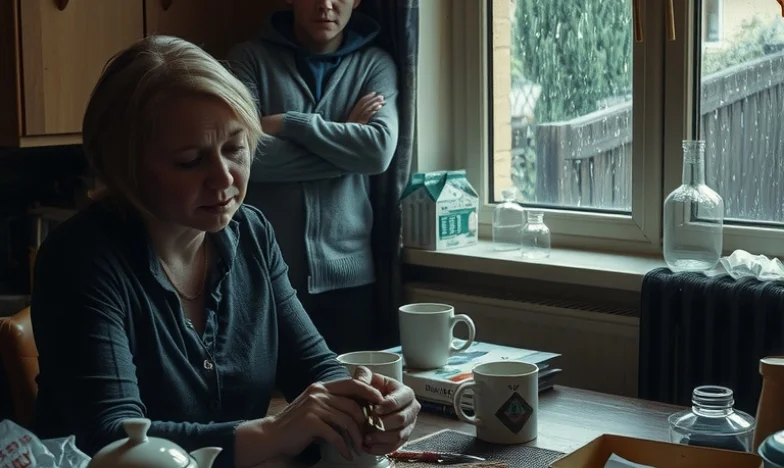
“You can’t be serious, Mum!” Michael’s voice echoed down the narrow hallway, his face flushed with disbelief and anger. Katie stood behind him, arms folded, her lips pressed into a thin, trembling line. I could feel my own hands shaking as I clutched the keys, the metal biting into my palm. The rain battered the windows of our small semi in Croydon, and the air inside was thick with the kind of tension that makes your chest ache.
Three years ago, when Michael and Katie turned up at my door with their battered suitcases and hopeful smiles, I never imagined it would come to this. “Just until we get back on our feet, Mum,” Michael had said, his eyes pleading. Katie nodded, her voice soft, “We’ll help out, pay our way, and be gone before you know it.”
At first, I was glad for the company. The house had felt too quiet since my husband, Peter, passed away. I’d spent months rattling around, talking to the kettle and the cat, missing the sound of laughter and footsteps. But as the weeks turned into months, and the months into years, the promise of a temporary arrangement faded into a daily grind of unwashed dishes, unpaid bills, and simmering resentment.
I tried to be patient. I really did. I told myself they were struggling, that the job market was tough, that London rents were impossible. But every time I came home from my shift at the hospital to find Michael sprawled on the sofa, PlayStation controller in hand, or Katie scrolling endlessly on her phone, my patience wore thinner. The arguments started small—about chores, about money, about respect. But they grew, like mould in the corners, until every conversation felt like a battle.
One evening, after another row about the electricity bill, I found myself sobbing in the kitchen, clutching a mug of cold tea. My friend Linda called, her voice warm and steady. “You’re not their maid, love. They’re adults. Maybe it’s time you let them be.”
But how do you throw your own child out? How do you look into the eyes of the boy you raised, the boy who used to run to you with scraped knees and wild stories, and tell him he’s no longer welcome?
The final straw came last week. I’d come home early, hoping to surprise them with a takeaway curry. Instead, I found Katie in tears, Michael shouting, the living room a mess of takeaway boxes and dirty laundry. “We’re doing our best!” Michael yelled when he saw me, but I’d heard it all before. Something inside me snapped.
That night, I lay awake, staring at the ceiling, listening to the rain. I thought about all the times I’d bailed Michael out—paying his phone bill, covering his overdraft, smoothing things over with his father. I thought about how tired I was, how small my world had become, tiptoeing around their moods, waiting for things to get better.
The next morning, I made them tea and sat them down at the kitchen table. My voice shook, but I forced myself to speak. “I love you both, but this can’t go on. You need to find your own place. I want my home back.”
Michael stared at me, stunned. Katie’s eyes filled with tears. “But we can’t afford it, not yet,” she whispered. I shook my head. “You’ll never be able to if you don’t try. I’ve enabled you for too long. It’s time.”
The days that followed were a blur of slammed doors, angry words, and silent meals. Michael accused me of abandoning him, of choosing my own comfort over his needs. Katie barely spoke to me, her disappointment radiating from every glance. I tried to explain, to make them see that I wasn’t doing this out of cruelty, but out of love. But they wouldn’t listen.
On the morning they left, the house felt colder than ever. Michael refused to hug me goodbye. Katie mumbled a thank you and disappeared into the drizzle, dragging her suitcase behind her. I watched them go, my heart breaking and swelling with relief all at once.
Now, the silence is back. I wander from room to room, picking up stray socks and empty mugs, wondering if I did the right thing. Linda says I was brave, that I’ve given them the push they needed. But at night, when the house creaks and the wind rattles the windows, I wonder if I’ve failed as a mother.
I see Michael’s posts on Facebook—photos of their tiny flat in Streatham, complaints about the dodgy boiler and the noisy neighbours. Katie’s started a new job at a café. They’re managing, somehow. I want to reach out, to offer help, but I stop myself. They need to do this on their own.
Sometimes, I catch myself setting three places at the table, or listening for the sound of their laughter. The loneliness is sharp, but there’s a strange peace in it, too. I can breathe again. I can listen to the radio without headphones, cook what I like, leave the washing up until morning if I want.
But the guilt lingers. Did I push them too hard? Was I selfish, or finally strong enough to let go? I think about all the mothers I know—Linda, who still does her grown-up son’s laundry; Margaret, whose daughter moved back in after her divorce. We all want to protect our children, to keep them safe. But maybe, sometimes, the kindest thing we can do is let them fall, let them struggle, let them find their own way.
I don’t know if Michael will ever forgive me. I don’t know if I’ll ever forgive myself. But I do know this: love isn’t always soft. Sometimes it’s the hardest thing in the world.
Would you have done the same? Or am I just another selfish mother, putting my own needs first at last?