A Night of Secrets: What the Police Found in Emily’s House

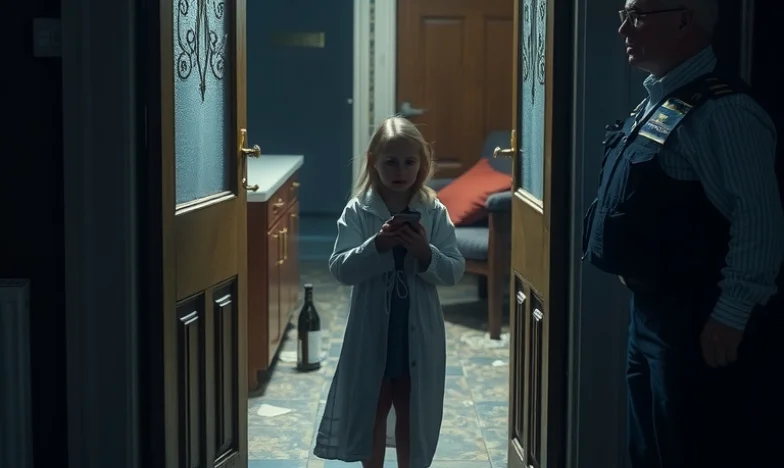
The knock was sharp, urgent—three raps that echoed through the terraced house and made my heart leap into my throat. I’d been lying awake, staring at the ceiling, listening to the wind rattle the loose pane in my bedroom window. Mum was out—again—and the house was so quiet I could hear the pipes groan. When the knock came, I froze, clutching my phone, thumb hovering over the emergency call button. But then I saw the blue lights flickering through the frosted glass of the front door, and I knew it wasn’t just some drunk stumbling home from the pub.
I crept down the stairs, every step creaking under my weight. My dressing gown was too thin for the chill, but I didn’t dare go back for a jumper. The police were here, and I was alone. I hesitated at the door, peering through the letterbox. Two officers stood outside, their faces pale in the streetlight. One was a woman, her hair scraped back tight, eyes scanning the street. The other was a man, tall and broad, shifting from foot to foot as if he’d rather be anywhere else.
I opened the door a crack, my voice barely a whisper. ‘Can I help you?’
‘Emily Carter?’ the woman asked, her tone gentle but firm. ‘We need to speak to your mum. Is she home?’
I shook my head. ‘She’s… she’s not here. She’s at work. Or… I don’t know where she is.’
The officers exchanged a look. The man knelt down, trying to meet my eyes. ‘Emily, is everything all right in the house? Are you alone?’
I nodded, but my hands were shaking. I didn’t want them to come in. I didn’t want anyone to see the mess, the empty bottles on the kitchen table, the pile of unopened letters on the mat. But the woman stepped forward, her voice soft. ‘Emily, it’s very late. Can we come in and have a quick chat? Just to make sure you’re safe.’
I hesitated, but something in her eyes made me step aside. They walked in, their radios crackling softly. The man glanced around, taking in the peeling wallpaper, the threadbare carpet, the cold air that seeped through the gaps in the window frames. The woman crouched down beside me. ‘How old are you, Emily?’
‘Twelve,’ I whispered.
‘And you’re here on your own?’
I nodded again. My throat felt tight, like I’d swallowed a stone. I wanted to tell them I was fine, that I could take care of myself, that Mum would be back soon. But the words wouldn’t come.
The man wandered into the kitchen, his footsteps muffled by the faded lino. I heard him sigh, heard the clink of glass as he moved the bottles. The woman stayed with me, her hand resting lightly on my shoulder. ‘Emily, do you know where your mum is tonight?’
I shook my head. ‘She said she was going to the shop. But that was hours ago.’
The woman’s eyes softened. ‘Does this happen a lot?’
I didn’t answer. I didn’t have to. The silence said enough.
The man came back, holding a letter. ‘Emily, do you know what this is?’
I glanced at the envelope. It was from the council, the red stamp glaring up at me. I shrugged. ‘We get a lot of those.’
He exchanged another look with the woman. She squeezed my shoulder. ‘Emily, do you have anyone you can call? A neighbour, a family member?’
I shook my head. Dad was gone—he’d left when I was six, and I hadn’t seen him since. Gran had died last year. There was no one.
The woman sighed. ‘We’re going to have to stay with you until your mum comes home. Is that all right?’
I nodded, but my stomach twisted. I didn’t want them here. I didn’t want anyone to see how we lived. But I didn’t have a choice.
They settled in the living room, the man perched awkwardly on the edge of the sofa, the woman sitting beside me. She asked me questions—about school, about my friends, about what I liked to do. I answered as best I could, but my mind kept drifting to Mum. Where was she? Would she be angry when she saw the police? Would she blame me?
Time crawled by. The clock on the mantelpiece ticked louder and louder, each second stretching out. The man made a cup of tea, rummaging through the cupboards for a clean mug. He found one, eventually, and offered it to me. I took it, wrapping my hands around the warmth, but I didn’t drink.
It was nearly four in the morning when the front door banged open. Mum stumbled in, her hair wild, her eyes red. She froze when she saw the officers, her face draining of colour. ‘What’s going on?’ she demanded, her voice slurred.
The woman stood up, her tone calm but firm. ‘Mrs Carter, we need to talk to you about Emily. She’s been here alone all night.’
Mum glared at me, her eyes narrowing. ‘I was only gone for a bit. She’s fine. She can look after herself.’
The man shook his head. ‘It’s not safe for a child to be left alone, especially at this hour. We need to make sure Emily’s all right.’
Mum scoffed, waving her hand. ‘She’s tougher than she looks. Aren’t you, Em?’
I shrank back, wishing I could disappear. The woman knelt beside me again. ‘Emily, do you feel safe at home?’
I didn’t know what to say. I wanted to say yes, to make it all go away. But I couldn’t lie. Not anymore. I shook my head, tears stinging my eyes.
Mum swore, turning away. ‘This is ridiculous. She’s just being dramatic. She’s always been a little liar.’
The man’s voice was gentle but unyielding. ‘Mrs Carter, we’re going to have to call social services. Emily can’t stay here tonight.’
Mum spun around, her face twisted with anger. ‘You can’t do that! She’s my daughter!’
The woman stood, her voice steady. ‘Our priority is Emily’s safety. We’ll make sure she’s looked after.’
I watched as Mum’s anger crumbled, her shoulders sagging. She looked so small, so lost. For a moment, I almost felt sorry for her. But then I remembered all the nights I’d spent alone, all the times I’d gone to bed hungry, all the times I’d wished for someone—anyone—to notice.
The officers called social services. A woman arrived, her smile warm but tired. She knelt beside me, introducing herself as Claire. ‘You’re very brave, Emily,’ she said. ‘We’re going to take you somewhere safe, just for tonight. Is that all right?’
I nodded, my heart pounding. I packed a bag—just a few clothes, my favourite book, the teddy bear Gran had given me. Mum didn’t say goodbye. She just sat on the sofa, staring at the floor, her hands shaking.
Claire led me outside. The sky was beginning to lighten, the first hints of dawn creeping over the rooftops. I climbed into the car, clutching my bag to my chest. As we drove away, I looked back at the house—the only home I’d ever known, now just another secret on a quiet street.
At the foster home, everything was strange. The walls were painted bright colours, the kitchen smelled of toast and tea. The other children watched me with curious eyes, but no one spoke. I lay awake that night, listening to the unfamiliar sounds—the creak of the stairs, the distant hum of traffic. I wondered if Mum missed me, if she even noticed I was gone.
The days blurred together. Social workers came and went, asking questions, filling out forms. I went to a new school, sat at the back of the class, kept my head down. The teachers were kind, but I didn’t trust them. I didn’t trust anyone.
One afternoon, Claire came to visit. She brought biscuits and sat with me in the garden. ‘How are you feeling, Emily?’
I shrugged. ‘I don’t know. Everything’s different.’
She nodded. ‘Change is hard. But you’re safe now. That’s what matters.’
I wanted to believe her. I wanted to feel safe. But every night, I dreamed of Mum—her voice, her laughter, the way she used to tuck me in when I was little. I missed her, even though she’d let me down.
A few weeks later, I had to go to court. The judge was kind, her voice gentle as she asked me questions. I told the truth—about the nights alone, the empty cupboards, the shouting. Mum cried, but I couldn’t look at her. I felt like I was betraying her, but I knew I had to speak up.
Afterwards, Claire hugged me. ‘You did the right thing, Emily. You’re very brave.’
I nodded, but I didn’t feel brave. I felt empty.
Months passed. I started to settle in at the foster home. I made friends, joined the school choir, learned to laugh again. But sometimes, late at night, I lay awake and wondered—what if things had been different? What if Mum had come home that night, just a little earlier? What if I’d lied to the police, said everything was fine?
Would anything have changed? Or was this always how it was meant to be?
Sometimes I wonder—how many other kids are lying awake right now, hoping someone will knock on their door and finally see them? Would you have noticed, if it was your street, your neighbour, your child?