An Imperfect Father

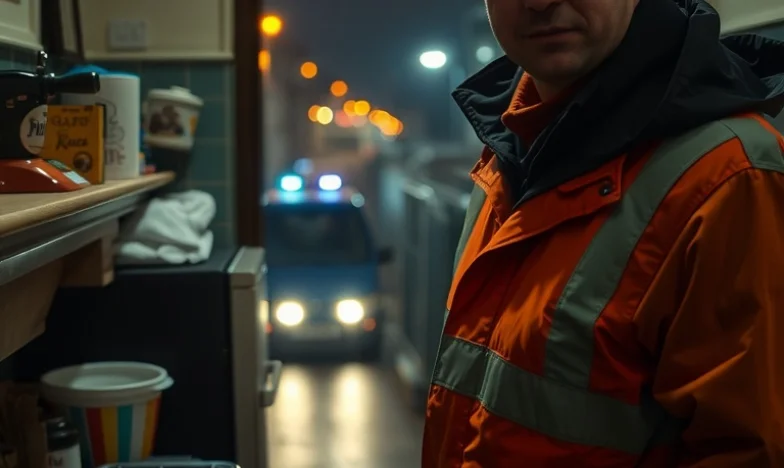
“You’re late again, Dad.” My voice trembled, not with anger, but with the familiar ache of disappointment. The clock on the mantelpiece chimed seven, echoing through the cramped living room of our council flat in Salford. Rain battered the window, blurring the orange glow of the streetlights outside. Dad stood in the doorway, his hair plastered to his forehead, the collar of his hi-vis jacket stained with something I didn’t want to identify. He looked at me, eyes bloodshot, and for a moment I saw the man he used to be – before the drink, before the shouting, before Mum left.
He dropped his keys onto the table with a clatter. “Work ran over, Jamie. I told you.”
I wanted to believe him. God, I wanted to. But the sharp tang of whisky clung to him like a second skin. I turned away, busying myself with the half-burnt shepherd’s pie I’d made for dinner. The silence between us was thick, broken only by the hum of the fridge and the distant wail of sirens.
Growing up, Dad was my hero. He’d take me to Old Trafford on Saturdays, his laughter booming as we cheered United on from the stands. He taught me how to ride a bike, how to tie my laces, how to stand up for myself when the other kids called me names for my second-hand clothes. But somewhere along the way, after the factory closed and the bills piled up, something in him snapped. The bottle became his best mate, and I became an afterthought.
Mum tried to hold us together. She worked double shifts at the Tesco Express, her hands raw from stacking shelves. I remember her voice, soft but tired, as she tucked me in at night: “He’s not a bad man, Jamie. He’s just… lost.” But even she couldn’t weather the storm forever. One morning, she packed her bags and left, her eyes rimmed red, promising to call. She never did.
After that, it was just me and Dad. Or rather, me and the shell of the man he used to be. I learned to fend for myself – cooking, cleaning, dodging his moods. Some nights he’d stumble in, singing old Oasis tunes, and we’d laugh until our sides hurt. Other nights, he’d rage at the world, smashing plates and cursing the government, blaming everyone but himself for our misery.
School was an escape, but even there I couldn’t outrun the whispers. “Jamie’s dad’s a pisshead,” they’d sneer. I’d clench my fists, jaw tight, and walk away. I hated him for making me a target. I hated myself for still loving him.
One evening, after a particularly bad row, I found him slumped on the sofa, tears streaming down his face. “I’m sorry, son,” he slurred. “I never wanted this for you.”
I knelt beside him, my own tears threatening to spill. “Then why don’t you stop?”
He looked at me, truly looked at me, and for the first time I saw the depth of his pain. “I don’t know how.”
That night, I lay awake, listening to his snores through the thin walls. I thought about calling Mum, about running away, about anything that might make the ache in my chest go away. But I stayed. Because despite everything, he was still my dad.
The years blurred together, each one marked by broken promises and fleeting moments of hope. He’d swear off the drink, make it a week, maybe two, before slipping back into old habits. I stopped inviting friends over, stopped dreaming of a normal life. Instead, I poured myself into my studies, determined to carve out a future that didn’t revolve around his chaos.
On my eighteenth birthday, he surprised me with a battered guitar. “Thought you might like to learn,” he said, his voice gruff. I wanted to throw it back at him, to scream that I didn’t want his gifts, I wanted him. But I bit my tongue, thanked him, and retreated to my room. That night, I strummed the strings until my fingers bled, the music drowning out the sound of his drunken singing in the next room.
University was my salvation. I got a place at Manchester, packed my bags, and left without looking back. The freedom was intoxicating, but the guilt gnawed at me. I called him every Sunday, our conversations stilted and awkward. Sometimes he was sober, sometimes not. But I kept calling, because I couldn’t bear the thought of him alone.
One winter night, I got the call I’d been dreading. He’d been found unconscious in the park, hypothermic and reeking of booze. I rushed to the hospital, my heart pounding. He looked so small in the bed, tubes snaking from his arms, his skin pale and waxy.
“Jamie,” he croaked, his voice barely a whisper.
“I’m here, Dad.”
He reached for my hand, his grip weak. “I’m sorry. For everything.”
Tears spilled down my cheeks. “I know.”
He squeezed my hand, a ghost of a smile on his lips. “You’re a good lad. Better than I deserve.”
He pulled through, but the scare shook him. For the first time, he agreed to rehab. I visited him every week, watching as the fog slowly lifted from his eyes. We talked – really talked – about the past, about Mum, about the future. It wasn’t easy. The wounds ran deep, and forgiveness didn’t come overnight. But we tried.
Now, years later, I sit in my own flat, the city lights twinkling outside. Dad’s been sober for three years. We see each other every Sunday, sharing tea and awkward silences. Sometimes we talk about football, sometimes about nothing at all. But we’re trying. And maybe that’s enough.
I still wonder, late at night, if I’ll ever stop feeling like that scared little boy waiting for his dad to come home. Can you ever truly forgive someone for breaking your heart, even if they’re trying to mend it? Or do some scars never really fade?