When Blood Isn’t Thicker Than Justice: A British Family’s Betrayal

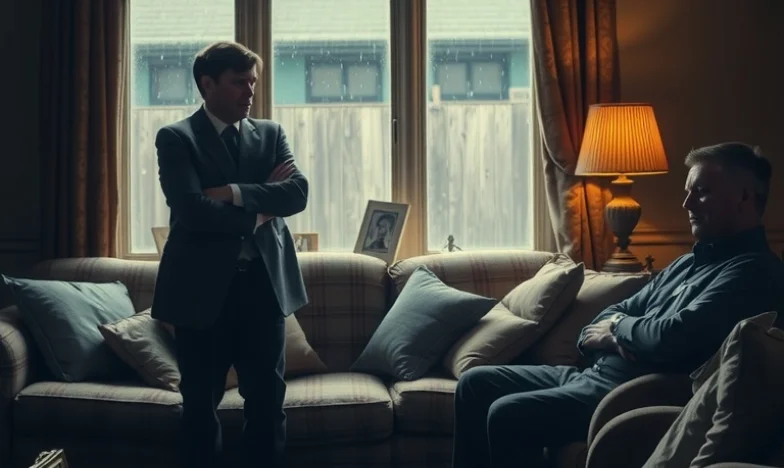
“You can’t be serious, Mum. You can’t just give the house to Emily and leave us with nothing.” My husband, Tom, stood in the middle of his parents’ living room, his voice trembling, eyes darting between his mother and father. I sat on the edge of the faded floral sofa, my hands clenched so tightly my knuckles were white, my heart pounding in my chest. The air was thick with the scent of roast beef and disappointment.
Tom’s mother, Margaret, folded her arms, her lips pressed into a thin line. “It’s our decision, Tom. Emily needs the house more than you do. She’s still finding her feet, and you two are doing just fine.”
I wanted to scream. Doing just fine? We’d scraped and saved for years, living in a cramped two-bed flat in Croydon, while Emily, the golden child, flitted from one failed job to another, always landing softly in her parents’ arms. I’d never asked for anything from them. I’d built my life on self-reliance, on the belief that hard work would be rewarded, that fairness mattered. But in that moment, I realised how naïve I’d been.
Tom’s father, Alan, cleared his throat. “It’s not about favourites. It’s about need. You’ve always been independent, love,” he said, glancing at me, as if that was a compliment. “Emily’s had a rough time.”
I bit back the urge to laugh. Emily’s rough time was mostly of her own making – a string of bad boyfriends, a habit of quitting jobs when they got too hard, and a knack for turning every family gathering into a drama. But she was their youngest, their darling, and apparently, that counted for more than anything else.
After that day, I stopped going to Sunday lunches. I stopped answering Margaret’s texts, the ones that always ended with a passive-aggressive “Hope you’re well.” Tom tried to keep the peace, but I could see the hurt in his eyes, the way he avoided talking about his parents, the way he hesitated before calling his sister. Our home became quieter, the silences stretching longer, filled with things we couldn’t say.
One evening, as rain lashed against the window, Tom sat at the kitchen table, staring at his phone. “Maybe we should just let it go,” he said quietly. “It’s only a house.”
I slammed the cupboard door harder than I meant to. “It’s not just a house, Tom. It’s about respect. It’s about being treated like we matter.”
He looked at me, his eyes tired. “They’re my parents. I don’t want to lose them.”
“And what about us?” I whispered. “Don’t we deserve better?”
The argument hung between us, unresolved. I knew Tom was torn, caught between loyalty to his family and the injustice of their decision. I tried to be understanding, but resentment gnawed at me, growing with every passing week.
Months went by. Emily moved into the house, posting photos on Facebook of her redecorated bedroom, her new puppy, her latest boyfriend. Margaret and Alan visited her every weekend, bringing casseroles and bags of shopping. Tom’s phone calls to them became less frequent, shorter, filled with awkward pauses. I watched him withdraw, his laughter fading, his shoulders slumping under the weight of disappointment.
One night, after a particularly tense dinner, Tom finally broke. “I feel like I don’t belong anywhere anymore,” he said, his voice cracking. “My parents chose her. They always choose her.”
I reached for his hand, but he pulled away. “Maybe if you tried harder with them, things would be different.”
The words stung. I’d tried. I’d bitten my tongue at every slight, smiled through every backhanded compliment, offered help that was always politely refused. But I was never enough. Not for them. Maybe not for Tom, either.
The next morning, I packed a bag and left for my sister’s in Brighton. I needed space, time to think. As the train rattled along the coast, I stared out at the grey sea, wondering how it had come to this. Was I being petty? Was I letting pride get in the way of family? Or was I finally standing up for myself, refusing to accept crumbs when I deserved more?
My sister, Lucy, welcomed me with open arms. Over mugs of tea and slices of Victoria sponge, I poured out the whole story. She listened, nodding, her face a mixture of sympathy and anger.
“That’s not right, love,” she said. “You’ve always been the strong one. But even you deserve to be treated fairly.”
I stayed in Brighton for a week, walking along the pebbled beach, letting the wind whip away my frustration. I thought about my own parents, long gone, and how they’d always tried to be fair, even when it was hard. I wondered if Margaret and Alan ever thought about what their decision had cost them – not just a relationship with me, but with their own son.
When I returned to Croydon, Tom was waiting. He looked exhausted, his eyes red-rimmed. “I’m sorry,” he said. “I shouldn’t have blamed you. This isn’t your fault.”
We talked for hours, finally saying all the things we’d kept bottled up. Tom admitted he felt betrayed, not just by his parents, but by the idea that family was supposed to mean unconditional love. I told him I was tired of pretending, tired of swallowing my hurt to keep the peace.
We decided, together, to step back. No more Sunday lunches, no more forced conversations. If Margaret and Alan wanted to see us, they’d have to make the effort. If Emily wanted a relationship, she’d have to reach out. We focused on our own little family, on rebuilding trust and laughter in our home.
It wasn’t easy. There were days when I missed the way things used to be, when I longed for the comfort of belonging. But there were also days when I felt lighter, freer, no longer weighed down by the burden of other people’s expectations.
A year later, Margaret called. She sounded older, her voice softer. “We miss you,” she said. “We miss Tom. Maybe we made a mistake.”
I didn’t know what to say. Part of me wanted to forgive, to move on. But another part of me remembered the pain, the feeling of being invisible, unimportant.
Tom and I talked it over. We agreed to meet them for coffee, to see if bridges could be rebuilt. The conversation was awkward, stilted, but honest. Margaret apologised, tears in her eyes. Alan looked ashamed. Emily didn’t come.
We’re not the same family we once were. The wounds are still there, but they’re healing, slowly. I don’t know if I’ll ever fully trust them again, but I’m learning that sometimes, justice matters more than blood. Sometimes, you have to choose yourself, even if it means walking away from those who should love you most.
I still wonder, late at night, staring at the ceiling: Is it really so wrong to expect fairness from family? Or is that just another childish hope we’re supposed to outgrow?