Hatred Without Borders

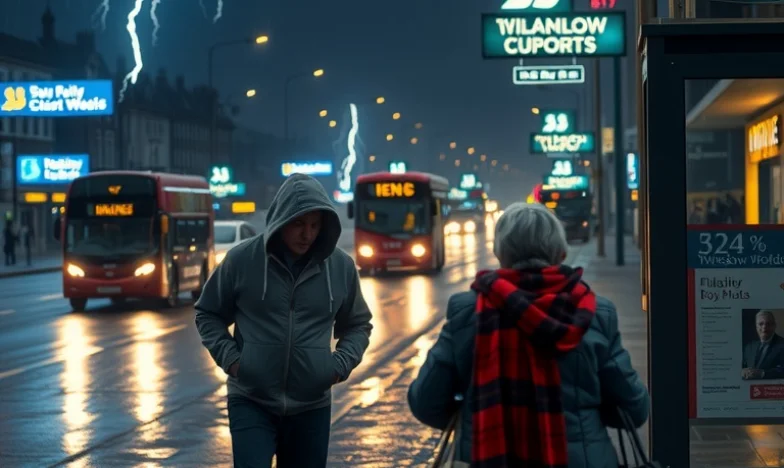
The first crack of thunder split the sky just as I turned onto Wilmslow Road, the rain already pelting down hard enough to soak through my jacket. I pulled my hood tighter, cursing under my breath. My car was still in the bloody garage, and the thought of squeezing onto a packed Stagecoach bus with everyone else’s elbows in my ribs was unbearable. So I walked, letting the rain wash over me, hoping it might cool the anger burning in my chest.
I couldn’t get my brother’s words out of my head. “You’re just like Dad, you know that? Always thinking you’re better than everyone else.” His voice had been sharp, almost trembling with rage, and I’d snapped back without thinking. “At least I’m not a coward, Tom. At least I don’t run away when things get tough.”
We’d been standing in Mum’s kitchen, the smell of her shepherd’s pie still lingering in the air, the telly blaring some mindless quiz show in the background. Mum had tried to step between us, her hands shaking, but Tom just stormed out, slamming the door so hard the plates rattled in the cupboard. That was three weeks ago. He hadn’t answered my calls since.
The rain grew heavier, drumming on the pavement, and I ducked into the shelter of a bus stop. An old woman in a tartan scarf eyed me warily, clutching her shopping bag to her chest. I nodded, trying to look harmless, but she turned away, staring out at the traffic. I wondered if she could sense the anger radiating off me, the way it seemed to poison everything I touched lately.
I thought about texting Tom again, but what would I even say? Sorry I called you a coward? Sorry I brought up Dad? The truth was, I wasn’t sorry. Not really. He’d always been the golden boy, the one who could do no wrong in Mum’s eyes. I was the one who stayed behind, who looked after her when Dad left, who paid the bills and fixed the leaky taps. Tom just breezed in for Sunday lunch, cracked a few jokes, and left again, never sticking around long enough to see the cracks in the walls or the worry in Mum’s eyes.
A bus hissed to a stop in front of me, doors swinging open. The old woman shuffled on, and I almost followed, but something held me back. I didn’t want to be trapped in a metal box with strangers, not tonight. I wanted to walk, to feel the rain, to let it soak through to my bones.
I set off again, my trainers squelching with every step. The city felt different in the rain—quieter, somehow, as if everyone had retreated indoors, leaving the streets to the ghosts and the desperate. I passed the off-licence where Tom and I used to buy cheap cider as teenagers, sneaking it into Platt Fields Park and daring each other to talk to girls. I remembered the way we’d laughed, the way we’d sworn we’d always have each other’s backs, no matter what.
But things change. People change. Dad left, and Tom left soon after, off to London for a job in finance, leaving me to pick up the pieces. I resented him for it, even as I told myself I understood. Who wouldn’t want to escape this city, with its endless drizzle and boarded-up shops? But I stayed, and every time I saw Mum’s tired face, I felt the weight of it pressing down on me.
My phone buzzed in my pocket, jolting me out of my thoughts. For a moment, hope flared—maybe it was Tom, finally ready to talk. But it was just a message from my mate Liam: “Pub later?” I ignored it. I wasn’t in the mood for pints and banter. Not tonight.
I turned onto our street, the familiar row of terraced houses looming out of the gloom. Mum’s curtains were drawn, a faint glow spilling out onto the wet pavement. I hesitated outside, wiping rain from my face. I didn’t want her to see me like this—angry, soaked, defeated. But I had nowhere else to go.
Inside, the house was warm and smelled faintly of lavender. Mum was in the lounge, knitting something pink and fluffy, her glasses perched on the end of her nose. She looked up as I came in, her eyes softening. “You’re drenched, love. Here, let me get you a towel.”
I shrugged off my jacket, trying to hide the tremor in my hands. “It’s fine, Mum. I’ll sort myself.”
She watched me for a moment, then patted the seat beside her. “Come sit down. You look like you’ve seen a ghost.”
I sat, staring at the flickering flames in the electric fire. For a while, neither of us spoke. The silence stretched, heavy and uncomfortable.
Finally, Mum broke it. “You heard from Tom?”
I shook my head, jaw clenched. “No. He’s probably too busy with his fancy job.”
She sighed, setting her knitting aside. “You two need to sort this out. You’re brothers. Family’s all we’ve got.”
I felt the old anger flare up again. “He doesn’t care, Mum. He never has. He just swans in when it suits him and leaves the rest to me.”
“That’s not fair, Jamie,” she said quietly. “He’s got his own life. Doesn’t mean he doesn’t care.”
I wanted to argue, to list all the ways Tom had let us down, but the words stuck in my throat. Instead, I stared at my hands, watching a drop of rainwater slide down my wrist.
Mum reached over, squeezing my shoulder. “You’re so much like your father sometimes. Stubborn as a mule.”
I flinched at the mention of Dad. “Don’t say that.”
She smiled sadly. “He wasn’t all bad, you know. He just… couldn’t cope. Some people aren’t built for sticking around.”
I didn’t reply. I didn’t want to think about Dad, or Tom, or the way our family seemed to be crumbling around us.
Later, after Mum had gone to bed, I sat alone in the kitchen, nursing a mug of tea. The rain had eased, but the storm inside me hadn’t. I scrolled through old photos on my phone—me and Tom at the seaside, grinning with ice creams; the two of us at Dad’s funeral, faces drawn and pale. I wondered when things had started to go wrong. Was it when Dad left? Or had the seeds of resentment always been there, waiting to bloom?
I thought about calling Tom again, but fear held me back. What if he didn’t answer? What if he did, and we just ended up shouting at each other again? I wanted to forgive him, to let go of the anger, but it felt like a betrayal—of myself, of Mum, of all the years I’d spent holding things together.
The next morning, I woke to a text from Tom. Just two words: “Can we talk?”
My heart hammered in my chest as I typed back, “Yeah. When?”
He replied almost instantly. “Tonight. Yours?”
All day at work, I was distracted, snapping at colleagues, making stupid mistakes. I kept replaying the argument in my head, trying to find the moment when I could have stopped it, when I could have chosen kindness instead of anger.
That evening, I paced the lounge, checking my watch every few minutes. When the doorbell finally rang, I nearly jumped out of my skin.
Tom stood on the doorstep, looking older than I remembered, his hair thinning at the temples. He gave me a tentative smile. “Alright?”
I nodded, stepping aside to let him in. We sat in the kitchen, mugs of tea between us, the silence thick and awkward.
Finally, Tom spoke. “I’m sorry, Jamie. For what I said. For leaving you to deal with everything.”
I stared at him, unsure what to say. Part of me wanted to lash out, to make him feel the hurt I’d carried for so long. But another part—the part that remembered cider in the park and shared secrets—just wanted my brother back.
“I’m sorry too,” I said quietly. “I shouldn’t have called you a coward.”
He looked down, fiddling with his mug. “I was scared. After Dad left, I didn’t know how to help. So I ran. It was easier.”
We sat in silence, the weight of years pressing down on us. Finally, I reached across the table, resting my hand on his. “We can’t change the past, Tom. But maybe we can try to do better.”
He nodded, eyes shining with unshed tears. “Yeah. I’d like that.”
Later, after he’d gone, I sat alone in the quiet house, listening to the rain start up again outside. I thought about hatred—how it can seep into your bones, how it can poison everything if you let it. But maybe, just maybe, it doesn’t have to last forever.
Is it really so hard to forgive? Or is it just that we’re afraid of what comes after—the emptiness, the vulnerability, the hope?