My Husband Cried When I Told Him the Baby Might Not Be His — I Said, ‘At Least It’s Not Yours’

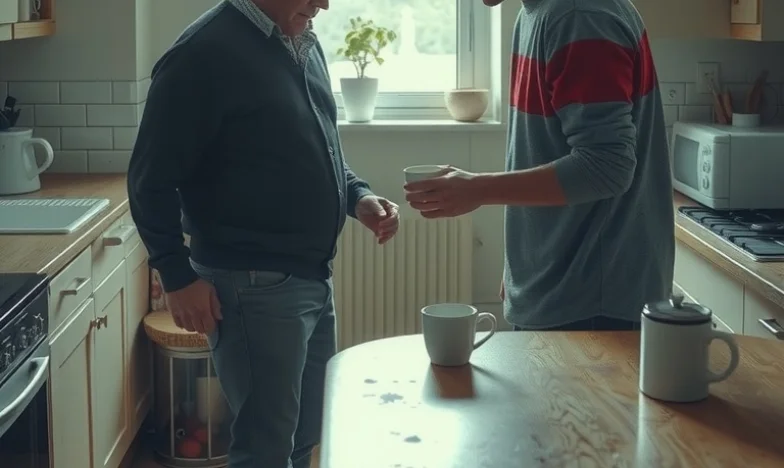
“You’re not serious, are you?” Tom’s voice trembled, his hands gripping the chipped mug so tightly I thought it might shatter. The kitchen was cold, the kind of damp chill that seeps into your bones in a London flat, but I was sweating, heart pounding so loud I could barely hear him. I stared at the faded linoleum, unable to meet his eyes.
“I’m sorry, Tom. I just… I can’t lie anymore.” My voice was barely above a whisper, but the words hung in the air like smoke.
He set the mug down, sloshing tea onto the table. “So what are you saying, exactly?”
I swallowed, my throat dry. “I’m saying… there’s a chance the baby isn’t yours.”
The silence that followed was suffocating. I could hear the distant hum of traffic outside, the neighbour’s telly through the thin walls, but in our kitchen, it was as if the world had stopped. Tom’s face crumpled, and for a moment, I thought he might shout, or storm out, or throw something. Instead, he just… cried. Silent, shaking sobs, tears streaming down his cheeks. I’d never seen him cry before, not even when his dad died.
I wanted to reach out, to comfort him, but my hands felt glued to my sides. I’d rehearsed this moment a hundred times in my head, but nothing prepared me for the reality of it.
He finally looked up, eyes red and raw. “How could you?”
I bit my lip, fighting back my own tears. “You knew what I was like when we met, Tom. I never pretended to be perfect.”
“That’s not the point, Ellie! We’re married. I thought—” He broke off, voice cracking. “I thought we were happy.”
I shook my head, frustration bubbling up. “Happy? You work late every night, you barely talk to me anymore. I felt invisible, Tom. I made a mistake, but at least I had the decency to tell you.”
He stared at me, disbelief etched on his face. “Decency? You call this decency?”
I stood up, anger flaring. “At least it’s not yours!” The words burst out before I could stop them, echoing in the small kitchen. I saw the hurt flash in his eyes, and instantly regretted it, but I couldn’t take it back.
He pushed his chair back, standing so abruptly it scraped against the floor. “I need to get out of here.”
He grabbed his coat and keys, slamming the door behind him. I sank back into my chair, head in my hands, the weight of what I’d done crashing over me.
The next few days passed in a blur. Tom didn’t come home that night, or the next. I called his mobile, left messages, but he never answered. I went to work at the charity shop on the high street, pretending everything was normal, but inside I was falling apart. My mum called, asking if I was coming round for Sunday roast, but I made excuses. I couldn’t face her, not with this secret hanging over me.
On the third night, Tom finally came home. He looked exhausted, eyes ringed with dark circles, stubble shadowing his jaw. He didn’t say a word, just went straight to the spare room and shut the door. I lay awake all night, listening to the creaks and groans of the old flat, wishing I could turn back time.
The next morning, I found him in the kitchen, staring out the window at the grey sky. He didn’t look at me as I poured myself a cup of tea.
“Are you going to get a test?” he asked quietly.
I nodded. “If you want. I’ll do whatever you need.”
He finally turned to me, his expression unreadable. “I don’t know what I want.”
We went through the motions for weeks, barely speaking except when necessary. I went to the doctor, arranged for the DNA test. The nurse was kind, but I could see the judgement in her eyes. I wondered how many women had sat in that chair, wishing they could disappear.
At work, I tried to focus on sorting through donations, but my mind kept drifting. I remembered the night it happened — the office Christmas party, too many glasses of cheap prosecco, laughter that turned into something else. I barely remembered his name, just the way he made me feel seen, if only for a moment. I hated myself for it, but I couldn’t change the past.
Tom’s family started to notice something was wrong. His mum called, asking if everything was alright. I lied, said he was just stressed at work. I could hear the doubt in her voice.
The day the results came, I sat on the edge of the bed, envelope trembling in my hands. Tom stood in the doorway, arms crossed, face pale. I opened it, scanning the words, my heart pounding.
“It’s yours,” I whispered, relief flooding through me. I looked up, expecting him to smile, to rush over and hold me, but he just stared, expressionless.
“Doesn’t change what you did,” he said quietly, turning and walking away.
I sat there, clutching the paper, tears streaming down my face. I’d thought the truth would set us free, but all it did was build a wall between us.
The weeks that followed were a blur of awkward silences and forced politeness. We went to counselling, sat in a circle of strangers and talked about trust and forgiveness. I tried to explain how lonely I’d felt, how desperate I was for someone to notice me. Tom listened, but I could see the hurt in his eyes, the way he flinched when I reached for his hand.
One night, after another argument, I found him sitting on the balcony, staring out at the city lights. I sat beside him, pulling my cardigan tighter around me.
“I’m sorry, Tom. I know I hurt you. I wish I could take it back.”
He didn’t look at me. “I just keep thinking… if you could do this once, what’s to stop you doing it again?”
I swallowed, tears prickling my eyes. “I can’t promise I’ll never make mistakes. But I can promise I’ll never lie to you again.”
He sighed, rubbing his eyes. “I want to believe you, Ellie. I really do. But I don’t know if I can.”
We sat in silence, the city humming below us. I thought about all the couples I knew — my sister and her husband, always posting perfect photos on Instagram; my parents, who barely spoke but stayed together out of habit. I wondered if anyone was really happy, or if we were all just pretending.
As my due date approached, Tom became more distant. He went to work early, came home late, barely spoke to me. I tried to prepare for the baby on my own, folding tiny clothes, painting the nursery a soft yellow. My mum came round, fussing over me, but I could see the worry in her eyes.
The night I went into labour, Tom was at work. I called him, voice shaking, and he rushed home, panic etched on his face. He held my hand through the pain, whispered encouragement, tears streaming down his cheeks as our daughter was born. For a moment, it felt like we were a family again, united by the tiny life we’d created.
But as the days passed, the cracks reappeared. Tom was gentle with the baby, but cold with me. I tried to talk to him, to bridge the gap, but he kept me at arm’s length.
One night, as I rocked our daughter to sleep, I looked at Tom standing in the doorway, shadows under his eyes. “Do you hate me?” I asked quietly.
He shook his head, voice barely audible. “I don’t know how to feel, Ellie. I love our daughter. But I don’t know if I can ever trust you again.”
I nodded, tears slipping down my cheeks. “I understand.”
Months passed. We went through the motions, co-parenting, sharing responsibilities, but the intimacy was gone. Friends stopped inviting us to dinner parties, unsure how to act around us. My mum suggested we take a holiday, try to reconnect, but Tom refused.
One evening, after putting our daughter to bed, I sat alone in the living room, staring at the wedding photo on the mantelpiece. We looked so happy, so full of hope. I wondered where it all went wrong. Was it the loneliness? The pressure to be perfect? Or was it something deeper, something broken inside me?
Tom came in, sitting across from me. “I’ve been thinking,” he said quietly. “Maybe we need some time apart. Figure out who we are, what we want.”
I nodded, heart breaking all over again. “If that’s what you need.”
He reached for my hand, squeezing it gently. “I don’t hate you, Ellie. I just… I need to heal.”
As he packed his things, I watched him go, our daughter sleeping peacefully in her cot. I wondered if she’d ever know how close we came to falling apart, how hard we tried to hold on.
Now, as I sit in the quiet flat, I think about everything that’s happened. I wonder if honesty is always the best policy, or if some secrets are better left buried. Did I do the right thing, telling Tom the truth? Or did I destroy the only thing that ever really mattered?
Would you have told the truth, if you were me? Or would you have kept the secret, for the sake of your family?