When Lidia Returned: A Tale of Loss, Fortune, and Forgiveness in London

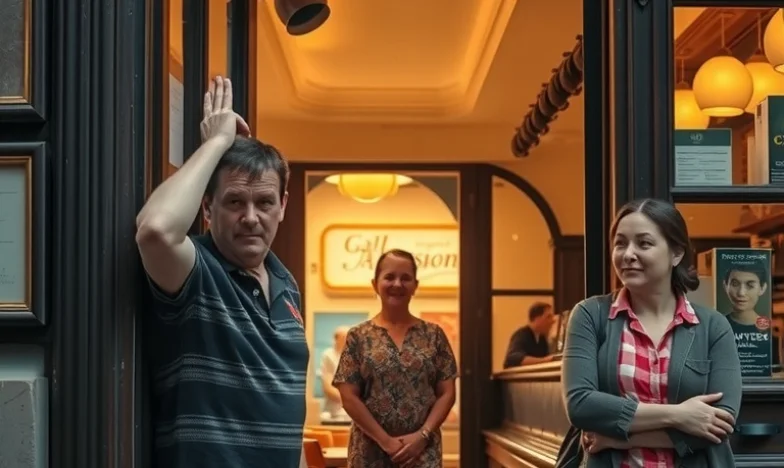
“You’re not welcome here, Lidia.” My voice trembled, but I stood my ground, blocking the doorway of our restaurant as the summer heat shimmered off the pavement outside. The clatter of cutlery and the hum of lunchtime chatter faded into the background as my ex-wife, Lidia, stood before me, her eyes darting between me and our twin daughters, Alice and Bridget, who watched from behind the bar. It had been seven years since she’d walked out, leaving me with two toddlers and a mountain of debt, never knowing that fate would soon turn in our favour.
I remember that day as if it were yesterday. Lidia had packed her bags in the dead of night, her voice cold and final. “I can’t do this anymore, Tom. I need more than this life.” She didn’t look back, not even when Alice cried for her in the hallway, clutching her favourite bear. I was left to pick up the pieces, to dry their tears and promise them that one day, things would be better. I never imagined that day would come in the form of a letter from a solicitor, informing me that a distant cousin—some eccentric old lord in the Cotswolds—had left me a fortune. Not just a bit of money, but enough to buy our freedom, our future, and, eventually, this restaurant in the heart of Soho.
Alice and Bridget grew up fast, forced to become each other’s best friend and confidante. We worked hard, the three of us, scrimping and saving, dreaming of the day we could open our own place. When the inheritance came, it felt like a miracle. We poured our hearts into the restaurant, every recipe a memory, every table a testament to the life we’d built from the ashes of abandonment. The girls blossomed, their laughter filling the rooms that had once echoed with loneliness.
And then, on the hottest day of the year, Lidia returned. She looked different—older, thinner, her once-glossy hair pulled back in a severe bun. But her eyes were the same: sharp, searching, hungry for something she couldn’t name. She hesitated on the threshold, her hands twisting nervously. “Tom, please. I just want to talk.”
Alice stepped forward, her voice steady but cold. “You left us. Why are you here now?”
Lidia’s gaze flickered to Bridget, who stood silent, arms folded, her jaw set in a way that reminded me painfully of her mother. “I made a mistake,” Lidia whispered. “I thought I could find happiness somewhere else, but I was wrong. I’ve lost everything. I just want to see my girls.”
The restaurant fell silent, the staff and customers sensing the tension. I felt the old anger rising, mingled with a grief I thought I’d buried. “You don’t get to just walk back in,” I said, my voice barely above a whisper. “You missed birthdays, school plays, hospital visits. You missed their lives.”
Lidia’s eyes filled with tears. “I know. And I’ll never forgive myself. But I had to try. I had to see you all again.”
Bridget broke her silence, her voice trembling. “You left us with nothing. Dad worked himself to the bone to keep us afloat. We didn’t even have enough for Christmas presents some years. And now you show up because you heard we’re rich?”
Lidia shook her head, her cheeks flushed. “I didn’t know. I swear. I only found out when I saw the article in the Evening Standard. I just… I wanted to see if you could forgive me.”
The girls exchanged a glance, a silent conversation passing between them. I watched them, my heart aching. They were strong, resilient, but I could see the hurt in their eyes. I wanted to protect them, to shield them from more pain, but I also knew that forgiveness was a gift only they could give.
We sat down at a corner table, the four of us, the air thick with unspoken words. Lidia told her story—how she’d moved to Manchester, tried to start over, but nothing ever felt right. She’d lost her job, her flat, her friends. She was alone, haunted by memories of the family she’d abandoned. “I thought about you every day,” she said, her voice cracking. “I was too ashamed to come back.”
Alice stared at her, her eyes hard. “We needed you. But we survived without you. We built something beautiful. Why should we let you back in now?”
Lidia reached across the table, her hand trembling. “Because I’m still your mum. Because I love you. And because I want to make things right, even if it takes the rest of my life.”
The conversation stretched on, raw and painful. Bridget asked questions I’d never dared to voice: Did you ever think about us? Did you ever regret leaving? Lidia answered honestly, her tears falling unchecked. She didn’t ask for money, or a place to stay. She just wanted a chance—a chance to be part of our lives again, however small.
After she left, the girls and I sat in silence, the weight of the encounter pressing down on us. The restaurant buzzed back to life around us, but I felt changed, as if a door I’d kept locked for years had finally creaked open. That night, as I closed up, Alice lingered by the window, watching the city lights flicker. “Do you think people can really change, Dad?” she asked softly.
I didn’t have an answer. I only knew that forgiveness is never simple, and that the past never truly lets go. But maybe, just maybe, we could find a way to move forward—together, or apart.
So I ask you, if someone who hurt you deeply came back, would you let them in? Or are some wounds too deep to ever truly heal?