I Am Not a Nanny: A Grandmother’s Stand in Manchester

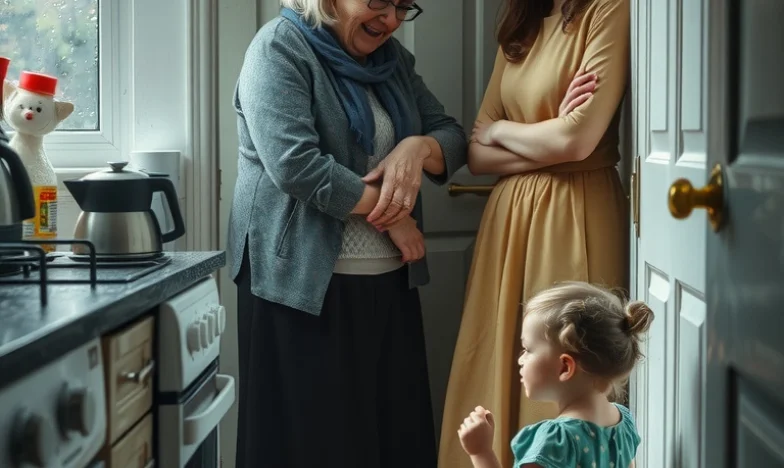
“Mum, you’re being unreasonable!” Emily’s voice echoed through the kitchen, sharp as the clatter of the mug she’d just set down. I stood by the window, hands trembling, watching the drizzle streak down the glass. The kettle whistled, but neither of us moved. My heart pounded in my chest, and I could feel the heat rising to my cheeks.
I never imagined my retirement would come to this: a shouting match with my only daughter, the person I’d once cradled in my arms, now glaring at me as if I were a stranger. “I’m not being unreasonable, Emily,” I replied, my voice barely above a whisper. “I’ve spent my whole life working, raising you, looking after your father until the cancer took him. I just want a bit of peace now.”
Tom, my son-in-law, hovered in the doorway, arms folded, jaw set. “We’re not asking for much, Margaret. Just a bit of help with Sophie. Nursery fees are through the roof, and we’re both working full time.”
I turned to face them, my hands gripping the edge of the counter. “I love Sophie more than anything, but I’m not a nanny. I want to enjoy my retirement, not start all over again.”
Emily’s eyes filled with tears, but there was anger there too. “You know we’re struggling. You know how hard it is for us. Why can’t you just help?”
I wanted to scream that I had helped, over and over. I’d picked Sophie up from nursery, babysat on weekends, cooked dinners, cleaned their flat when Emily was too tired. But it was never enough. Now they wanted me every day, all day, as if my time belonged to them.
The argument had started a week ago, when Emily called me late at night. “Mum, Tom’s hours have changed. We need you to look after Sophie during the week. Just until things settle down.”
I hesitated. “Emily, I’ve got my own plans. I’ve joined the walking group, I’m volunteering at the library, I—”
“Mum, please. We can’t afford nursery anymore. You’re her grandmother.”
I felt the guilt settle in my stomach like a stone. Of course I was her grandmother. But did that mean I had to give up everything for them? I’d spent years putting everyone else first. When John got sick, I left my job to care for him. When Emily was a teenager, I worked double shifts to pay for her school trips, her violin lessons, her dreams. Now, for the first time, I had a little freedom. I wanted to travel, to read, to sit in the park and watch the world go by.
But Emily didn’t see it that way. To her, I was being selfish.
The next day, Tom called. “Margaret, we really need you. Emily’s at her wit’s end. Can’t you just help us out?”
I tried to explain. “Tom, I’m tired. I’m not as young as I used to be. Looking after a toddler is hard work.”
He sighed. “We’re all tired, Margaret. That’s life.”
I hung up, feeling like I’d failed them. The guilt gnawed at me, but so did the resentment. Why was it always me who had to sacrifice?
The following Sunday, they came round for lunch. Sophie ran into my arms, her curls bouncing, her laughter filling the room. For a moment, I forgot the tension. But as soon as she was settled with her toys, Emily started again.
“Mum, we’ve looked at the numbers. If you help us, we can save enough for a deposit on a house. It’s just for a year or two.”
I shook my head. “Emily, I can’t. I’m sorry.”
Her face crumpled. “You don’t care about us. You don’t care about Sophie.”
That hurt more than anything. I loved Sophie with all my heart. But I was tired of being taken for granted.
After they left, I sat in the quiet, the house feeling emptier than ever. I thought about my own mother, how she’d helped me when Emily was born, but she’d never been expected to give up her life for us. Things were different now. Childcare was expensive, jobs were insecure, and families were stretched thin. But did that mean grandparents had to pick up the slack?
A few days later, I bumped into my neighbour, Jean, at the shops. She listened as I poured out my heart. “You’re not alone, love,” she said, patting my arm. “My daughter’s the same. Thinks I’ve got nothing better to do than mind her kids. We’ve earned our rest.”
Her words comforted me, but the guilt lingered. I missed Emily. I missed Sophie. But I couldn’t give up my life, not again.
The next week, Emily stopped calling. Tom sent a few terse texts about picking up Sophie’s things. The silence was deafening. I tried to fill my days with walks, books, volunteering, but my heart ached. Had I done the right thing?
One afternoon, I saw Emily in town, pushing Sophie in her pram. She looked tired, drawn. I wanted to run to her, to hold her, to say I was sorry. But I held back. She glanced at me, her eyes cold, and walked on.
That night, I sat by the window, watching the rain. I thought about all the sacrifices I’d made, all the times I’d put my family first. Was it so wrong to want something for myself?
A week later, there was a knock at the door. I opened it to find Sophie, clutching her favourite teddy, with Emily standing behind her. “Mum,” Emily said, her voice trembling, “can we talk?”
We sat in the kitchen, the air thick with unspoken words. Sophie played quietly at our feet.
“I’m sorry, Mum,” Emily said, tears in her eyes. “I didn’t realise how much we were asking. I just… I’m so tired. I feel like I’m failing at everything.”
I reached across the table, taking her hand. “You’re not failing, love. You’re doing your best. But I need to look after myself too.”
She nodded, wiping her eyes. “I know. I just wish things were easier.”
We sat in silence, the distance between us slowly closing. I knew things wouldn’t be the same, but maybe, just maybe, we could find a new way forward.
Now, as I watch Sophie play in the garden, I wonder: when did being a grandmother become a job, not a joy? How do we balance love and boundaries, family and freedom? Am I selfish for wanting a life of my own, or just human? What would you do in my place?