When the World Collapsed in a Single Night: A British Mother’s Story of Loss and Survival

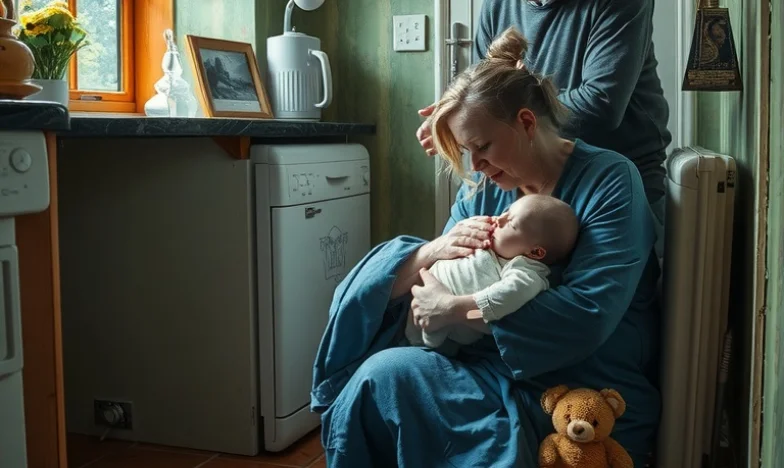
“No, no, please, Matthew, wake up!” My scream echoed through the narrow hallway, bouncing off the faded wallpaper and the family photos that now seemed to mock me with their frozen smiles. Rain battered the windows of our terraced house in Sheffield, the wind howling as if it too mourned with me. My hands shook as I pressed them to my son’s tiny chest, desperate for a heartbeat, a breath, any sign that this was not real. My husband, Tom, stood behind me, his face ashen, his eyes wide with terror and disbelief. Our daughter, Emily, only four, watched from the stairs, clutching her teddy bear, her lips trembling as she whispered, “Mummy, what’s wrong with Matty?”
The ambulance arrived in minutes, but time had already stopped for us. The paramedics moved quickly, their voices calm and professional, but I could see the pity in their eyes. I sat on the cold kitchen floor, my dressing gown soaked with tears and rainwater, as they worked on my baby. Tom paced the hallway, running his hands through his hair, muttering prayers he hadn’t spoken since he was a boy. Emily sobbed quietly, her small body curled up on the bottom step. I wanted to hold her, to comfort her, but I was paralysed, trapped in a nightmare I couldn’t wake from.
When they told us Matthew was gone, the world fell silent. The rain, the sirens, the voices—all faded into a dull, endless ache. I remember Tom collapsing onto the floor, his fists pounding the tiles, screaming in a way I’d never heard before. I remember Emily’s cries, high and sharp, as she begged me to make her brother better. I remember the paramedics’ gentle hands on my shoulders, their soft words that meant nothing. I remember the emptiness, the cold, the sense that I had failed in the most fundamental way a mother can fail.
The days that followed blurred together, each one heavier than the last. Family and friends came and went, their faces drawn with grief and awkward sympathy. My mother brought casseroles and cups of tea, her hands trembling as she tried to fill the silence. Tom’s parents arrived from Manchester, their grief mingling with anger and blame. “How could this happen?” Tom’s mum demanded, her voice sharp. “Wasn’t anyone watching him?”
I wanted to scream at her, to tell her that I had only left the room for a moment, that I had checked on him just minutes before. But the words stuck in my throat, choked by guilt and shame. Tom defended me, his voice hoarse. “It was an accident, Mum. No one’s fault.” But I saw the doubt in his eyes, the way he avoided my gaze, the way he flinched when I touched him.
Emily clung to me, her questions relentless. “When is Matty coming back, Mummy? Did he go to the stars?” I tried to answer, but the words sounded hollow, rehearsed. I read her stories at night, my voice breaking as I stumbled over the happy endings. She started wetting the bed again, waking up screaming for her brother. I held her close, whispering promises I couldn’t keep.
Tom and I drifted apart, our grief pulling us in different directions. He threw himself into work, staying late at the office, coming home long after Emily was asleep. I wandered the house, haunted by memories of Matthew’s laughter, his chubby hands reaching for me, his favourite blue blanket still folded in his cot. I washed his clothes, folded them neatly, unable to let go. I avoided the nursery, the sight of his toys too much to bear.
One evening, as the rain hammered the windows again, Tom came home drunk. He slammed the door, startling Emily, who ran to her room. He glared at me, his eyes red and wild. “You should have been watching him,” he spat. “You were always so distracted, always on your bloody phone.”
His words cut deeper than any knife. I stood there, frozen, unable to defend myself. “I’m sorry,” I whispered, my voice barely audible. “I’m so sorry.”
He broke down then, collapsing onto the sofa, his body wracked with sobs. I sat beside him, unsure if I should touch him, unsure if he wanted me there. We sat in silence, the distance between us growing with every heartbeat.
The funeral was a blur of black coats and white lilies, of whispered condolences and stifled sobs. I stood by the tiny coffin, my hands shaking as I placed Matthew’s favourite toy car inside. Emily clung to my leg, her eyes wide and frightened. Tom stood beside me, his face a mask of grief and anger. I felt like an imposter, like I was watching someone else’s life unravel.
After the funeral, the house felt emptier than ever. Emily’s laughter was quieter, her smiles rarer. Tom barely spoke to me, his grief turning to resentment. My mother urged me to see a counsellor, but I refused. “I just need time,” I insisted. But time only made the pain sharper, the guilt heavier.
One night, unable to sleep, I crept into Matthew’s room. I sat on the floor, clutching his blanket, rocking back and forth as silent tears streamed down my face. I whispered apologies into the darkness, begging for forgiveness, for a second chance. I thought about ending it all, about slipping away quietly so the pain would stop. But then I heard Emily’s voice, soft and scared, calling for me from her room. I wiped my tears, forced myself to stand, and went to her. She wrapped her arms around my neck, her small body warm against mine. “Don’t leave me, Mummy,” she whispered. “Please don’t leave.”
In that moment, I realised I had to keep going, for her sake if not for mine. I started seeing a counsellor, pouring out my grief and guilt in weekly sessions. Tom refused to join me, insisting he was fine, but I saw the cracks in his armour. We argued more, our words sharp and bitter. He blamed me, I blamed myself, and Emily suffered in the crossfire.
One afternoon, after another screaming match, Tom packed a bag and left. He said he needed space, time to think. Emily cried for days, asking when Daddy would come home. I tried to reassure her, but I didn’t know the answer. My mother moved in for a while, helping with the school run, cooking meals I couldn’t eat. I went through the motions, numb and hollow.
Months passed. The seasons changed, but the pain remained. I found small moments of peace—watching Emily play in the garden, hearing her laughter return, feeling the warmth of the sun on my face. I started volunteering at a local charity for bereaved parents, sharing my story, listening to others. It helped, a little, to know I wasn’t alone.
Tom came back eventually, quieter and sadder than before. We talked, really talked, for the first time in months. We cried together, apologised, forgave. It wasn’t easy, and it wasn’t perfect, but it was a start. We promised to try, for Emily, for ourselves, for Matthew’s memory.
Some days are still unbearable. I see mothers with their sons at the park and feel a pang of envy and sorrow. I hear Matthew’s laugh in my dreams and wake up crying. But I hold onto hope, onto the love I have for Emily, onto the memories of my son. I try to find meaning in the pain, to believe that life can go on, even when the world has collapsed.
Sometimes I wonder—how do you forgive yourself for the unforgivable? How do you find hope in the ruins of your life? Maybe you don’t. Maybe you just keep going, one day at a time, holding onto the ones you love, and hoping that’s enough.