At Ninety, I Disguised Myself and Entered My Own Supermarket — What Happened Changed My Legacy Forever

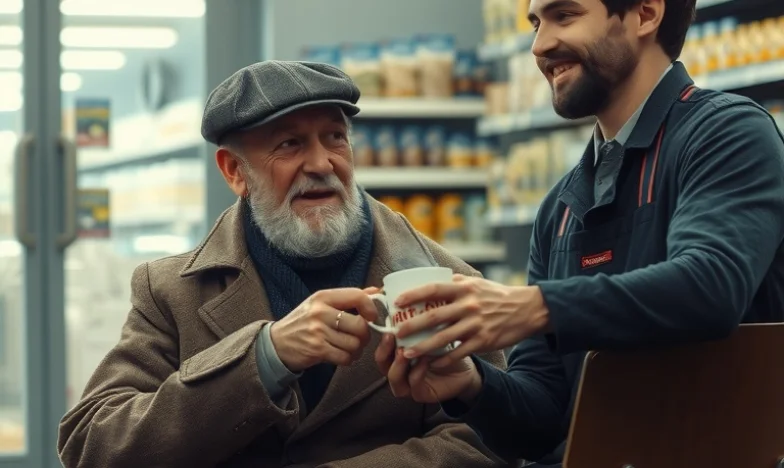
The automatic doors hissed open, and the chill of the morning air clung to my bones as I shuffled inside, hunched and unrecognisable even to myself. My hands trembled, not just from age but from nerves — after all, it’s not every day you sneak into your own supermarket, disguised in a threadbare coat and a battered flat cap, hoping no one will see through you. I clutched a chipped mug of instant coffee, the steam fogging my glasses, and tried to blend in with the early shoppers.
I’d spent ninety years building this place, brick by brick, shelf by shelf, until it became the heart of our little town in Derbyshire. But now, after a lifetime of hard work and stubborn pride, I was just another old man, invisible and ignored. That was the point. I wanted to see what my legacy had become — not through the eyes of the owner, but through the eyes of someone who had nothing left to lose.
The fluorescent lights buzzed overhead, and the smell of fresh bread mingled with the faint tang of bleach. I watched as a young man in a navy apron — Lewis, his name tag read — stacked tins of beans with the kind of care I’d once insisted upon. He glanced up and caught me staring. “You alright there, sir?” he asked, his voice gentle but wary.
I hesitated, then nodded, shuffling towards the café corner. My knees ached, and I lowered myself onto a plastic chair, feeling every year of my age. The world had changed so much, and I wondered if I’d changed with it, or if I’d simply been left behind.
A woman with a pram struggled with the automatic doors, and Lewis hurried over to help her, offering a warm smile. I watched him, remembering the days when I’d have done the same, before arthritis and regret set in. My own children rarely visited now — too busy, too distant, or perhaps just too tired of my stubborn ways. I’d always believed in hard work, discipline, and keeping emotions locked away, but now, sitting alone in the supermarket I’d built, I wondered if I’d been wrong.
Lewis returned, wiping his hands on his apron. He glanced at me again, then approached, pulling up a chair. “You waiting for someone?” he asked, cautious but kind.
I shook my head. “No family left,” I lied, my voice rasping with age and something deeper. “Just needed somewhere warm.”
He nodded, understanding more than I’d expected. “It’s tough, isn’t it? My grandad used to come here every morning, just for a chat. Said it made him feel less… forgotten.”
His words hit me like a hammer, chipping away at the armour I’d built over decades. I stared into my coffee, the bitter taste anchoring me to the present. Memories flooded back — arguments with my son over the business, harsh words with my daughter about her choices, the way I’d dismissed their feelings in favour of keeping the shop afloat. I’d told myself it was for their own good, but now, in the silence of the café, I wondered if I’d simply been afraid to let them in.
Lewis leaned forward, lowering his voice. “If you need anything, just ask. We’re not supposed to give out free tea, but I can sneak you a biscuit.”
I managed a weak smile, grateful and ashamed all at once. “You’re a good lad,” I said. “Your family must be proud.”
He shrugged, a shadow passing over his face. “Mum’s working two jobs. Dad’s not around. I just try to help where I can.”
The honesty in his voice stung. I’d always prided myself on providing for my family, but I’d never really been there for them, not in the way that mattered. I wondered if they’d remember me as a provider, or just as a distant, demanding figure.
A commotion near the tills drew our attention. An elderly woman was struggling with her shopping, her purse spilling coins onto the floor. Lewis sprang up, helping her gather them, his patience unwavering. I watched as he reassured her, offering to carry her bags to the bus stop. The other staff barely glanced up, too busy or too indifferent. I felt a surge of anger — not at them, but at myself. Had I created a place where kindness was the exception, not the rule?
When Lewis returned, I asked, “Do you like working here?”
He hesitated, glancing around before answering. “It’s alright. Some of the managers are a bit… strict. Not much room for mistakes. But the customers are mostly nice.”
I recognised my own words in his description. I’d always demanded perfection, never tolerated weakness. I thought it made the business strong, but maybe it just made people afraid.
The day wore on, and I watched the ebb and flow of shoppers — young mums with tired eyes, pensioners counting pennies, teenagers laughing by the crisps aisle. I saw myself in all of them, in their struggles and small victories. I realised I’d spent so long building walls that I’d forgotten how to let people in.
As the afternoon sun slanted through the windows, Lewis sat beside me again. “You sure you’ve got nowhere to go?” he asked, his tone gentle but insistent.
I shook my head, feeling the weight of my own choices. “I had a family once. Drove them away, I suppose. Thought I was doing the right thing.”
He nodded, understanding in his eyes. “It’s never too late, you know. My grandad used to say, ‘You can’t change the past, but you can change what you do next.’”
His words lingered long after he returned to work. I sat there, surrounded by the life I’d built, and realised it was empty without the people I’d pushed away. I thought of my son, who’d begged me to retire and spend time with the grandchildren. My daughter, who’d wanted to open a bakery in the shop, but I’d refused, insisting on tradition. I’d been so afraid of change, of losing control, that I’d lost them instead.
As closing time approached, Lewis brought me a sandwich, wrapped in cling film. “On the house,” he whispered, winking. “Don’t tell the boss.”
I laughed, the sound rusty from disuse. “Thank you, Lewis. You’ve got a good heart.”
He smiled, then hesitated. “You remind me of my grandad. Stubborn, but kind underneath.”
I swallowed hard, the truth of his words settling in my chest. I’d spent my life hiding behind rules and routines, but kindness was what people remembered. Not the profits, not the spotless floors — but the moments of connection.
As I left the supermarket, the sky darkening overhead, I made a decision. The next morning, I called my son. My hands shook as I dialled, but when he answered, I let the walls fall. “I’m sorry,” I said, voice thick with emotion. “For everything. I want to make things right.”
There was silence, then a soft reply. “It’s not too late, Dad. Come round for tea.”
I hung up, tears streaming down my face. For the first time in years, I felt hope. My legacy wasn’t the supermarket, or the money, or the reputation. It was the people I loved, and the kindness I’d forgotten to show.
Now, as I sit by the window, watching the world go by, I wonder: How many of us wait too long to say what matters? How many legacies are built on silence, when they could be built on love?