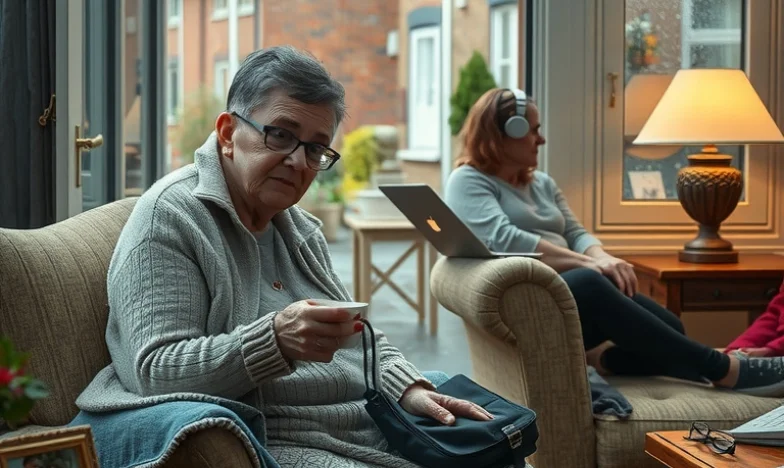
I Feel Like a Stranger in My Own Home: The Story of a Grandmother and Granddaughter

“You’ve used the last of the Yorkshire Tea again, Sophie!” My voice echoed down the hallway, sharper than I intended, but I couldn’t help it. The kitchen, once my sanctuary, now felt like a battleground. Sophie, my only granddaughter, poked her head out from behind her laptop, her hair in a messy bun, eyes rimmed with exhaustion and eyeliner. “Sorry, Gran, I’ll pick some up after my seminar,” she mumbled, barely looking up.
I stood there, clutching the empty box, feeling a wave of irritation and guilt. I’d always imagined having Sophie here would bring life back into this old house in Sheffield. After her parents split and she got into uni, it seemed natural for her to stay with me. I pictured us baking scones, watching Strictly, sharing secrets over mugs of tea. Instead, I found myself tiptoeing around, unsure of what I could say, what I could touch, what I could even cook without her rolling her eyes or sighing about calories.
The first few weeks were a blur of excitement. Sophie arrived with boxes of books, a battered suitcase, and a Spotify playlist that seemed to play on a loop. She hugged me tight, her perfume sweet and unfamiliar. “Thanks for letting me stay, Gran. I promise I won’t be any trouble.”
But trouble crept in quietly. It started with the little things. My favourite mug disappeared, replaced by a garish pink one emblazoned with “Girl Boss.” The radio was always tuned to stations I didn’t recognise, the news replaced by podcasts about feminism and climate change. I tried to keep up, to ask questions, but Sophie’s answers were clipped, distracted. She was always rushing – to lectures, to meet friends, to Zoom calls with her mum. I missed the slow pace of my days, the gentle rhythm of my routines.
One evening, I found her in the living room, feet up on the coffee table, laptop open, headphones on. I cleared my throat. “Sophie, love, would you mind taking your feet off the table? I’ve just polished it.”
She didn’t hear me. Or pretended not to. I repeated myself, louder this time. She pulled off her headphones, irritation flashing in her eyes. “Gran, I’m in the middle of something. Can’t it wait?”
I felt my cheeks burn. “It’s just… this is my house, Sophie. I’d appreciate it if you respected that.”
She rolled her eyes. “You’re so old-fashioned. It’s just a table.”
I retreated to the kitchen, blinking back tears. Was I really being unreasonable? I’d lived in this house for over forty years. I’d raised my children here, buried my husband, watched the seasons change from the same window. Now, every corner felt unfamiliar, every routine disrupted. I felt like a guest in my own home.
The tension simmered, unspoken but ever-present. Sophie started bringing friends over – loud, laughing, sprawled across my sofa with takeaway boxes and bottles of wine. I tried to join in, to ask about their studies, but their conversations were peppered with slang I didn’t understand. I’d retreat to my bedroom, the laughter echoing through the walls, feeling lonelier than ever.
One night, after another argument about the heating bill (“Gran, it’s freezing, you can’t just sit here in a cardigan!”), I found myself sitting on the edge of my bed, staring at the wedding photo on my nightstand. My late husband, Arthur, smiled back at me, his eyes crinkling at the corners. “What would you do, love?” I whispered. “How do I make her see me?”
The next morning, I tried to bridge the gap. I made Sophie’s favourite breakfast – avocado toast, which I’d learned to make from YouTube. She came downstairs, scrolling through her phone. “Morning, Gran.”
“I made you breakfast,” I said, trying to sound cheerful.
She glanced at the plate, then at her phone. “Thanks, but I’m running late. I’ll grab something on the way.”
The toast sat untouched. I sat at the table, the silence heavy. I missed the days when a simple meal could bring us together.
Things came to a head one rainy Saturday. I’d planned a quiet afternoon, but Sophie announced she was hosting a study group. “It’s just a few mates, Gran. We’ll stay in the living room.”
I nodded, but as the house filled with voices and music, I felt myself shrinking. I retreated to the conservatory, clutching a book I couldn’t focus on. The rain tapped against the glass, drowning out the laughter from the next room. I felt invisible.
Later, as the last of her friends left, I confronted her. “Sophie, I can’t live like this. I feel like a stranger in my own home.”
She stared at me, shocked. “Gran, I didn’t realise you felt that way. I thought you liked having people around.”
“I do, sometimes. But I need space, too. This house… it’s all I have left of my old life. I need to feel like I belong here.”
She sat down beside me, her bravado slipping away. “I’m sorry, Gran. I’ve been so caught up in my own stuff, I didn’t think about how it was for you.”
We sat in silence, the rain easing outside. For the first time in weeks, I felt a glimmer of hope. Maybe we could find a way to share this space, to make it ours together.
But old habits die hard. The next day, I found Sophie reorganising the kitchen cupboards. “I thought it’d be easier if we put the mugs here,” she said, smiling.
I bit back my frustration. “I’ve kept them in that cupboard for years, Sophie. It’s how I like it.”
She sighed. “Gran, you have to let things change sometimes.”
I wanted to scream. Why did everything have to change? Why couldn’t she see how much I’d already given up?
That night, I called my daughter, Sophie’s mum. “I don’t know what to do, love. I want to help her, but I feel like I’m losing myself.”
She listened, her voice gentle. “Mum, you’ve always been there for us. Maybe it’s time to set some boundaries. Tell Sophie what you need.”
So I did. The next morning, over tea (Yorkshire, finally restocked), I told Sophie we needed some house rules. “I want you to feel at home, love, but I need to feel at home too. Can we find a way to make this work?”
She nodded, tears in her eyes. “I don’t want you to feel like an outsider, Gran. I’ll try harder.”
We made a list – quiet hours, shared meals, space for both of us. It wasn’t perfect, but it was a start.
Some days are better than others. We still clash – over music, over mess, over the thermostat. But we’re learning. I’m learning to let go, just a little. She’s learning to hold on, just enough.
Sometimes, late at night, I hear her laughing with her friends, and I smile. Maybe this house can be big enough for both of us, after all.
But I still wonder – how do you share your life without losing yourself? How do you make room for the future without erasing the past?