I Came to See My Son, But He Said: “I Have No Mother”

“I have no mother.”
Those four words, spoken with such cold finality, echoed in my ears as Kieran turned away from me. I stood frozen on the cracked paving stones outside his flat in Manchester, the drizzle soaking through my coat, my hands trembling. I’d rehearsed a hundred ways this reunion could go, but nothing prepared me for the emptiness in his eyes. He didn’t slam the door—he simply walked away, leaving it ajar, as if even the act of shutting me out was too much effort.
I wanted to call after him, to beg, to explain. But what could I say? That I was sorry? That I’d been a terrible mother? That I’d chosen survival over love, work over home, and now I was here, desperate for a second chance? The words stuck in my throat, thick and useless.
I remember the day our world fell apart. Kieran was three, his cheeks still round with baby fat, his hair a wild tangle of gold. My husband, Mark, came home late, his face set in that way I’d come to dread. He didn’t shout. He didn’t cry. He just packed a bag, zipped it up, and left. No explanations, no apologies. The silence he left behind was deafening.
I tried to hold it together. I really did. But the bills piled up, the fridge emptied, and the loneliness gnawed at me. My family—what was left of it—offered little more than pitying glances and the occasional fiver slipped into my hand. I was too proud to beg, too ashamed to admit how badly I was failing.
When Mrs. Patel from down the road mentioned a job at her cousin’s café in Birmingham, I took it. It meant leaving Kieran with my mum during the week, seeing him only on weekends. I told myself it was temporary, that I’d save up, get us back on our feet. But weeks turned into months, and the distance between us grew wider than the miles on the M6.
Kieran changed. He stopped asking when I’d be home. He stopped hugging me. He started calling my mum “Mum” and me “her.” I tried to bridge the gap—bought him toys, took him to the park, baked his favourite chocolate cake. But he looked through me, as if I were a ghost haunting the edges of his life.
I missed his first day at school. I missed his first lost tooth. I missed the moment he stopped needing me.
The years blurred together. I worked, I sent money, I called when I could. But every time I heard his voice, it was colder, more distant. My mum said he was doing well—bright, polite, a bit quiet. She never said he missed me. Maybe he didn’t.
When I finally scraped together enough to move back to Manchester, Kieran was fifteen. Tall, sullen, his hair now a dark mop falling over his eyes. I tried to talk to him, to explain, but he shrugged me off. “You left,” he said. “You chose work over me.”
I wanted to scream that I’d had no choice, that I’d done it for him, for us. But the words sounded hollow, even to me.
We drifted, orbiting each other like strangers. I watched him from afar—at school events, from the back of the crowd, never daring to approach. I sent birthday cards, Christmas presents, all returned unopened.
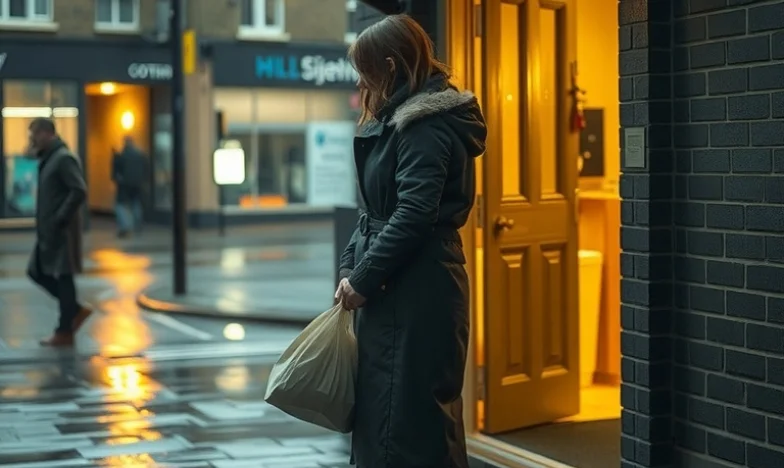
Then, last week, I heard he’d moved into his own flat. I stood outside, clutching a bag of groceries, rehearsing my apology. When he opened the door, I saw a flicker of something—surprise, maybe, or just annoyance. I tried to smile.
“Kieran, love, I just wanted to see you. To talk.”
He looked at me, his jaw clenched. “I have no mother.”
He turned and walked away, leaving me standing in the rain, groceries slipping from my numb fingers.
I don’t remember how I got home. I sat in the dark, listening to the city outside, replaying every mistake, every missed moment. I thought about the night Mark left, about the way Kieran’s tiny hand had clung to mine, about the promises I’d made and broken.
My phone buzzed—a message from my mum. “Give him time. He’s angry, but he’s not lost.”
But what if he was? What if I’d lost him forever?
I started writing letters. Not to send, just to say the things I couldn’t say aloud. I wrote about the nights I cried myself to sleep, about the pride I felt when I heard he’d passed his exams, about the ache in my chest every time I saw a mother and son laughing together in the park.
I wrote about the guilt—the bone-deep, unshakeable guilt. About how I’d chosen work, not because I wanted to, but because I had to. About how I’d failed him, over and over, and how sorry I was.
I left the letters on my kitchen table, unsure if I’d ever have the courage to give them to him.
Weeks passed. I saw Kieran once, across the street, headphones in, head down. I wanted to run to him, to beg for forgiveness. But I stayed where I was, watching him disappear into the crowd.
One night, I dreamt of him as a little boy, running towards me, arms outstretched. I woke up crying, the sheets tangled around me like chains.
I started volunteering at a local shelter, hoping to fill the emptiness. I met other women—mothers, daughters, sisters—each carrying their own burdens. We shared stories, tears, laughter. It helped, a little.
But nothing filled the space Kieran left behind.
Then, one afternoon, there was a knock at my door. I opened it to find my mum, her face lined with worry.
“He’s struggling, love,” she said quietly. “He won’t say it, but he is. Maybe it’s time to try again.”
I nodded, heart pounding. I gathered the letters, tucked them into an envelope, and walked to his flat. I left them on his doorstep, too afraid to knock.
Days passed. No word. I told myself I’d done all I could.
Then, late one evening, my phone buzzed. A message from an unknown number.
“Got your letters. Don’t know what to say.”
My hands shook as I typed back. “You don’t have to say anything. Just know I’m here. Always.”
There was no reply. But it was something. A crack in the wall between us.
I don’t know if Kieran will ever forgive me. I don’t know if I deserve it. But I’ll keep trying, for as long as it takes.
Sometimes I wonder—how many of us are out there, mothers and sons, daughters and fathers, lost in the spaces between words unsaid and wounds unhealed? Is it ever too late to find our way back?