Nineteen Years Gone: The Day My Mother Returned

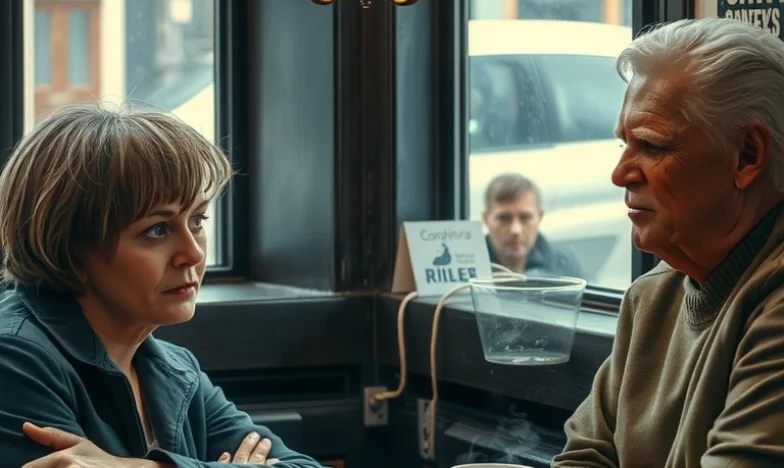
“You’re not my mother. Not anymore.” The words tumbled out before I could stop them, echoing in the cramped café off the high street in Sheffield. Rain battered the windows, and the smell of burnt coffee clung to the air. Across from me sat the woman who had given birth to me, the woman who had left me at the gates of St. Agnes Children’s Home nineteen years ago. She looked older, of course—her hair streaked with grey, her hands trembling as she clutched her mug. But her eyes, those cold blue eyes, hadn’t changed. They still held that same distant, unreadable look I remembered from my childhood.
She flinched at my words, her lips parting as if to protest, but I pressed on. “You can’t just turn up after all these years and expect me to—what? Forgive you? Help you?”
She set her mug down, her knuckles white. “Daniel, please. I know I’ve no right to ask anything of you. But I’m desperate. I’ve nowhere else to go.”
I stared at her, my mind racing back to that night. I was ten years old, standing in the rain outside the children’s home, clutching a plastic bag with my clothes. She’d barely looked at me as she handed me over to the matron. No explanations, no goodbyes. Just a signature on a form and then she was gone. For years, I’d imagined her dead, or at least far away, living a life where I didn’t exist.
Now she was here, in my city, asking for help. I wanted to laugh at the absurdity of it. “Why now?” I asked, my voice barely above a whisper. “Why come back after all this time?”
She looked down, twisting a napkin in her hands. “I’ve been ill. Lost my job. The council’s taken my flat. I thought… maybe you’d let me stay. Just for a while.”
The anger bubbled up inside me, hot and bitter. “You want me to take you in? After you abandoned me?”
She winced, but didn’t deny it. “I know I don’t deserve your kindness. But I’m your mother.”
I almost laughed. “You stopped being my mother the day you left me at St. Agnes.”
The café was nearly empty, save for a couple of students hunched over laptops and an old man reading the Daily Mail. I felt exposed, raw, as if everyone could see the wounds she’d left on me. I remembered the years in the home—Christmases spent watching other kids get visits from their families, birthdays marked only by a stale cupcake and a card from the staff. I’d learned not to hope, not to expect anything from anyone.
She reached across the table, her hand hovering over mine. “I’m sorry, Daniel. I was young, stupid. Your father had left, I couldn’t cope. I thought you’d be better off—”
“Don’t,” I snapped, pulling my hand away. “Don’t pretend you did it for me.”
She looked as if I’d slapped her. For a moment, I almost felt guilty. But then I remembered the years of silence, the letters I’d written that were never answered, the birthdays she’d missed. I owed her nothing.
“I’ve built a life,” I said, my voice shaking. “I’ve got a job, a flat, friends. I did it all without you. Why should I let you ruin it now?”
She wiped her eyes with the back of her hand. “I’m not asking for forever. Just until I get back on my feet.”
I shook my head. “You don’t get to ask me for anything. Not after what you did.”
She looked so small, so defeated. For a moment, I saw the woman she might have been—the mother I’d wanted her to be. But that woman was a ghost, a figment of my imagination.
“Please, Daniel. I’ve got nowhere else.”
I stood up, my chair scraping against the floor. “I can’t help you. I’m sorry.”
I walked out into the rain, my heart pounding. I could feel her eyes on me as I left, but I didn’t look back. The cold air hit me like a slap, but I welcomed it. It was real, unlike the fantasy of reconciliation she’d tried to sell me.
That night, I lay awake in my flat, staring at the ceiling. Her words echoed in my mind. I thought you’d be better off. Was that true? Had she really believed that, or was it just an excuse? I remembered the other kids at St. Agnes—some of them had parents who visited, who tried to make amends. Not me. I’d been alone. I’d learned to survive, to trust no one but myself.
The next morning, I found a note slipped under my door. Her handwriting was shaky, almost illegible. “I’m sorry. I’ll leave you alone. I just wanted to see you one last time.”
I crumpled the note in my fist, anger and sadness warring inside me. She’d come back into my life only to leave again. Was that all I was to her—a last resort, a place to go when she had nowhere else?
At work, I couldn’t concentrate. My colleague, Sarah, noticed. “You alright, Dan? You look like you’ve seen a ghost.”
I shrugged. “Just… family stuff.”
She gave me a sympathetic look. “Families are complicated. My dad walked out when I was little. Never saw him again.”
I nodded, grateful for her understanding. But it wasn’t the same. My mother had chosen to leave me, and now she’d chosen to come back. Did I owe her anything? Was forgiveness even possible?
That evening, I found myself walking the streets, searching for her. I didn’t know why—maybe I wanted answers, maybe I just wanted closure. I found her sitting on a bench in the park, her suitcase at her feet. She looked up as I approached, her eyes red-rimmed.
“I thought you’d gone,” she said softly.
“I could say the same to you.”
We sat in silence for a while, the sounds of the city around us. Finally, I spoke. “Why did you really leave me?”
She sighed, her shoulders slumping. “I was scared. Your father had left, I had no money, no family to help. I thought the home would be better than the streets. I know it was wrong. I’ve regretted it every day.”
I looked at her, searching for the truth in her face. “Why didn’t you ever come back?”
She shook her head. “I was ashamed. I thought you’d hate me. I hated myself.”
I wanted to believe her. Part of me did. But another part, the wounded child inside me, couldn’t forgive so easily.
“I can’t just forget what happened,” I said. “I can’t pretend it didn’t hurt.”
She nodded. “I don’t expect you to. I just wanted you to know I’m sorry.”
We sat there, two strangers bound by blood and pain. I didn’t know what the future held—whether I could ever forgive her, or if I even wanted to. But for the first time, I felt a glimmer of understanding. Maybe that was enough.
As I walked home, I wondered: Can we ever truly forgive those who hurt us the most? Or are some wounds too deep to heal?