A Wife Without a Title

“Dawid, I’m ready!” My voice echoed down the narrow hallway of our semi in Reading, trembling just enough to betray the nerves I’d tried to smooth away with lipstick and a navy dress. The mirror caught me fidgeting, smoothing the fabric over my hips, checking for flaws. I’d chosen the dress carefully—elegant but not showy, the sort of thing a respectable wife might wear to meet her husband’s colleagues. Only, I wasn’t his wife. Not really. Not on paper. Not in the eyes of the world.
He appeared at the top of the stairs, tie askew, hair still damp from the shower. “You look lovely, Kinga.” His smile was soft, but I caught the flicker of anxiety in his eyes. He hated these work dos as much as I did, but for different reasons. For him, it was the small talk, the forced laughter. For me, it was the way I’d be introduced—if I was introduced at all.
In the car, Dawid drummed his fingers on the steering wheel, glancing at me as if he wanted to say something but couldn’t find the words. I stared out at the drizzle streaking the windows, the streetlights blurring into gold smudges. “Do you think they’ll ask?” I said quietly.
He hesitated. “Ask what?”
“You know. About us.”
He sighed, shifting in his seat. “It’s nobody’s business, Kinga.”
But it was. It always was. In the UK, people ask. They want to know how you fit, what your story is. And ours was complicated. We’d met at university, fallen in love over late-night chips and endless cups of tea. But Dawid’s divorce had dragged on for years, tangled in legal knots and bitter arguments. His ex-wife refused to sign the papers, and so I remained—officially—nothing. No status. No title. Just the woman who lived in his house, cooked his meals, loved him fiercely and quietly, but never quite belonged.
At the restaurant, Dawid’s colleagues clustered around the bar, laughing too loudly, their wives in glossy heels and perfect hair. I felt the old ache in my chest, the sense of being an outsider. Dawid squeezed my hand. “Come on. Let’s get this over with.”
We wove through the crowd, and he introduced me—“This is Kinga”—without elaboration. Not “my partner,” not “my wife.” Just my name, floating in the air, untethered. I smiled, shook hands, tried to remember names. One of the women, Sarah, leaned in, her voice syrupy. “So, how long have you two been together?”
“Five years,” I said, forcing a smile.
She raised an eyebrow. “Oh! And you’re not married?”
I felt Dawid stiffen beside me. “It’s complicated,” he said, his voice tight.
Sarah’s lips pursed. “Isn’t it always?”
The evening blurred into a haze of small talk and forced laughter. I watched Dawid across the table, saw the way he avoided certain questions, the way he glanced at me when someone mentioned family, or children, or anniversaries. I felt invisible, a shadow at the edge of his life.
Later, in the ladies’ loo, I caught my reflection in the harsh fluorescent light. The dress looked drab now, my hair limp. Another woman entered—Emma, I think her name was—her perfume sharp and expensive. She smiled at me in the mirror. “You’re Dawid’s…?”
I hesitated. “Partner.”
She nodded, lips twitching. “He’s lovely. Bit of a closed book, though. You must be patient.”
I wanted to scream. Instead, I smiled, washed my hands, and returned to the table.
On the drive home, silence pressed between us. Dawid stared at the road, jaw clenched. I watched the rain, the way it blurred the world outside. Finally, I spoke. “Do you ever wish things were different?”
He didn’t answer for a long time. “Every day,” he said quietly. “But I can’t force her to sign. You know that.”
I nodded, tears burning behind my eyes. “I just… I want to be seen. I want to be your wife. Not just… this.”
He reached for my hand, his fingers cold. “You are. In every way that matters.”
But it wasn’t true. Not really. Not when I had no rights, no name, no place in his world beyond the walls of our home.
Weeks passed. Dawid grew quieter, distracted. I found him staring at his phone, reading emails from his solicitor, his face drawn. One night, I heard him on the phone with his ex-wife, his voice low and pleading. “Please, Anna. It’s been years. Let me move on.”
I stood in the hallway, listening, my heart pounding. When he hung up, he found me there, arms folded. “She won’t budge,” he said, voice breaking. “She wants more money. She wants to punish me.”
I wanted to hate Anna, but I couldn’t. I understood her anger, her grief. But I was drowning in the consequences.
My mother called from Manchester, her voice brisk. “When are you getting married, Kinga? You’re not getting any younger.”
I lied. “Soon, Mum. We’re just waiting for the paperwork.”
She sighed. “You deserve better. Don’t let him string you along.”
I hung up, guilt gnawing at me. Was I being strung along? Was I just convenient?
One evening, Dawid came home late, his face grey. “Anna’s threatening to take me to court. She wants the house.”
I stared at him, fear rising. “What does that mean for us?”
He shook his head. “I don’t know. I’m sorry, Kinga. I’m so sorry.”
We argued, voices echoing through the house. “I’ve given you everything!” I shouted. “I’ve waited, I’ve been patient. But I can’t keep living like this. I need more. I need to matter.”
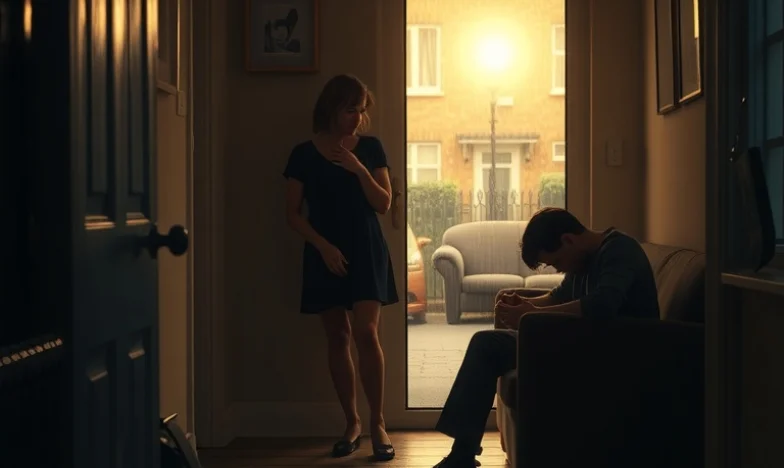
He slumped onto the sofa, head in his hands. “I know. I know. But what do you want me to do?”
I didn’t have an answer. I just wanted to be seen. To be chosen.
The weeks dragged on. Dawid withdrew, lost in legal battles and guilt. I found myself drifting, spending more time at work, avoiding home. My colleagues asked about wedding plans, and I smiled, lied, changed the subject.
One Friday night, I met my friend Sophie for drinks. She listened as I poured out the whole messy story, her eyes wide with sympathy. “You can’t keep waiting for him, Kinga. You have to decide what you want. You deserve to be someone’s first choice.”
Her words echoed in my head all weekend. On Sunday, I packed a bag and left it by the door. When Dawid came home, I stood in the hallway, heart pounding.
“I can’t do this anymore,” I said. “I love you. But I need more than this. I need to be seen. I need to be your wife, not your secret.”
He stared at me, panic in his eyes. “Don’t go. Please. I’ll fix this. I promise.”
But promises weren’t enough. Not anymore.
I left that night, the rain cold on my face as I walked to the station. I didn’t know where I was going, only that I couldn’t stay. I deserved more than a life lived in the shadows.
Now, months later, I still think of Dawid. I wonder if he ever managed to break free, if he ever found the courage to fight for us. I wonder if I was wrong to leave, or if I finally did the right thing.
Is love enough when the world refuses to see you? Or do we owe it to ourselves to demand more?