When Love Arrives Too Late: The Story of Jack and Margaret

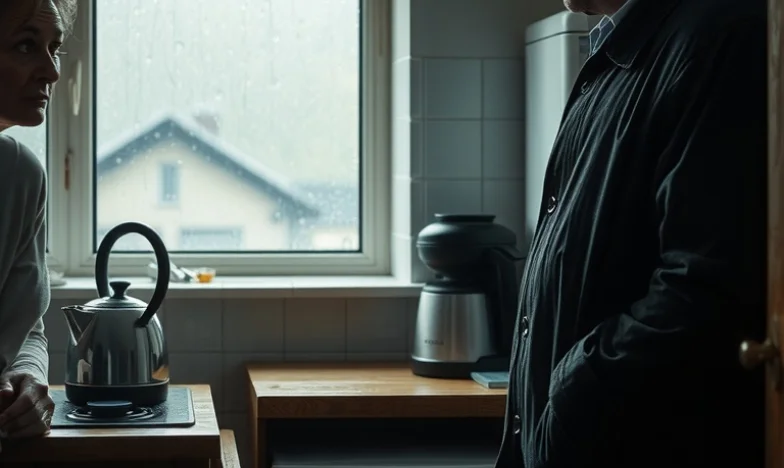
“You’re never happy, Jack. Not with me, not with the kids, not with anything,” Margaret’s voice trembled as she stood in the kitchen, her hands gripping the edge of the counter. The kettle whistled behind her, but neither of us moved. Rain battered the window, the grey Manchester sky pressing in, and I felt the weight of her words settle on my shoulders like a sodden coat.
I wanted to protest, to tell her she was wrong, but the truth was I couldn’t remember the last time I’d felt anything other than a dull ache in my chest. Our silver wedding anniversary had come and gone with a polite dinner at the local pub, our laughter forced, our conversation circling the same old topics: the kids, the house, the weather. I’d always been the quiet one, the serious one. My father used to say I was born frowning, and maybe he was right. Margaret, for all her warmth, had grown tired of trying to coax a smile from me.
It was at the library, of all places, that I met Helen. She was shelving books in the history section, humming under her breath. Her hair was streaked with silver, her eyes bright and curious. She smiled at me as if I were someone worth noticing. I found myself returning to the library every week, borrowing books I had no intention of reading, just to see her. We talked about everything: the miners’ strikes, the novels of Ian McEwan, the best fish and chips in town. With Helen, I felt seen. I felt alive.
I told myself it was harmless. Margaret and I had grown apart, hadn’t we? The children, Tom and Emily, were busy with their own lives. I was just a middle-aged man, invisible in his own home, desperate for a spark. But when Helen touched my hand one afternoon, her fingers lingering just a moment too long, I knew I was in trouble.
“Jack, you’re a good man,” she said softly. “But you’re lost.”
I wanted to believe she could save me. I wanted to believe I could start again, even at my age. I began to withdraw from Margaret, coming home later, making excuses. She noticed, of course. She always noticed.
“Is there someone else?” she asked one night, her voice barely more than a whisper. The telly flickered in the background, casting shadows across her face.
I hesitated. “I don’t know.”
She laughed, a bitter, hollow sound. “You don’t know? After thirty years, you don’t know?”
I left that night, the front door slamming behind me. I walked the empty streets, the rain soaking through my coat. I ended up at Helen’s flat, my heart pounding. She let me in, her expression wary.
“Jack, what are you doing?”
“I can’t go back,” I said. “Not tonight.”
She made me tea, her hands gentle but distant. We sat in silence, the air thick with things unsaid. I wanted to reach for her, to ask her to save me from myself, but she kept her distance.
“I’m not the answer, Jack,” she said finally. “You need to figure out what you want.”
I slept on her sofa, waking in the grey dawn to the sound of her making breakfast. She handed me a plate of toast, her eyes kind but firm.
“You should go home,” she said. “Talk to Margaret. Don’t run away.”
I stumbled back to the house, my mind in turmoil. Margaret was waiting for me, her face pale, her eyes red.
“Did you sleep with her?” she asked, her voice flat.
“No,” I said. It was the truth, but it didn’t matter. The damage was done.
We tried to patch things up. We went to counselling, sat in uncomfortable silence as the therapist asked us questions we couldn’t answer. Margaret cried. I stared at the floor. The kids called, worried, but I couldn’t bring myself to tell them the truth. I was ashamed—ashamed of my weakness, my selfishness, my inability to love the woman who had stood by me for three decades.
In the end, Margaret asked me to leave. She said she couldn’t live with someone who didn’t want to be there. I moved into a small flat above a chip shop, the smell of grease seeping into my clothes. I saw Helen a few more times, but she kept her distance. She told me she wasn’t interested in being the reason for a broken marriage. She wanted a friend, not a lover.
I lost everything: my home, my marriage, my sense of self. The kids visited, but things were strained. Tom looked at me with disappointment; Emily barely spoke. I spent my evenings alone, watching the rain streak down the window, wondering where I’d gone wrong.
One night, I ran into Margaret at the supermarket. She looked happier, lighter. She smiled at me, a real smile, and for a moment I remembered the girl I’d fallen in love with all those years ago.
“Are you alright, Jack?” she asked.
“I’m getting by,” I said. It was the best I could manage.
We stood in awkward silence, the hum of the fluorescent lights above us. I wanted to apologise, to beg her forgiveness, but I knew it was too late. I had made my choices, and now I had to live with them.
Sometimes I wonder if I ever really knew what love was. Was it the quiet comfort of a shared life, or the wild hope of something new? Did I throw away happiness in search of something that never existed?
Do we ever truly appreciate what we have until it’s gone? Or are we all just searching for a spark, even if it burns us in the end?