We Didn’t Buy This House for Them: My Family Turned My Life Into a Nightmare

“You can’t just leave your muddy boots in the hallway, Tom! I’ve told you a hundred times!” My voice cracked, echoing off the walls of the house we’d bought just two years ago, the house I’d once called my dream. Tom, my husband, shot me a look—half apology, half exhaustion. But it wasn’t Tom’s boots this time. It was his brother, Gary, who’d stomped in from the garden, trailing clumps of wet earth across the tiles I’d scrubbed clean that morning.
I stood there, clutching the banister, my knuckles white. Gary just shrugged, grinning as if he’d done me a favour. “Lighten up, Jess. It’s only a bit of dirt.”
Only a bit of dirt. That’s what they all said. Only a bit of dirt, only a bit of noise, only a few weeks until they got back on their feet. But it had been six months since Tom’s brother and his wife, Sharon, moved in with us, bringing their two kids and a dog that never stopped barking. Six months since my home became a battleground of slammed doors, raised voices, and silent tears in the bathroom at midnight.
I remember the day Tom told me they’d be coming. “It’s just until Gary finds work,” he’d said, his eyes pleading. “They’ve nowhere else to go, Jess. We can’t just turn them away.”
I wanted to be the good wife, the understanding partner. I wanted to help. But I never imagined how quickly my life would unravel. The first week, I tried to keep the peace. I cooked extra meals, smiled through gritted teeth, and told myself it was temporary. But the weeks stretched into months, and the cracks in my marriage widened with every argument, every whispered conversation behind closed doors.
Sharon was the worst. She treated our home like a hotel, leaving dirty plates in the sink, laundry piled high in the utility room, and her children running wild through the house. I tried to talk to Tom about it, but he always made excuses. “They’re family, Jess. They’re struggling.”
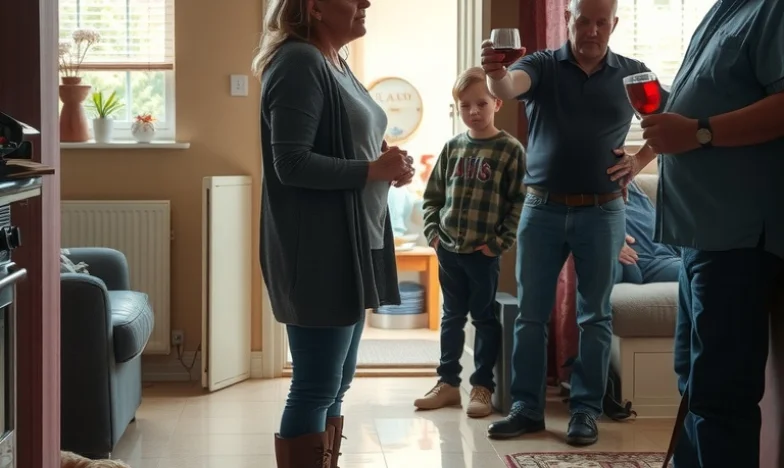
One evening, as I was clearing up after dinner, Sharon sauntered into the kitchen, glass of wine in hand. “You know, Jess, you really should relax. You’re making everyone uncomfortable with all this cleaning.”
I bit my tongue so hard I tasted blood. “I just like things tidy. It’s my home.”
She laughed, a sharp, brittle sound. “Well, it’s our home now too, isn’t it?”
That night, I lay awake, staring at the ceiling, listening to the muffled sounds of laughter from downstairs. Tom was with them, drinking and joking, as if nothing was wrong. I felt invisible, a stranger in my own life.
The next morning, I found my favourite mug smashed in the sink. No one admitted to breaking it. No one ever did. It was always just an accident, just a misunderstanding. But each little thing chipped away at me, until I barely recognised myself in the mirror.
I started spending more time at work, volunteering for extra shifts just to avoid going home. My colleagues noticed the dark circles under my eyes, the way I flinched at sudden noises. “Everything alright at home, Jess?” they’d ask. I’d force a smile and say yes, because what else could I say? That my marriage was falling apart, that I’d lost control of my own life?
One Saturday, I came home early to find Sharon and Gary arguing in the living room. The kids were screaming, the dog barking, and Tom was nowhere to be seen. I stood in the doorway, watching the chaos unfold, and something inside me snapped.
“Enough!” I shouted, my voice trembling. “This isn’t working. You can’t just take over our lives like this!”
Sharon turned on me, eyes blazing. “We’re family, Jess. You’re supposed to help us!”
“I have helped! But I can’t do this anymore. I can’t live like this!”
Gary stormed out, slamming the door so hard the pictures rattled on the walls. Sharon glared at me, her face twisted with anger. “You’re selfish, Jess. You’ve always been selfish.”
I fled to the garden, tears streaming down my face. Tom found me there an hour later, sitting on the cold stone steps, hugging my knees to my chest.
“Jess, please,” he said softly, sitting beside me. “They just need more time.”
I shook my head, unable to speak. I wanted to scream at him, to make him see what this was doing to me, to us. But the words caught in my throat.
Days passed in a blur of tension and resentment. I stopped talking to Sharon and Gary, stopped trying to keep the peace. Tom grew distant, spending more time at the pub with Gary, coming home late and smelling of beer. We stopped sharing a bed, stopped sharing anything except the same suffocating air.
One night, I found Tom in the kitchen, staring into the fridge. I stood in the doorway, arms folded. “We can’t go on like this, Tom.”
He closed the fridge, his shoulders slumping. “What do you want me to do, Jess? Throw my own brother out on the street?”
“I want you to choose me. I want you to fight for us.”
He looked at me, eyes red-rimmed and tired. “I don’t know if I can.”
That was the moment I realised I was truly alone. I packed a bag and left that night, staying with my sister in Bristol. The silence in her flat was a relief, but it was also a reminder of everything I’d lost.
Tom called me every day, begging me to come home, promising things would change. But I knew, deep down, that nothing would change unless he was willing to put us first.
After two weeks, I returned to the house. Sharon and Gary were still there, but the atmosphere had shifted. Tom met me at the door, his face drawn and pale.
“I told them they have to go,” he said quietly. “I should have done it sooner.”
It took another month for them to find somewhere else. The day they left, I stood in the doorway, watching their car disappear down the road. I felt a strange mix of relief and guilt, as if I’d failed some unspoken test of loyalty.
Tom and I tried to rebuild what we’d lost, but the cracks remained. Some nights, I lay awake, wondering if I’d done the right thing, if I’d been too harsh, too selfish. Other nights, I felt a fierce pride for standing up for myself, for refusing to let my life be dictated by other people’s needs.
Now, months later, the house is quiet again. I’ve reclaimed my space, my routines, my sense of self. But the scars remain, invisible but deep. I still catch myself flinching at sudden noises, still check the hallway for muddy boots.
Sometimes I wonder: was it worth it? Did I save my marriage, or just delay the inevitable? And if your home stops being your sanctuary, what’s left to fight for?