After the Divorce: Building a New Life from the Ashes of My Old One

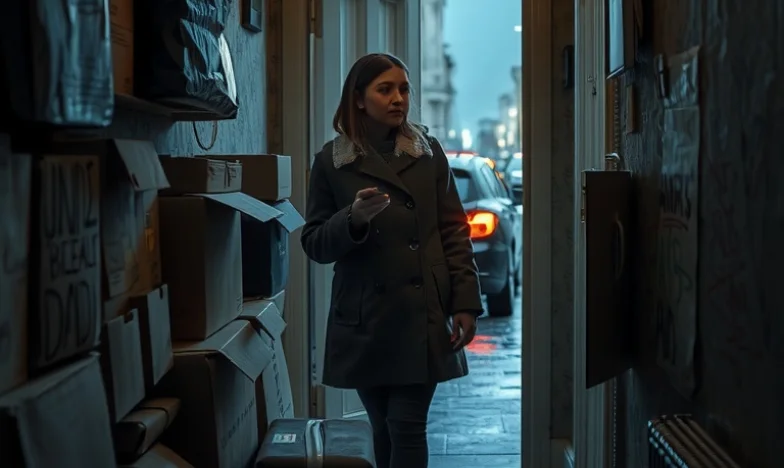
The rain hammered against the windowpane, a relentless drumming that matched the chaos in my chest. I stared at the cardboard boxes stacked in the hallway, my life reduced to a handful of possessions and a battered suitcase. “You can’t stay here, Emma,” my ex-husband’s voice echoed in my mind, cold and final, as if he’d only just said it. But it had been three months since the divorce, three months since I’d watched him pack my things into the boot of his Audi and drive away, leaving me standing on the kerb outside the terraced house in Clapham that we’d once called ours.
I’d never imagined I’d be thirty-seven and homeless, shuffling between friends’ spare rooms and the odd Airbnb, clutching my phone like a lifeline as I scrolled through listings I couldn’t afford. My mother’s voice, sharp and unsympathetic, haunted me: “You should have seen this coming, Emma. You always were too trusting.” I wanted to scream at her, to tell her that love wasn’t supposed to be a calculated risk, but the words stuck in my throat, thick with shame.
The first night in my new flat—a poky one-bedroom in Streatham with peeling wallpaper and a view of the bins—I lay awake on a borrowed mattress, listening to the distant wail of sirens. I pressed my face into the pillow, trying to block out the memories: the laughter in our old kitchen, the way Tom used to tuck my hair behind my ear, the promises we’d made. All gone, swept away in a tide of accusations and lawyers’ letters. I’d lost more than a husband; I’d lost my anchor, my sense of who I was.
I tried to keep busy. I threw myself into my job at the local library, shelving books and helping pensioners with the self-checkout machines. My colleagues, kind but awkward, tiptoed around me, unsure what to say. Only Sarah, my oldest friend, dared to broach the subject. “You’re stronger than you think, Em,” she said over coffee one Saturday, her hand warm on mine. “You’ll get through this.”
But I didn’t feel strong. I felt brittle, like one more blow would shatter me completely. The loneliness was the worst part. Evenings stretched ahead, empty and silent, the only company the hum of the fridge and the occasional mouse skittering behind the skirting board. I tried dating apps, but every conversation fizzled out, my heart not in it. How could I trust anyone again, when the person I’d trusted most had turned away from me so easily?
One rainy Tuesday, as I was shelving returns, a man approached the desk. He was tall, with kind eyes and a nervous smile. “Excuse me,” he said, “do you have any books on starting over?”
I almost laughed at the coincidence. “A whole section,” I replied, leading him to the self-help aisle. We chatted about books, about the weather, about the best place for coffee in Streatham. His name was David, and he’d just moved to London after his own messy breakup. There was a gentleness to him, a quiet understanding that made me feel seen for the first time in months.
We started meeting for coffee after work, then dinner at the little Italian on the high street. With David, I could breathe. He didn’t push, didn’t pry, just listened and shared his own stories of heartbreak and hope. For the first time, I began to imagine a future that wasn’t defined by loss.
But the fear lingered, a shadow at the edge of every conversation. One night, as we walked along the Thames, David reached for my hand. I flinched, pulling away before I could stop myself.
“Sorry,” I muttered, embarrassed. “I’m just… not used to this.”
He squeezed my hand gently. “It’s okay, Emma. We can go as slow as you need.”
I wanted to believe him, to believe that I could be loved again without losing myself. But every time I let my guard down, I heard my mother’s voice, or Tom’s, or my own, whispering that I was foolish, that I’d only get hurt again.
The real test came when my father fell ill. I hadn’t spoken to him in years, not since he’d sided with my mother during the divorce. But when Sarah called to say he was in hospital, I knew I had to go. The hospital was cold and sterile, the smell of disinfectant sharp in my nose. My father looked smaller than I remembered, his hands trembling as he reached for mine.
“I’m sorry, Em,” he whispered. “I should have been there for you.”
The anger I’d carried for so long melted away, replaced by a deep, aching sadness. “I just wanted you to believe in me,” I said, my voice cracking.
He squeezed my hand, tears in his eyes. “I do. I always have.”
That night, I sat in my flat and cried for everything I’d lost—my marriage, my home, my family. But as the tears dried, I felt something shift inside me. Maybe I couldn’t go back, but I could move forward. I could build something new, brick by brick, even if it was just a life for myself.
David was waiting for me when I got home, a worried look on his face. “How did it go?” he asked softly.
I told him everything—the hospital, the apology, the years of hurt. He listened, holding me as I sobbed into his shoulder. “You’re not alone, Emma,” he whispered. “Not anymore.”
It wasn’t a fairy tale. There were still bad days, still nights when the loneliness crept in and the fear threatened to overwhelm me. But slowly, I began to trust again—not just David, but myself. I painted the walls of my flat a cheerful yellow, bought a second-hand sofa, invited friends over for tea. I started volunteering at a local shelter, helping women who’d lost their homes, their families, their sense of safety. Their stories echoed my own, and together we found strength in our shared resilience.
One evening, as I watched the sun set over the city, David wrapped his arms around me. “Do you ever regret it?” he asked quietly. “Leaving everything behind?”
I thought of the life I’d lost, the pain and the fear, but also the freedom I’d found. “Sometimes,” I admitted. “But I think… I think I’m finally starting to believe that I deserve happiness. That I can build something new, even if it’s not perfect.”
He smiled, kissing my forehead. “You already have.”
Now, as I sit in my little flat, surrounded by the chaos and beauty of my new life, I wonder: will I ever truly feel safe again? Or is the real strength in learning to live with uncertainty, to trust that I can survive whatever comes next? What do you think—can we ever really start over, or do the scars of the past always linger?