Just a Mum: Love Without Rights or Time

“Mum, where’s my PE kit?!” Katie’s voice ricochets down the stairs, sharp and impatient, as I stand in the kitchen, hands deep in soapy water, the kettle whistling behind me. Jacob’s already at the table, hunched over his phone, cereal going soggy. I glance at the clock—7:42. We’re late. Again.
I drop the mug, water splashing my jumper, and rush upstairs, heart pounding. “It’s in the airing cupboard, Katie! Where you left it!” I shout, but she’s already stomping past me, hair wild, eyes rolling. “You could’ve washed it, you know,” she mutters, not meeting my gaze. I bite my tongue. Sixteen years old, and every morning is a battlefield.
Downstairs, Jacob pipes up, “Mum, can you sign my homework diary? Mr. Evans said if I forget again, I’ll get detention.” I grab a pen, scrawl my name, and shove it back at him, barely noticing the smudge of jam on his sleeve. My own breakfast sits untouched. I haven’t had a hot cup of tea in years, it seems.
By 8:15, the house is empty. Silence. I lean against the counter, breathless, staring at the mess—crumbs, dirty plates, a trail of discarded shoes. I used to care about the mess. Now, it’s just part of the landscape. I’m forty-one, and I can’t remember the last time I did something just for me.
Work is a blur—accounts at a small solicitor’s office in town. My boss, Mr. Harding, is kind but distant, always asking about the kids, never about me. At lunch, I scroll through Facebook, watching old friends post about holidays, promotions, new relationships. I feel invisible. I am invisible.
After work, I pick up Jacob from football practice. He’s quiet, staring out the window. “Everything alright, love?” I ask. He shrugs. “Just tired.” I want to press, but I know better. Boys his age don’t talk to their mums. Not about real things.
Katie’s not home when we arrive. She’s out with friends, no message, no call. I try not to worry, but my mind races—what if she’s drinking? What if she’s with that boy, Liam, the one with the pierced eyebrow? I remember being sixteen, sneaking out, lying to my mum. The cycle continues.
Dinner is pasta, again. Jacob eats in silence, headphones on. I eat standing up, scrolling through emails. My ex-husband, Mark, has sent another message: “Can I have the kids this weekend?” I sigh. He’s always the fun parent, the one with the big house and the new girlfriend. I’m just the one who remembers the dentist appointments and washes the uniforms.
Katie bursts in at 9:30, cheeks flushed, eyes bright. “Sorry I’m late, Mum. Lost track of time.” She’s already halfway up the stairs before I can say anything. I want to shout, to ground her, but I’m too tired. Instead, I sit at the kitchen table, staring at the clock, wondering when my life became so small.
Later, I lie in bed, staring at the ceiling. The house is quiet, but my mind is loud. I think about the dreams I had—travelling, writing, falling in love again. Now, my world is school runs and packed lunches. I wonder if anyone sees me at all.
The next morning, the cycle repeats. Katie slams the bathroom door, Jacob can’t find his trainers, and I’m running late for work. At the office, Mr. Harding asks if I can stay late to finish the quarterly reports. I want to say no, but I nod, because that’s what mums do. We say yes, even when we’re drowning.
That evening, I find Katie crying in her room. She’s curled up on the bed, mascara streaked down her cheeks. “What’s wrong, love?” I ask, sitting beside her. She shakes her head. “Nothing. Just leave me alone.”
I reach out, but she pulls away. “You don’t understand, Mum. You never do.”
I want to scream—don’t you see how hard I’m trying? But I swallow the words. Instead, I sit in silence, listening to her sobs, feeling helpless.
Jacob comes in later, holding his maths homework. “Can you help me, Mum?” I nod, even though my head aches and my heart feels heavy. We sit at the kitchen table, working through fractions, his brow furrowed in concentration. For a moment, I feel useful. Needed.
After the kids are in bed, I pour myself a glass of wine and sit in the garden, wrapped in a blanket. The night is cold, but I don’t care. I look up at the stars and wonder—when did I stop being Sarah? When did I become just a mum?
A week later, Mark picks up the kids for the weekend. The house is silent, too big. I wander from room to room, unsure what to do with myself. I try to read, but the words blur. I call my sister, Emma, but she’s busy with her own family. I think about calling my mum, but we haven’t spoken properly in months. She never understood why I left Mark, why I chose this life.
On Sunday, I go for a walk in the park. I see couples holding hands, children laughing, dogs chasing sticks. I feel like a ghost, drifting through someone else’s life. I sit on a bench and watch the world go by, wondering if anyone would notice if I disappeared.
That night, the kids come home, full of stories about the cinema and pizza and Mark’s new puppy. I listen, smiling, but inside I ache. I want to be the fun parent, the one they’re excited to see. Instead, I’m the one who nags about homework and vegetables.
One evening, Katie storms in, slamming her bag on the floor. “I hate this house! I hate you!” she shouts, tears streaming down her face. “Why can’t you just let me live my life?”
I stand there, stunned. “Katie, I’m just trying to keep you safe.”
She glares at me. “You don’t get it. You never will.”
She runs upstairs, door slamming. Jacob looks at me, wide-eyed. “Is Katie okay?”
I force a smile. “She’s just upset, love. Teenagers, eh?”
But later, I sit in the dark, tears streaming down my face. I wonder if I’m failing them. If I’m failing myself.
One night, after another argument with Katie, I find myself standing in front of the mirror, really looking at myself for the first time in years. My hair is greying, lines etch my face, but my eyes are the same. I remember the girl I used to be—the one who laughed, who danced, who dreamed. Where did she go?
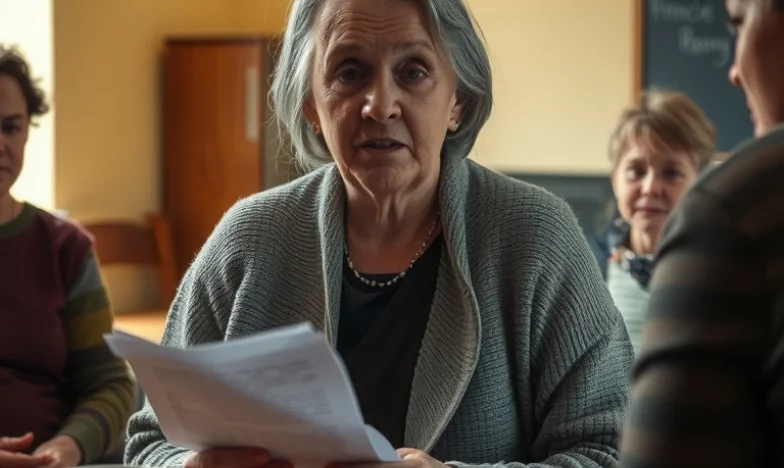
I decide to do something for myself. I sign up for a creative writing class at the community centre. The first night, I’m terrified. The room is full of strangers, all with their own stories. But as I read my first piece aloud, I feel something shift inside me. For the first time in years, I feel seen.
Katie mocks me at first. “A writing class? Seriously, Mum?” But Jacob is curious. “Can I read your story, Mum?” he asks. I let him, and he smiles. “It’s really good.”
Slowly, things begin to change. I start carving out small pockets of time for myself—a walk in the morning, a cup of tea in the garden, a chapter of a book before bed. I’m still a mum, but I’m also Sarah. I’m allowed to have dreams.
Katie and I still fight, but sometimes she sits with me, telling me about her day. Jacob hugs me more often. Mark notices, too. “You seem different,” he says when he drops the kids off. “Happier.”
I smile. “Maybe I am.”
But the guilt never fully goes away. I still worry I’m not enough—for them, for myself. I still feel invisible, sometimes. But I’m learning. I’m learning that being a mum doesn’t mean losing yourself. That love isn’t about sacrifice without end.
As I sit in the garden, pen in hand, I wonder—how many other mums feel like this? How many of us are just surviving, waiting for permission to live? Do we ever get to be more than ‘just a mum’? Or is that enough?