When You Hear About Your Son’s Wedding from the Neighbour: Anna’s Story and the Silence in the Family

“Did you hear, Anna? Your Tom’s getting married next month! Oh, how exciting!”
The words hung in the air, heavy and sharp, as if Mrs. Cartwright had just thrown a stone through my kitchen window. I stood there, mug of tea trembling in my hand, staring at her over the low brick wall that separated our gardens. The late afternoon sun was warm, but I felt cold, as if a shadow had fallen over me. My son, Tom, my only child—getting married? And I was hearing it from my neighbour, not from him. I managed a weak smile, my lips barely moving. “Oh, is he?” I said, my voice thin and brittle. “That’s… that’s lovely.”
Mrs. Cartwright, oblivious to the storm she’d just unleashed, prattled on about how she’d seen Tom and his fiancée, Emily, at the bakery, how radiant they looked, how she’d always known they were meant for each other. I nodded, barely listening, my mind racing. I excused myself as soon as I could, closing the back door behind me and leaning against it for support. My heart hammered in my chest. Why hadn’t Tom told me? What had I done so wrong that my own son couldn’t share the most important moment of his life with me?
I sat at the kitchen table, staring at the faded photograph of Tom on the mantelpiece—his first day at primary school, grinning, his hair sticking up at odd angles. I remembered the way he used to run into my arms after school, the way he’d confide in me about playground squabbles and secret crushes. When had that changed? When had the laughter turned to silence, the hugs to awkward nods?
The phone sat on the table, silent and accusing. I picked it up, dialled Tom’s number, then hung up before it could ring. What would I say? “Why didn’t you tell me?” “Why am I the last to know?” The words tasted bitter. I thought of Emily, sweet, polite Emily, who’d always called me Mrs. Harris, never Anna or Mum. Had I been too distant? Too critical? I remembered the last time Tom had visited, how we’d argued about his job, his choices, the way he never seemed to have time for me anymore. I’d said things I regretted, words meant to protect him but which must have sounded like judgement.
The silence in the house pressed in on me, thick and suffocating. I wandered from room to room, touching Tom’s old football trophies, the books he’d left behind, the jumper I’d knitted for him last Christmas that he’d never worn. I thought of all the times I’d meant to call, to apologise, to ask him how he was, but pride had held me back. I’d told myself he was busy, that he’d call when he was ready. Now, it seemed, he’d moved on without me.
That night, I lay awake, replaying every conversation, every argument, every moment I might have pushed him away. The house creaked and settled around me, but I couldn’t find peace. I thought of my own mother, how we’d drifted apart after Dad died, how I’d sworn I’d never let that happen with my own child. Yet here I was, alone, learning about my son’s wedding from someone else.
The next morning, I couldn’t bear the thought of facing Mrs. Cartwright or anyone else on the street. I pulled on my coat and walked to the park, the air crisp and sharp. Children played on the swings, mothers chatted on benches, and I felt like a ghost among them. I sat on a bench and watched the clouds drift across the sky, wondering where I’d gone wrong.
I thought about Tom’s childhood—how I’d worked two jobs to keep a roof over our heads after his father left, how I’d tried to be both mum and dad. I’d wanted the best for him, but maybe I’d held on too tightly, tried to control too much. I remembered the way he’d looked at me the last time we argued, hurt and angry, as if he didn’t recognise me anymore.
I knew I had to do something. I couldn’t let silence and pride steal any more years from us. That evening, I sat at the kitchen table and wrote Tom a letter. My hands shook as I wrote, the words spilling out in a rush:
“Dear Tom,
I heard from Mrs. Cartwright that you’re getting married. I wish I’d heard it from you, but I know I haven’t made it easy for you to talk to me lately. I’m sorry for the things I’ve said, for the times I’ve made you feel like you couldn’t share your life with me. I love you, and I want to be part of your happiness, if you’ll let me. Please, let’s talk. Love, Mum.”
I posted the letter the next morning, my heart pounding as I dropped it into the red pillar box. Then I waited. Days passed, each one heavier than the last. I jumped every time the phone rang, but it was never Tom. I replayed our last conversation in my mind, wishing I could take back every harsh word.
One evening, as I was washing up, the phone finally rang. I snatched it up, my hands wet and soapy. “Hello?”
“Mum? It’s me.”
His voice was hesitant, uncertain. I swallowed hard. “Tom. I—”
He cut me off. “I got your letter.” There was a pause. “I’m sorry, Mum. I should have told you. I just… I didn’t know how. Things have been so tense between us.”
I closed my eyes, relief and sorrow mingling in my chest. “I know. I’m sorry too. I never meant to push you away.”
He sighed. “Emily and I… we wanted to keep things simple. We didn’t want a big fuss. But I should have told you. You’re my mum.”
Tears pricked my eyes. “I want to be there, Tom. I want to meet Emily’s family, to see you happy.”
He was quiet for a moment. “We’d like that. Emily was worried you wouldn’t approve.”
I laughed, a shaky, watery sound. “I just want you to be happy. That’s all I’ve ever wanted.”
We talked for a while, awkward at first, then easier, the old warmth creeping back in. He told me about the wedding plans, about Emily’s family in Kent, about his new job. I listened, really listened, for the first time in years.
After we hung up, I sat in the quiet kitchen, tears streaming down my face. Not all wounds heal overnight, but maybe, just maybe, we could find our way back to each other.
The weeks leading up to the wedding were a blur of nerves and hope. I met Emily’s parents, polite and reserved, and tried to make a good impression. I helped Emily choose flowers, biting my tongue when our tastes clashed, reminding myself that this was her day, not mine. Tom seemed happier, lighter, and I realised how much my approval meant to him, how much I’d taken for granted.
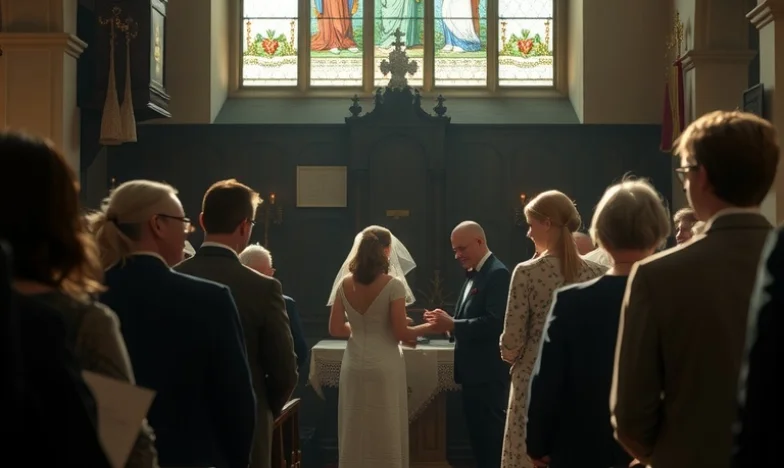
On the day of the wedding, I stood at the back of the small church in Canterbury, my heart in my throat. Tom looked so grown up in his suit, Emily radiant in her dress. As they exchanged vows, I thought of all the years we’d lost to silence and pride, all the moments we could never get back. But I also thought of the future, of grandchildren, of Sunday lunches and laughter.
After the ceremony, Tom hugged me, holding on a little longer than necessary. “Thank you for coming, Mum. It means everything.”
I smiled through my tears. “Thank you for letting me.”
That night, as I lay in bed, I thought about the silence that had nearly destroyed us, and the courage it took to break it. I wondered how many other families were torn apart by pride, by words left unsaid. I thought of my own mother, and wished I’d tried harder with her. Maybe it’s never too late to reach out, to say sorry, to start again.
Do we ever really know the right moment to let go of pride and reach for forgiveness? Or do we just wait, hoping someone else will make the first move? I hope my story makes someone pick up the phone, write that letter, or simply say, “I’m sorry.” Because sometimes, that’s all it takes to begin again.