Born Under a Lucky Star: The Story of Jessica Turner

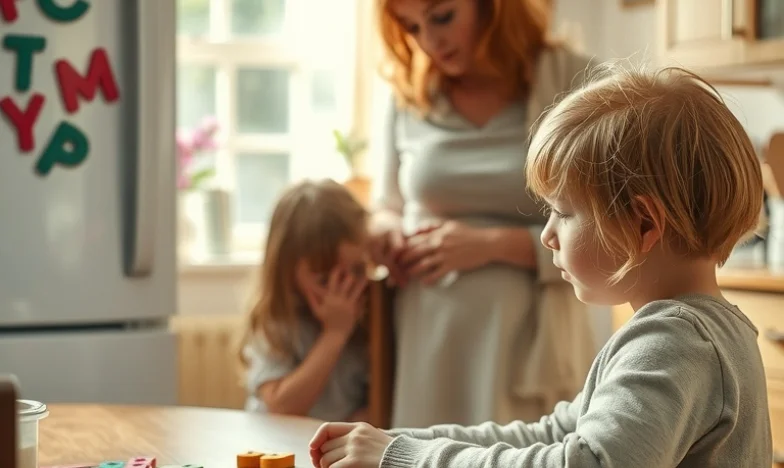
“Jessica, why can’t you just remember the letters? You’re five now, love. All the other children know their ABCs.” Mum’s voice trembled, not with anger, but with something softer—worry, maybe, or disappointment. I sat at the kitchen table, my chubby fingers tracing the colourful alphabet magnets on the fridge. The smell of toast and jam mingled with the faint scent of her lavender hand cream. I wanted to please her, to see her smile, but the letters danced and blurred, refusing to settle into anything that made sense.
Dad burst in, cheeks flushed from the cold, his muddy boots leaving prints on the lino. “Give the girl a break, Em. She’s clever in her own way.” He winked at me, and I grinned, relief flooding my chest. He always knew how to make the tension melt away. “Come on, Jess, let’s get you outside. The tomatoes won’t water themselves.”
Those early years were golden. Mum would plait my hair in the mornings, her fingers gentle as she hummed old Beatles tunes. She read me picture books at bedtime, her voice soft and lilting, the words painting worlds I could almost touch. Sometimes, though, she’d sigh when I couldn’t remember the stories or muddled up the characters. “You’re a dreamer, Jess,” she’d say, tucking the duvet under my chin. “But you need to pay attention.”
Dad was my hero. He taught me to ride my bike down the narrow lanes behind our house in Kent, running alongside me, laughing as I wobbled and shrieked. On weekends, he’d take me to the allotment, letting me steer the old wheelbarrow over the bumpy paths. “You’re a natural,” he’d say, even when I tipped the whole load of compost onto his boots. We’d eat sandwiches under the apple tree, watching clouds drift by, and I’d feel like the luckiest girl in the world.
But school was another matter. The other children seemed to glide through lessons, their hands shooting up with answers. I sat at my desk, heart pounding, the words on the page swimming before my eyes. Mrs. Carter, my teacher, was kind but firm. “Jessica, you must try harder. You’re bright, I know you are. But you have to focus.”
I tried. I really did. But the letters wouldn’t stay still, and the numbers tangled themselves into knots. At home, Mum’s patience wore thin. “We’ll practise every night,” she declared, determination in her eyes. “You’ll catch up, Jess. I won’t have you falling behind.”
Evenings became battlegrounds. Mum with her flashcards and worksheets, me with my stubborn tears. Dad would hover in the doorway, uncertain, before retreating to the shed. “She’s just different, Em,” I heard him say one night, his voice muffled. “Let her be.”
Mum wouldn’t let it go. “She needs to fit in, Tom. The world’s not kind to dreamers.”
I started to dread the sound of her footsteps in the hall, the scrape of the kitchen chair as she sat beside me. I missed the days when she’d stroke my hair and tell me stories. Now, her hands were tense, her voice clipped. “Jessica, concentrate. You’re not even trying.”
At school, the other children noticed. “Why are you so slow, Jess?” Sophie asked, her tone more curious than cruel. “You’re always last to finish.” I shrugged, cheeks burning. I didn’t have an answer. I wanted to be like them, to fit in, but my brain just wouldn’t cooperate.
One afternoon, after another disastrous spelling test, I hid in the cloakroom, tears pricking my eyes. Mrs. Carter found me, kneeling down so we were eye to eye. “It’s all right to find things hard, Jessica. Everyone’s good at something. What do you love?”
I thought of the allotment, the feel of earth between my fingers, the way Dad smiled when I spotted a ripe tomato. “I like being outside,” I whispered. “And stories. Even if I can’t read them very well.”
She smiled, her eyes kind. “That’s wonderful. Maybe we can find a way to help you with the reading. Would you like that?”
I nodded, hope flickering in my chest.
At home, though, things were tense. Mum and Dad argued more, their voices rising behind closed doors. “She needs help, Tom! We can’t just ignore it.”
“I’m not ignoring it, Em. I just don’t want her to feel broken.”
I pressed my ear to the wall, heart thudding. Was I broken? Was something wrong with me?
Mum took me to see a specialist in Canterbury. The waiting room smelled of antiseptic and old magazines. Dr. Hughes was gentle, asking me to read from a book, to write my name, to count backwards from twenty. He nodded, making notes, his brow furrowed.
Afterwards, Mum sat with him while I played with a battered dollhouse. Their voices drifted over. “She’s got dyslexia, Mrs. Turner. It’s nothing to be ashamed of. She’ll need extra support, but she can thrive.”
Mum’s voice was tight. “Will she ever catch up?”
“With the right help, yes. But she’ll always see the world a bit differently.”
On the drive home, Mum was silent, her hands gripping the steering wheel. I stared out the window, watching the fields blur past. When we got home, she hugged me tight, her voice thick. “We’ll get through this, Jess. I promise.”
Things changed after that. I had extra lessons at school, special books with bigger letters, and a teaching assistant who sat with me during reading time. Some days were better than others. Sometimes the words made sense, and I’d beam with pride. Other days, I’d stumble and falter, frustration boiling up inside me.
Mum tried to be patient, but the strain showed. She stopped reading me bedtime stories, too tired after long days at work and meetings with teachers. Dad picked up the slack, making up silly tales about talking vegetables and runaway chickens. I laughed until my sides hurt, the darkness lifting for a while.
But the world outside our home wasn’t always kind. At the park, older kids teased me. “Oi, slowcoach! Bet you can’t even spell your own name.” I tried to ignore them, but their words stuck, sharp as thorns.
One day, after a particularly hard week, I snapped. “Why did you even have me if I’m such a disappointment?” I shouted at Mum, tears streaming down my face. She froze, pain flickering in her eyes. “Oh, Jess. You’re not a disappointment. I just want the best for you.”
Dad pulled me into his arms, his voice gentle. “You’re our miracle, Jess. Don’t ever forget that.”
As I grew older, I learned to navigate the world in my own way. I found solace in the garden, in the rhythm of planting and harvesting, in the quiet companionship of Dad. Mum and I made peace, though our relationship was never quite the same. She still worried, still pushed, but I knew she loved me, even if she didn’t always understand.
At secondary school, I met others like me—kids who struggled, who saw the world through different eyes. We banded together, sharing tips and tricks, cheering each other on. I discovered a love for art, for painting and drawing, for telling stories without words. My teachers encouraged me, and for the first time, I felt proud of what I could do, not ashamed of what I couldn’t.
Looking back, I see now that happiness isn’t something you’re born with, or something that lasts forever. It’s fleeting, fragile, something you have to fight for. I still struggle, still stumble, but I’ve learned that it’s okay to be different. That sometimes, the things that make us stand out are the very things that make us shine.
So tell me—do you think happiness is something we’re born with, or something we create for ourselves? And if you’ve ever felt like you didn’t fit in, how did you find your place in the world?