Living with Unfinished Feelings: Where Are My Memories, Mum?

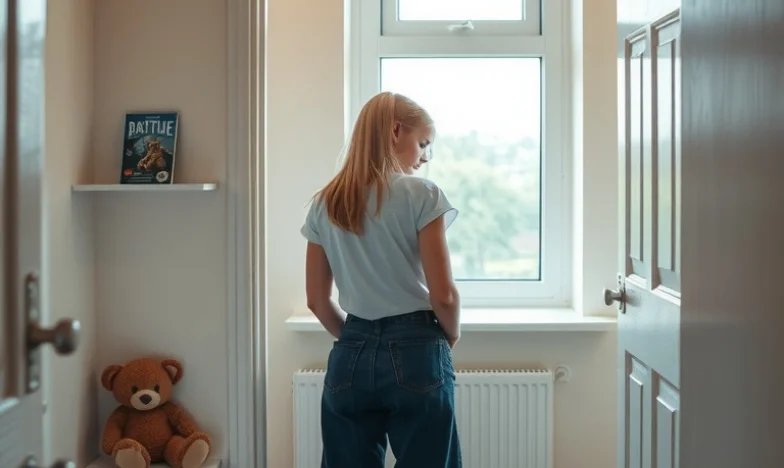
“Mum, where are my teddies?” My voice cracked as I stood in the doorway, staring at the hollowed-out shell of what used to be my bedroom. The walls, once plastered with posters and fairy lights, were now bare, the shelves empty except for a single, forgotten book. My mother, her back to me, was folding my old school uniform into a charity bag. She didn’t turn around. “I’ve given them to Auntie Barbara. Her granddaughter’s just the right age for them.”
I felt the sting behind my eyes, a pressure building in my chest. “But Mum, my Kinder Surprise toys were on the shelf too. They’re gone!”
She sighed, her voice clipped. “Veronica, you’re eighteen now. You’re off to university in a week. We need to make space.”
I wanted to scream. Instead, I pressed my palm against the doorframe, grounding myself. The room felt sterile, like a hospital ward, stripped of the warmth and clutter that made it mine. I remembered the nights I’d curled up with my teddies, whispering secrets to them when the world felt too much. Now, even the faint scent of lavender from my pillowcase was gone, replaced by the sharp tang of cleaning spray.
“Why didn’t you ask me?” My voice was small, almost lost in the echo of the empty room.
Mum finally turned, her face tight. “You’re always saying you want to grow up, Veronica. This is what growing up looks like.”
I bit my lip, fighting the urge to argue. Instead, I walked to the window and looked out at the grey London sky. The city felt as distant as my childhood, both slipping away from me. I tried to remember the last time I’d played with those toys, the last time I’d felt safe in this room. It was as if my memories were being packed away, piece by piece, without my consent.
That night, I lay awake in my stripped bed, the mattress unfamiliar without its usual pile of soft toys. I could hear Mum downstairs, her footsteps heavy, the clatter of dishes a reminder of her own restlessness. I wondered if she felt the loss too, or if she was relieved to be rid of the clutter, to have a daughter who was finally, officially, leaving home.
The next morning, I found her in the kitchen, making tea. The silence between us was brittle.
“Mum, can I have them back? The toys, I mean. They’re important to me.”
She didn’t look up from her mug. “Barbara’s already given them to her granddaughter. You can’t take them back now, Veronica. Don’t be childish.”
I clenched my fists. “It’s not about being childish. They’re memories. They’re mine.”
She set her mug down with a thud. “We can’t keep everything. Life moves on. You’ll make new memories at university.”
I wanted to believe her, but the ache in my chest told me otherwise. I left the kitchen, grabbing my coat and slamming the door behind me. The autumn air was sharp, biting at my cheeks as I walked aimlessly through the estate. I passed the playground where I’d once pushed my teddies on the swings, the corner shop where I’d spent pocket money on chocolate eggs, hoping for a rare toy inside. Everything felt smaller now, faded.
My best friend, Sophie, called that afternoon. “You sound rough, Vee. What’s up?”
I hesitated, embarrassed by how much it hurt. “Mum gave away my toys. All of them. Didn’t even ask.”
She was quiet for a moment. “That’s harsh. My mum still keeps my old Barbies in the loft. Says she can’t bear to throw them out.”
I laughed, but it was hollow. “I wish my mum felt the same.”
Sophie’s voice softened. “You know, it’s not really about the toys, is it?”
I swallowed. “No. It’s like… if I don’t have them, did my childhood even happen? Everything’s changing so fast. I’m not ready.”
She understood. “You don’t have to be ready. But you can be sad. That’s allowed.”
I spent the next few days in a daze, packing my things for university. Every item I put in my suitcase felt like a negotiation—what to keep, what to leave behind. I found an old diary under my bed, its pages filled with childish handwriting and dreams I barely recognised. I clung to it, a lifeline to the girl I used to be.
The night before I left, Mum knocked on my door. She hovered in the doorway, uncertain. “I found this in the attic,” she said, holding out a battered teddy bear. Its fur was matted, one eye missing. “I thought you might want it.”
I took it from her, tears pricking my eyes. “Thanks, Mum.”
She sat on the edge of the bed, her hands twisting in her lap. “I’m sorry, love. I thought I was doing the right thing. I didn’t realise how much it meant to you.”
I nodded, unable to speak. For a moment, we just sat there, the silence heavy with all the things we couldn’t say.
At university, everything was new and overwhelming. My flatmates were strangers, the city unfamiliar. I kept the teddy bear on my pillow, a small comfort in the chaos. But the feeling of unfinished business lingered. I missed home, but it wasn’t home anymore. I missed my toys, but more than that, I missed the certainty of childhood, the sense that everything had its place.
One evening, I called Mum. “Do you ever feel like something’s missing?”
She laughed, a little sadly. “All the time, love. That’s life, isn’t it? Always a bit unfinished.”
I thought about that for a long time. Maybe we’re all living with a sense of incompleteness, carrying the weight of things left unsaid, memories lost or given away. Maybe that’s what growing up really means—learning to live with the gaps, the spaces where something used to be.
Sometimes, late at night, I hold my battered teddy and wonder: if we can never go back, how do we move forward? How do we make peace with the things we’ve lost, the parts of ourselves we can’t reclaim? Does anyone else feel this way, or is it just me?