Did I Really Deserve Such Indifference From My Own Daughters?

“Mum, I’m busy. Can we talk later?”
The phone line crackled with my eldest daughter’s voice, clipped and distant, as if I were a nuisance she’d rather not deal with. I stared at the faded wallpaper in my small sitting room, the silence pressing in after she hung up. It was the third time this week I’d tried to call her. I set the phone down, my hand trembling, and wondered—not for the first time—how it had come to this.
I remember the days when the house was alive with laughter and chaos. Wiktor, my late husband, would come home from the factory, his boots muddy, his smile tired but warm. Our two girls, Emily and Sophie, would run to him, arms outstretched, begging for piggybacks or stories. We didn’t have much, but we had each other. Wiktor and I worked ourselves to the bone, skipping holidays, buying second-hand clothes, always putting the girls first. I’d patch up their uniforms, cook their favourite meals, and sit up late helping with homework, even when my eyes stung from exhaustion.
When Wiktor passed away three years ago, the house grew cold. I thought the girls would draw closer, that we’d lean on each other. Instead, they drifted further away. Emily moved to London, swept up in her career as a solicitor, always too busy for a visit. Sophie stayed closer, in Manchester, but she too seemed to have built a wall around herself, her calls brief and perfunctory.
I tried to fill my days—volunteering at the library, tending to my little garden, chatting with neighbours over the fence. But nothing filled the ache left by my daughters’ absence. I’d see other women my age, out with their families, laughing in the park or sharing a pot of tea at the café, and I’d wonder what I’d done wrong. Had I smothered them? Or was it simply the way of things now, children growing up and moving on, leaving their parents behind like old furniture?
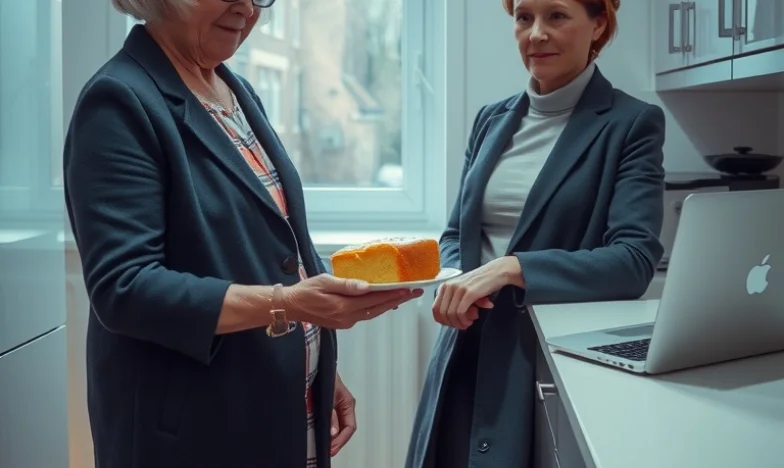
One Sunday, I decided to surprise Sophie. I baked her favourite lemon drizzle cake, wrapped it carefully, and took the train to Manchester. My heart pounded as I rang her doorbell. She answered, her face a mask of surprise and—was it annoyance?—as she ushered me in. Her flat was immaculate, all sleek lines and cold colours, nothing like the cluttered warmth of our old home.
“Mum, you should have called,” she said, glancing at her watch. “I’ve got a Zoom meeting in half an hour.”
I handed her the cake, my hands shaking. “I just wanted to see you, love. It’s been so long.”
She sighed, setting the cake on the counter. “I’m really busy, Mum. Maybe next time, yeah?”
I sat on her sofa, clutching my handbag, feeling more out of place than ever. We made small talk—her work, her new boyfriend, the weather. She didn’t ask about me, about how I was coping alone. After twenty minutes, she stood up, signalling the end of my visit.
On the train home, I stared out at the grey drizzle streaking the windows, my heart heavy. I thought of Wiktor, how he’d always say, “We’re doing this for the girls, Mary. One day, they’ll thank us.” But that day never came.
Emily’s visits were even rarer. She’d send a card at Christmas, sometimes a bouquet on my birthday, but she never came home. When I called, she was always in a meeting, or travelling, or simply too tired. Once, I asked if she could come for Easter. She hesitated, then said, “Mum, I just can’t get away. Maybe next year.”
I tried to hide my disappointment, but it gnawed at me. I’d see her on Facebook, smiling at parties, travelling to Paris or Rome, her life a whirl of excitement. I wondered if she ever thought of me, sitting alone in the house where she grew up.
One evening, after a particularly lonely day, I called Emily again. This time, she answered on the first ring.
“Mum, what’s wrong?” she asked, sounding impatient.
“Nothing’s wrong, love. I just wanted to hear your voice.”
She sighed. “Mum, I’m really busy. Can we talk later?”
I swallowed the lump in my throat. “Of course, darling. I’m sorry to bother you.”
After she hung up, I sat in the dark, tears streaming down my face. I thought of all the nights I’d stayed up with her when she was ill, all the sacrifices Wiktor and I had made so she could go to university, all the dreams we’d had for our family. Was this my reward—loneliness and indifference?
The days blurred together. I went through the motions—shopping, cleaning, watching the telly. My friends tried to cheer me up, inviting me to bingo or the church fete, but I couldn’t shake the feeling of emptiness. I envied those with close-knit families, wondered what secret they knew that I didn’t.
One afternoon, I bumped into Mrs. Patel from down the road. She was out with her daughter and grandchildren, their laughter echoing down the street. She waved me over, her eyes kind.
“Mary, you must come for tea sometime. The house is always open.”
I smiled, thanked her, but inside I felt a pang of envy. Why couldn’t my daughters be like that?
As winter set in, the loneliness grew sharper. The house felt colder, the nights longer. I started to dread the holidays, knowing I’d spend them alone. I tried to reach out to Emily and Sophie, but their responses were always the same—busy, tired, maybe next time.
One evening, I sat by the fire, looking through old photo albums. There we were—Wiktor and I, young and hopeful, the girls in matching dresses, grinning at the camera. I traced their faces with my finger, tears blurring my vision.
I wrote them both a letter, pouring out my heart. I told them how much I missed them, how proud I was of the women they’d become, how I longed for us to be close again. I posted the letters, hoping they’d understand, hoping something would change.
Weeks passed. Sophie called, her voice softer than usual. “Mum, I got your letter. I’m sorry I’ve been distant. Work’s been mad, and I didn’t realise how much you needed me.”
We talked for an hour, really talked, for the first time in years. She promised to visit soon, to make more time for me. Emily sent a text—short, but heartfelt. “Sorry, Mum. I’ll try to call more.”
It wasn’t much, but it was something. I clung to that hope, that maybe, just maybe, things could change.
Now, as I sit by the window, watching the rain, I wonder—did I really deserve such indifference from my own daughters after all I sacrificed? Or is this just the way of the world now, parents left behind as their children chase their own lives? Tell me, am I alone in feeling this way, or do others know this ache too?