Falling in Love at Sixty-Three: Am I Foolish or Brave?

“Mum, you can’t be serious. You’re sixty-three!”
The words hung in the air, sharp as the winter wind rattling the windowpanes of my little semi in Sheffield. I stared at my daughter, Emily, her arms folded, lips pressed into a thin line. My son, Tom, sat beside her, eyes fixed on his phone, pretending to be elsewhere. I could feel my heart pounding, my cheeks burning with a mixture of embarrassment and defiance.
“I am serious, Emily,” I replied, my voice trembling. “I haven’t felt this alive in years.”
Tom snorted. “Alive? Mum, you barely left the house for two years after Dad died. Now you’re telling us you’re in love with some bloke you met at the community centre?”
I wanted to disappear. The kettle whistled, shrill and insistent, and I clung to it as an excuse to turn away, to gather myself. I poured the tea with shaking hands, the steam fogging my glasses. I remembered the first time I’d met Peter, just three months ago, at the Thursday afternoon book club. He’d smiled at me over a battered copy of ‘Rebecca’, his eyes twinkling with mischief. We’d laughed about the biscuits being stale and the tea too strong. I hadn’t laughed like that in years.
After John died, the house became a mausoleum. His slippers by the bed, his mug in the cupboard, his scent lingering in the wardrobe. I moved through the days like a ghost, my only company the ticking of the clock and the hum of the fridge. Emily and Tom visited, but their lives were busy, their conversations brisk and practical. I never blamed them. I was the one who’d faded away.
But Peter… Peter saw me. Not as a widow, not as someone to be pitied, but as a woman. He asked about my favourite books, my childhood holidays in Cornwall, the time I’d danced on the pier at Blackpool. He made me feel visible, wanted. I hadn’t realised how much I’d missed that.
Now, facing my children’s disbelief, I wondered if I was being ridiculous. Was it foolish to hope for happiness at my age? Was I naïve to believe in love again?
Emily took her tea, her hands trembling slightly. “Mum, we just don’t want you to get hurt. You barely know this man.”
“I know enough,” I said, more firmly than I felt. “He’s kind. He listens. He makes me laugh.”
Tom finally looked up. “What does he want, though? I mean, you hear stories. Lonely women, men taking advantage…”
I flinched. The implication stung. “Peter isn’t like that. He’s lost someone too. His wife died last year.”
Emily sighed. “We’re just worried. It’s all so sudden.”
I wanted to shout, to tell them that life was short, that I’d wasted too many years already. But I bit my tongue. Instead, I remembered the way Peter had held my hand in the park, the warmth of his palm, the way he’d brushed a strand of hair from my face and called me beautiful. No one had called me beautiful in decades.
That night, after they’d gone, I sat in the dark, the house echoing with their doubts. Was I being reckless? Was I, as Emily had said, ‘having a late-life crisis’? I scrolled through my phone, reading the messages Peter had sent. ‘Thinking of you, love. Can’t wait to see you tomorrow.’
I smiled, despite myself. I’d told Peter about my children’s reaction. He’d squeezed my hand and said, “Give them time. They love you. They’re just scared of change.”
But change was exactly what I needed. I was tired of being the grieving widow, the dutiful mother, the invisible woman. I wanted to be me again.
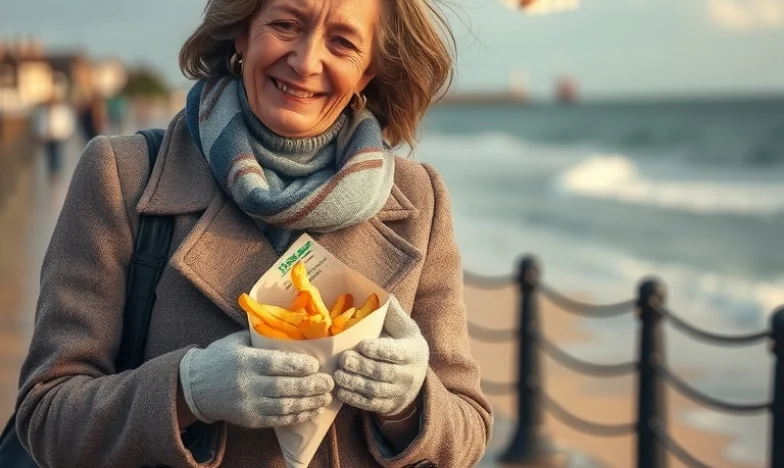
The next week, Peter and I went to the seaside. It was cold and blustery, the sky a sullen grey, but we walked along the promenade, sharing chips and laughing at the gulls. He told me about his wife, Margaret, how she’d loved to paint, how he still talked to her sometimes in the quiet of the night. I told him about John, about our first date at the Odeon, about the way he’d proposed in the rain outside the chippy.
We cried a little, but mostly we laughed. It felt good to remember, to share the pain and the joy. For the first time in years, I felt light, unburdened.
When I got home, Emily was waiting. She looked tired, her eyes red. “Mum, can we talk?”
We sat at the kitchen table, the same table where I’d bandaged scraped knees and helped with homework. She reached across and took my hand.
“I’m sorry,” she said quietly. “I just… I miss Dad. And seeing you with someone else, it’s hard.”
I squeezed her hand. “I miss him too, love. Every day. But I can’t live in the past forever.”
She nodded, tears slipping down her cheeks. “I know. I just don’t want to lose you too.”
“You won’t,” I promised. “You’ll always be my girl.”
Tom was harder to reach. He avoided my calls, sent curt texts. When I finally cornered him at his flat, he was defensive, arms crossed, jaw set.
“I just don’t get it, Mum. It’s weird. You’re supposed to be… I don’t know, knitting or gardening, not dating.”
I laughed, surprising us both. “I do knit. And I garden. But I’m also a woman, Tom. I still have feelings. I still want to be loved.”
He looked away, embarrassed. “It’s just… Dad’s only been gone three years.”
“Three years is a long time to be lonely,” I said softly.
He sighed. “I just don’t want you to get hurt.”
“I know. But I have to take that risk. For me.”
Slowly, things began to change. Emily invited Peter for Sunday lunch. She watched him closely, but he was his usual charming self, telling stories, helping with the washing up. Tom was quieter, but he shook Peter’s hand, asked about his football team. It wasn’t perfect, but it was a start.
Some friends were less understanding. At the WI meeting, I overheard whispers. “Did you hear about Mary? Sixty-three and acting like a teenager.”
I wanted to hide, to shrink into myself. But Peter squeezed my hand under the table, and I lifted my chin. Let them talk. They didn’t know what it was like to wake up every morning to silence, to ache for a touch, a laugh, a reason to get dressed.
One evening, as we sat by the fire, Peter turned to me. “Do you regret it? Us?”
I shook my head. “Not for a second. I only regret waiting so long to live again.”
He smiled, his eyes crinkling. “Me too.”
We planned a holiday to Cornwall, just the two of us. Emily helped me pack, fussing over my sunhat and sunscreen. Tom called to say he hoped we had a nice time. It wasn’t a blessing, exactly, but it was something.
On the train, I watched the countryside blur past, green and gold and wild. I thought about all the years I’d spent waiting for permission to be happy. Waiting for my children to understand, for my friends to approve, for the world to say it was okay to love again.
But happiness isn’t something you wait for. It’s something you fight for, even when it feels selfish, even when it hurts.
As the sea came into view, sparkling under the pale sun, I took Peter’s hand and squeezed it tight.
Am I foolish for believing in love at sixty-three? Or am I finally brave enough to choose my own happiness, no matter what anyone else thinks?
What would you do, if you were me?