When Your Own Children Become Strangers: A British Mother’s Tale

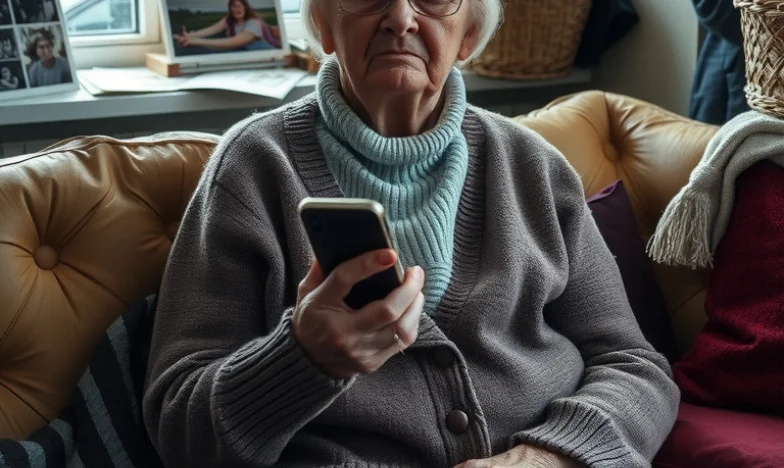
“Mum, I can’t talk now. I’m just about to go into a meeting.” The line went dead before I could even say goodbye. I stared at my mobile, the silence in my little flat in Croydon pressing in on me like a heavy fog. My hands shook as I set the phone down, the ache in my chest growing sharper. It was the third time this week that Emma had brushed me off, her voice clipped and distant, as if I were a nuisance rather than her mother. I glanced at the clock—half past three. The same time I used to pick her up from school, rain or shine, always waiting at the gates with a smile and a snack tucked into my handbag.
I never imagined it would be like this. When I was young, I poured every ounce of myself into my children. My friends, my own mother, even the nosy neighbour Mrs. Jenkins, would warn me, “Natalie, don’t lose yourself in them. You need a life of your own.” But I brushed them off. What could be more important than my children? I was certain that if I loved them enough, if I gave them everything, they would always love me back. That’s what the books said, what the telly mums promised. But now, at 69, I sit alone in a council flat, the walls echoing with memories and regrets.
I remember the day my youngest, Tom, left for university in Manchester. He hugged me at the door, his arms awkward and stiff, already half-turned towards his new life. “Don’t worry, Mum, I’ll call you every week.” That was nearly fifteen years ago. The calls dwindled from weekly to monthly, then to birthdays and Christmas, and now, sometimes, not even then. I tried to keep busy—volunteering at the library, joining a knitting group—but nothing filled the void left by my children’s absence.
Last Christmas, I invited them both for dinner. I spent days preparing—roasting the turkey, making Emma’s favourite bread sauce, even buying crackers with silly hats. Emma arrived late, her phone glued to her hand, her eyes flicking to the screen every few minutes. Tom didn’t come at all. “Sorry, Mum, something’s come up with work. Maybe next year.” I sat at the table, carving the turkey for two, the empty chair at the end of the table a silent accusation.
I tried to talk to Emma about it once. We were in her kitchen, the kettle whistling, her children—my grandchildren—running circles around us. “Emma, I miss you. I feel like I hardly see you anymore.” She sighed, not meeting my eyes. “Mum, I’m just so busy. The kids, work, everything. You wouldn’t understand.”
Wouldn’t understand? I wanted to scream. I raised her on my own after her father left, worked two jobs to keep a roof over our heads, went without so she could have new shoes for school. I understood more than she could ever know. But I bit my tongue, not wanting to push her further away.
Sometimes I wonder if I made a mistake. If I should have listened to those warnings, carved out a life for myself beyond being a mother. I see other women my age—Margaret from the knitting group, who travels to Spain every winter; Jean, who goes dancing every Thursday night. They have friends, hobbies, lives that don’t revolve around children who barely remember to call. I envy them, but I don’t know how to be anything other than a mother.
The loneliness is worst at night. I lie in bed, staring at the ceiling, replaying old conversations in my head. I remember Emma’s first day at school, the way she clung to my hand, her eyes wide with fear. I remember Tom’s laughter as he splashed in the bath, his chubby hands reaching for me. Where did those children go? When did they become strangers?
One afternoon, I bumped into Tom on the high street. He was with a woman I didn’t recognise, laughing, his face open and relaxed in a way I hadn’t seen in years. He spotted me and his smile faltered. “Mum! What are you doing here?”
“I was just picking up a few things from Sainsbury’s. Who’s this?”
“This is Sarah. We work together.” He didn’t introduce me as his mother. Sarah smiled politely, but I could see the discomfort in Tom’s eyes. “We’ve got to run, Mum. I’ll call you, yeah?”
He didn’t.
I tried to talk to my sister about it. “Maybe you were too soft on them, Nat,” she said, stirring her tea. “You did everything for them. Maybe they never learned to appreciate it.”
I bristled at that. I wanted to believe that love was enough, that sacrifice would be repaid with loyalty and affection. But maybe I was wrong. Maybe I should have set boundaries, demanded respect, insisted on being seen as a person, not just a servant.
The days blur together now. I watch the world go by from my window, the young mothers with their prams, the teenagers glued to their phones. I wonder if they’ll end up like me, alone and forgotten, their children too busy to care.
One evening, I fell in the kitchen, slipping on a patch of spilled tea. I lay there for what felt like hours, the pain in my hip sharp and unrelenting. I managed to drag myself to the phone and called Emma. She answered on the third ring.
“Mum, what is it?”
“I’ve had a fall. I think I need help.”
She sighed. “I’ll call an ambulance. I can’t get away right now.”
The paramedics were kind, but their eyes were full of pity. “Do you have anyone who can stay with you tonight?” one asked as they settled me back into bed.
“No,” I whispered. “No, I don’t.”
After that, I stopped calling as much. I didn’t want to be a burden. I started talking to the lady next door, Mrs. Patel, who brings me samosas and chats about her grandchildren. Sometimes, I think she cares more about me than my own children do.
I see Emma’s life on Facebook—holidays in Cornwall, birthday parties, smiling faces. I ‘like’ the photos, but she never replies to my comments. Tom is harder to track down. I hear from mutual friends that he’s doing well, but he never calls.
I wonder if they’ll regret it one day. If they’ll look back and wish they’d spent more time with me, listened to my stories, asked about my life. Or maybe they won’t. Maybe this is just how things are now—families drifting apart, everyone too busy, too tired, too distracted.
Sometimes, late at night, I whisper into the darkness, “Did I do something wrong?”
I don’t know if anyone is listening.
Would you have done anything differently? Or is this just the way life goes, no matter how much love you give?