A Northern Visit and the Secret by the Cots

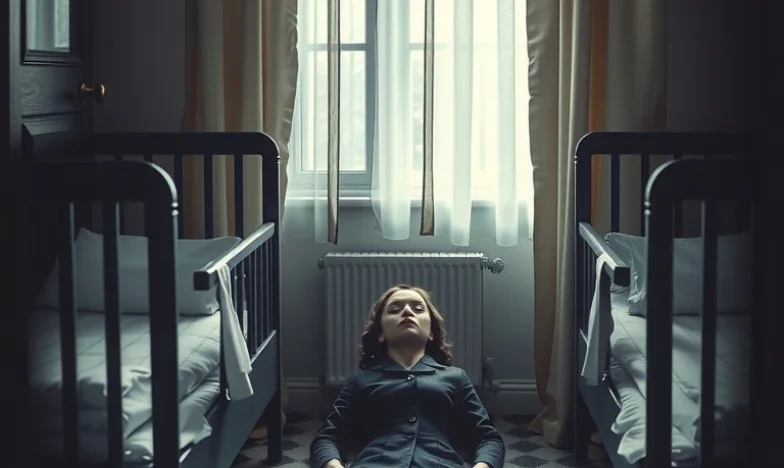
The moonlight sliced through the thin curtains, painting silver bars across the nursery floor. I stood in the doorway, my heart pounding so loudly I was sure it would wake the twins. The air was thick, almost suffocating, and the silence was so absolute it felt unnatural. I’d never known a night so still in this old house on the edge of Newcastle. My hand trembled as I reached for the light switch, but I stopped, transfixed by the sight before me. There, on the floor between the cots, lay Mrs Margaret Nowak, our new nanny, her face illuminated by the moon. For a moment, I thought I was seeing a ghost—her features were the very image of my late wife, Emily, as she’d looked in the faded photograph I kept hidden in my wallet.
I took a step forward, the floorboard creaking under my weight. Margaret didn’t stir. She was curled up, still in her plain navy uniform, clutching the twins’ battered teddy bear to her chest. The twins, Alice and Oliver, slept soundly, their tiny chests rising and falling in perfect synchrony. I felt a chill crawl up my spine. Why was Margaret sleeping on the floor? And why did she look so much like Emily?
“Margaret?” I whispered, my voice barely more than a breath. She didn’t move. I knelt beside her, gently shaking her shoulder. Her eyes fluttered open, and for a split second, confusion clouded her face. Then she sat up abruptly, cheeks flushed with embarrassment.
“I’m so sorry, Mr Carter,” she stammered, her accent faint but unmistakably Polish, though softened by years in England. “I must have dozed off. The twins were restless, and I didn’t want to leave them alone.”
I nodded, trying to steady my nerves. “It’s all right. But… are you feeling well? You look pale.”
She smiled, but it didn’t reach her eyes. “Just tired, sir. It’s been a long day.”
I wanted to believe her, but something in her expression unsettled me. I glanced at the photograph on the mantelpiece—Emily, holding the twins as newborns, her smile radiant. The resemblance was uncanny. I’d hired Margaret through an agency, desperate for help after Emily’s sudden death last winter. I’d barely glanced at her references, too numb with grief to care. Now, I wondered if I’d made a terrible mistake.
The next morning, I found Margaret in the kitchen, preparing porridge. She hummed a lullaby I hadn’t heard in years—the same one Emily used to sing. My mother, who’d come to stay after Emily’s funeral, sat at the table, her lips pressed into a thin line.
“She’s a good girl, that one,” Mum said quietly as Margaret left the room. “But there’s something odd about her. She knows things—about Emily, about the twins. Things she shouldn’t.”
I frowned. “What do you mean?”
Mum shook her head. “Last night, she called Alice by her middle name. No one uses that name but us.”
A knot formed in my stomach. I tried to brush it off, but the unease lingered. That evening, after the twins were asleep, I found Margaret in the garden, staring up at the moon. I hesitated, then joined her.
“Margaret, can I ask you something?”
She turned, her eyes shining in the moonlight. “Of course, Mr Carter.”
“Why did you take this job? You could have worked anywhere.”
She looked away, her hands twisting the hem of her cardigan. “I needed a change. And… I felt drawn here. Like I was meant to be.”
Her words sent a shiver through me. “Do you know my wife?”
She hesitated, then shook her head. “No, sir. Only what you’ve told me.”
But I saw the flicker of something—pain, perhaps, or guilt—in her eyes. I wanted to press her, but the words caught in my throat.
The days passed, and the house settled into a strange rhythm. Margaret was efficient, gentle with the twins, always humming that same lullaby. But the tension between her and my mother grew. One afternoon, I overheard them arguing in the hallway.
“You have no right to speak to them like that!” Mum hissed.
“I only want what’s best for them,” Margaret replied, her voice trembling.
“They’re not your children!”
I stepped in before it could escalate. “What’s going on?”
Mum glared at Margaret. “She’s overstepping. Acting like she’s their mother.”
Margaret’s eyes filled with tears. “I’m sorry, Mr Carter. I never meant—”
I held up a hand. “Let’s all calm down. We’re all here for the twins.”
That night, I couldn’t sleep. I lay awake, staring at the ceiling, haunted by memories of Emily and the growing sense that something was terribly wrong. I got up and wandered the house, finally stopping outside Margaret’s room. The door was ajar. Inside, I saw her sitting at the desk, writing in a small notebook. I watched as she tore out a page, folded it, and slipped it into her pocket.
The next morning, I found the notebook in the bin. Most of the pages were blank, but one caught my eye—a list of dates and names, including Emily’s. My hands shook as I read it. Why would Margaret keep such a list?
I confronted her in the kitchen. “Margaret, I found your notebook. Why is Emily’s name in it?”
She froze, her face draining of colour. “I can explain.”
“Then do.”
She took a deep breath. “I knew Emily. Years ago, in Poland. We were friends—very close. She helped me when I had nowhere else to go. When I heard she’d died, I wanted to help her family. I thought… I thought I could make up for not being there when she needed me.”
I stared at her, anger and confusion warring inside me. “Why didn’t you tell me?”
“I was afraid you wouldn’t trust me. I just wanted to help.”
I didn’t know what to say. Part of me wanted to believe her, but another part wondered what else she was hiding.
That evening, as I put the twins to bed, Alice looked up at me. “Daddy, why is Margaret sad?”
I knelt beside her cot, brushing a strand of hair from her face. “Sometimes grown-ups are sad, love. But we try to help each other, don’t we?”
She nodded, her eyes wide and solemn. “Will Mummy come back?”
My heart broke all over again. “No, sweetheart. But she loved you very much.”
After the twins were asleep, I found Margaret in the lounge, staring at the photograph of Emily. She looked up as I entered, tears streaming down her face.
“I’m sorry, Mr Carter. I should have told you the truth from the start. Emily was like a sister to me. When she moved here, we lost touch. I never forgave myself for not being there when she needed me most.”
I sat beside her, the weight of grief pressing down on us both. “We all have regrets, Margaret. But the twins need us now. Can you promise me there are no more secrets?”
She nodded, wiping her eyes. “I promise.”
In the weeks that followed, the tension eased. Margaret became part of our family, her presence a comfort rather than a source of unease. But sometimes, late at night, I’d catch her gazing at the moon, her expression haunted. I wondered if she was thinking of Emily, or of the life she’d left behind.
One night, as I stood in the nursery, watching the twins sleep, I thought about all the secrets we carry—the ones we share, and the ones we keep hidden, even from ourselves. I wondered if we ever truly know the people we love, or if we’re all just shadows in the moonlight, searching for a way home.
Do we ever really let go of the past, or does it linger, waiting for the right moment to return? And if it does, can we find the courage to face it together?