A Legacy of Shadows: My Fight for My Son’s Future

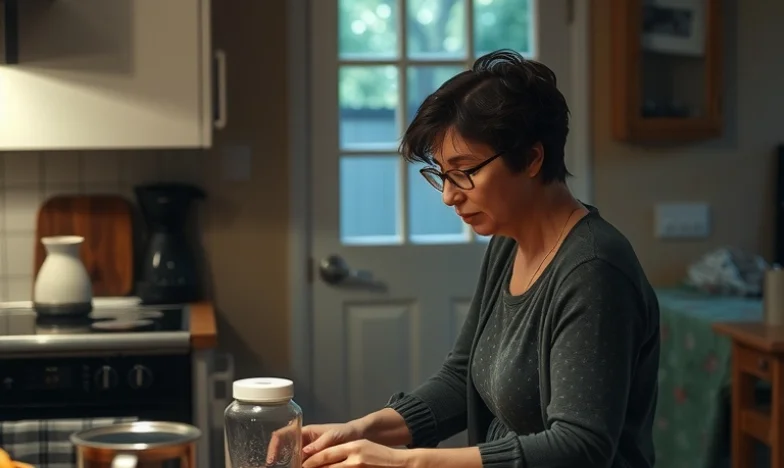
“You think you can just waltz in here and take everything, don’t you?” My brother-in-law’s voice echoed off the faded wallpaper, his face twisted with a bitterness I’d never seen before. The funeral flowers were still wilting in the hallway, their scent mingling with the sharp tang of resentment that now filled our home. I stood in the kitchen, clutching the letter from the solicitor, my hands trembling as I tried to steady my breath. My son, Jamie, only eight, sat quietly at the table, his eyes darting between us, sensing the storm even if he didn’t understand the words.
I never imagined my life would come to this. Only a month ago, I was Sarah Thompson, wife to David, living a modest but happy life in our semi-detached in Reading. David was everything to me—steady, kind, the sort of man who’d bring me a cup of tea in bed on Sunday mornings and read Jamie bedtime stories in silly voices. His heart attack was sudden, cruel. One moment he was laughing at Jamie’s impression of a T-Rex, the next he was gone, leaving a silence so heavy I thought it might crush me.
The will was a shock to everyone. David had inherited a considerable sum from his late aunt, a woman I’d only met twice, and he’d never told anyone—not even me. The solicitor explained it all in his cramped office, the words blurring as I tried to make sense of them: the house, the savings, the investments, all left to me and Jamie. I thought, foolishly, that this would mean security. Instead, it was the beginning of a nightmare.
My mother-in-law, Margaret, was the first to turn. She arrived the day after the funeral, her lips pressed into a thin line, her eyes cold. “David would have wanted us all to be looked after,” she said, her voice soft but edged with steel. “You’re young, Sarah. You’ll remarry. But Jamie—he’s a Thompson. The house should stay in the family.”
I tried to reason with her, to explain that Jamie and I were the family now, but she wouldn’t hear it. Soon after, David’s brother, Peter, started calling, then showing up unannounced, always with the same message: I should sell the house, split the money, do the ‘right thing’. Each conversation left me more shaken, more isolated. Even my own sister, Claire, hinted that maybe I was being selfish, that I should think about what was ‘fair’.
But what was fair? Was it fair that Jamie had lost his father? That I now lay awake every night, listening for the creak of the stairs, terrified that someone would try to take what little we had left? I started locking the doors, double-checking the windows. I changed my phone number after the late-night calls began—heavy breathing, then silence, then the click of the line going dead.
One evening, as I tucked Jamie into bed, he looked up at me with wide, frightened eyes. “Mum, are we going to have to move?” he whispered. My heart broke a little more. “No, love,” I lied, stroking his hair. “This is our home. No one can take it from us.” But even as I said it, I wasn’t sure I believed it.
The pressure mounted. Letters arrived, unsigned, telling me I was a gold-digger, that I’d never been good enough for David, that I was stealing from the family. Someone slashed the tyres on my car. The police were sympathetic but helpless. “It’s probably just kids,” the officer said, not meeting my eyes. But I knew better. I started seeing shadows at the edge of my vision, jumping at every noise. I stopped answering the door unless I recognised the knock.
Jamie became withdrawn, his laughter fading. He stopped inviting friends over, stopped asking to go to the park. One night, I found him crying in his room, clutching a photo of David. “I miss Dad,” he sobbed. “I wish he was here. He’d know what to do.”
I wanted to be strong for him, but I was falling apart. I barely slept, barely ate. My job at the library was slipping through my fingers—I couldn’t focus, couldn’t remember the simplest tasks. My manager, Mrs. Patel, called me into her office. “Sarah, you need to take some time,” she said gently. “You’ve been through so much. Let us help.”
But I didn’t know how to ask for help. Pride, or maybe fear, kept me silent. I started seeing a counsellor, Dr. Evans, who listened as I poured out my fears. “You’re not alone,” she said. “But you need to set boundaries. You need to protect yourself and Jamie.”
I tried. I really did. I changed the locks, installed a security camera. I told Margaret and Peter, firmly, that I would not be selling the house, that the money was for Jamie’s future. The next day, a brick came through the window, shattering glass across the living room. Jamie screamed. I called the police, my hands shaking so badly I could barely dial.
They questioned the neighbours, but no one had seen anything. I felt the walls closing in. I considered moving, starting over somewhere new, but the thought of uprooting Jamie again was unbearable. This was our home. David’s home. I couldn’t let them drive us out.
One afternoon, as I was picking Jamie up from school, Peter was waiting outside the gates. He blocked my path, his face red with anger. “You’re making a mistake, Sarah,” he hissed. “You think you can keep us out? You’re wrong. We’ll get what’s ours.”
I reported the incident, but nothing came of it. The police said there was no evidence, no witnesses. I felt invisible, powerless. Even my friends started to drift away, uncomfortable with the drama, unsure what to say. Only Mrs. Patel and Dr. Evans stood by me, their quiet support a lifeline in the storm.
As the months dragged on, the harassment continued. Jamie’s schoolwork suffered. He started having nightmares, waking up screaming for his dad. I tried to comfort him, but my own nerves were frayed to breaking point. I began to wonder if I was doing the right thing, if I was putting Jamie in danger by staying.
One night, after Jamie had finally fallen asleep, I sat at the kitchen table, staring at the pile of bills, the solicitor’s letters, the broken window still patched with cardboard. I thought of David, of the life we’d built together, of the promises we’d made. I thought of Jamie, so small and lost, and I knew I couldn’t give up.
I called the solicitor the next morning. “I want to set up a trust for Jamie,” I said, my voice steadier than I felt. “I want to make sure no one can touch his inheritance, not even me.” The solicitor agreed, and for the first time in months, I felt a glimmer of hope.
The threats didn’t stop, but I started to fight back. I kept records of every incident, every call, every letter. I spoke to the police again, this time with evidence. I reached out to a support group for widows, found women who understood, who offered advice and comfort. I started to rebuild, piece by fragile piece.
Jamie slowly began to heal. He made a new friend at school, started laughing again. We planted a rose bush in the garden for David, a living memory that bloomed each spring. The house felt lighter, less haunted by fear.
Margaret and Peter eventually backed off, their threats losing power as the trust protected Jamie’s future. I saw them at Christmas, tense and distant, but I held my head high. I’d done what I had to do. I’d protected my son, preserved our home, honoured David’s memory.
But sometimes, late at night, I still wonder: will I ever truly feel safe again? Or is this what it means to be strong—to keep fighting, even when you’re terrified, for the sake of the ones you love?
Would you have done the same? Or would you have walked away, let them win? I can’t help but ask myself: how far would you go to protect your child’s future?