I Won’t Let Them Take My Home: Jitka’s Stand for Her Own Life

“You’ll have to sell your flat, Jitka. It’s the only way to save us.”
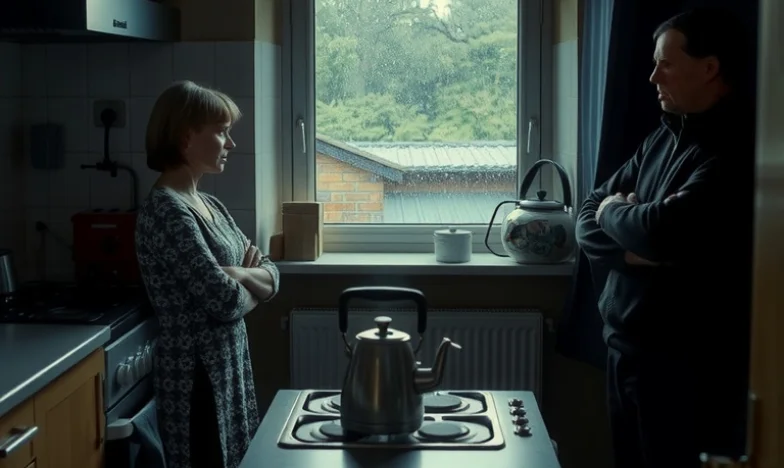
The words hung in the air, thick and heavy, as if the very walls of my tiny kitchen were closing in on me. My mother-in-law, Maureen, sat opposite, her hands folded primly on the table, eyes sharp and unyielding. I could hear the kettle boiling behind me, the whistle growing shrill, but I didn’t move. My heart hammered in my chest, and for a moment, I wondered if she could see it trembling beneath my jumper.
I’d always been the quiet one, the one who kept the peace. When I married Tom, I thought I was joining a family, not a battlefield. But here I was, thirty-eight years old, being told to give up the only thing that was truly mine. My flat in Croydon wasn’t much, but it was my sanctuary, my proof that I could survive in this city, even after my own family back in Brno had all but faded from my life.
“Jitka, love, you know we wouldn’t ask if it wasn’t desperate,” Maureen pressed, her voice softening just enough to sound like concern. “Tom’s brother’s business has gone under, and your father-in-law’s pension barely covers the bills. We’re family. We help each other.”
I stared at her, searching for any sign that she understood what she was asking. Did she know how hard I’d worked for that flat? The late shifts at the hospital, the weekends spent cleaning offices, the loneliness of those first years in London when I barely spoke the language? Did she care?
Tom stood by the window, arms folded, gaze fixed on the grey drizzle outside. He hadn’t said a word since Maureen arrived. I wanted him to speak up, to defend me, but he just stared, as if he could will himself invisible.
“Maureen, I can’t just sell my home,” I managed, my voice trembling. “It’s all I have.”
She sighed, as if I were a stubborn child. “You’re being selfish, Jitka. We’re all struggling. You’re part of this family now.”
I bit my lip, feeling the old urge to apologise, to smooth things over. But something inside me snapped. I thought of the nights I’d spent alone, the sacrifices I’d made, the way I’d always put everyone else first. Not this time.
“I’m sorry, but I won’t do it,” I said, my voice firmer than I felt. “I won’t give up my home because of someone else’s mistakes.”
The silence that followed was deafening. Maureen’s eyes narrowed, and Tom finally turned, his face pale. “Jitka, maybe we should talk about this,” he said quietly.
I shook my head. “No, Tom. I’ve spent my whole life giving in. Not anymore.”
Maureen stood abruptly, her chair scraping against the floor. “I hope you can live with yourself,” she spat, grabbing her coat. “You’re tearing this family apart.”
After she left, Tom slumped into a chair, rubbing his temples. “You know she’s just worried. It’s not easy for them.”
“And it’s not easy for me,” I replied, my voice cracking. “Why is it always me who has to sacrifice?”
He didn’t answer. Instead, he stared at the table, as if the answer might be hiding in the wood grain.
That night, I lay awake, staring at the ceiling. The rain tapped against the window, a steady, relentless rhythm. I thought of my mother, back in the Czech Republic, who’d always told me to be strong, to stand my ground. “Don’t let them walk all over you, Jitka,” she’d said, her voice echoing in my mind. “You have a right to your own life.”
But in this country, I’d learned to keep my head down, to be grateful for what I had. I’d learned to swallow my pride, to accept that I’d always be the outsider. Now, for the first time, I wondered if I’d been wrong.
The days that followed were tense. Tom barely spoke to me, and when he did, it was clipped, distant. Maureen called every day, leaving voicemails that grew more accusatory with each message. “You’re destroying us, Jitka. How can you be so heartless?”
At work, I tried to focus on my patients, but the worry gnawed at me. What if Tom left? What if his family never forgave me? Was I really being selfish, or was I finally standing up for myself?
One evening, as I was leaving the hospital, my friend Sarah caught up with me. “You look like you’ve seen a ghost,” she said, linking her arm through mine.
I hesitated, then told her everything. She listened quietly, nodding in all the right places. When I finished, she squeezed my hand. “You’re not wrong, Jitka. You have every right to protect what’s yours. Don’t let them guilt you into giving up your life.”
Her words gave me strength, but the guilt lingered. At home, Tom was waiting for me, his face drawn. “Mum says she’s going to talk to a solicitor,” he said. “She thinks she can force you to sell.”
I felt a cold wave of fear wash over me. “She can’t. The flat’s in my name.”
He shrugged. “She’s desperate. She’ll do anything.”
I sat down, my hands shaking. “Tom, do you think I’m a bad person?”
He looked at me, his eyes tired. “No. But I wish things were different.”
“So do I,” I whispered.
The weeks dragged on. Maureen’s campaign intensified. She called my friends, my colleagues, anyone who would listen, painting me as the villain. At family gatherings, I was met with cold stares and whispered conversations. Even Tom’s sister, who’d always been kind to me, avoided my gaze.
One Sunday, after another tense lunch, I found myself alone in the garden with Tom’s father, Alan. He sat on the bench, staring at the dying roses. “You know, Jitka,” he said quietly, “I lost my home once. It nearly broke me. Don’t let them take yours.”
I looked at him, surprised. “But Maureen—”
He shook his head. “She means well, but she doesn’t understand. You’ve got to look after yourself. No one else will.”
His words stayed with me. That night, I wrote a letter to Maureen, explaining everything—how hard I’d worked, how much the flat meant to me, how I couldn’t sacrifice my future for mistakes that weren’t mine. I told her I loved Tom, but I needed to protect myself, too.
I never got a reply.
Tom and I drifted further apart. The tension became unbearable. One evening, after another argument, he packed a bag and left. “I need some time,” he said, his voice hollow.
I watched him go, tears streaming down my face. For the first time in years, I was truly alone. But as the days passed, I began to feel something else—a quiet sense of relief. I could breathe again. I could walk through my flat without feeling like a guest in my own life.
Sarah came over one evening, bringing wine and takeaway. We sat on the sofa, laughing and crying, sharing stories of heartbreak and hope. “You did the right thing,” she said, raising her glass. “You chose yourself.”
It wasn’t easy. The loneliness was sharp, and the guilt still lingered. But slowly, I began to rebuild. I painted the walls, bought new curtains, filled the flat with plants and music. I started going to yoga classes, joined a book club, made new friends. For the first time, I felt like I belonged—not to a family, not to a man, but to myself.
Months later, Tom called. He wanted to talk. We met in a café, awkward and tentative. He apologised for not supporting me, for letting his family come between us. “I was scared,” he admitted. “I didn’t want to lose them.”
“And I didn’t want to lose myself,” I replied.
We talked for hours, sharing our fears and regrets. In the end, we agreed to try again, but on new terms. No more sacrifices, no more guilt. Just two people, choosing each other, but never at the cost of themselves.
Looking back, I realise that standing up for myself was the hardest thing I’ve ever done. But it was also the most important. I learned that love isn’t about giving up everything for someone else. It’s about finding the courage to hold on to what matters most.
Sometimes I still wonder—was I selfish, or was I finally brave? Would you have done the same, or would you have given in? Where do we draw the line between helping family and losing ourselves?