Why Do You Need Another Flat When You Already Have Four?

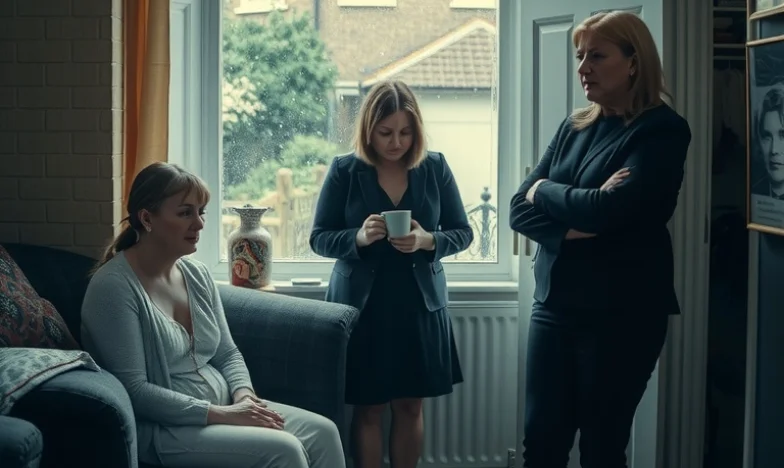
“Why do you need another flat when you already have four?” My voice trembled, echoing off the faded wallpaper of our living room. Mum sat hunched on the sofa, her hands twisting the hem of her cardigan, eyes darting between Tamara and me. Tamara stood by the window, arms folded, her lips pressed into a thin line. The rain outside battered the glass, but inside, the storm was far worse.
I never imagined it would come to this. Tamara and I, sisters, born just two years apart, raised in this very house in Croydon. We used to share secrets under the covers, giggle about boys, and sneak biscuits from the tin when Mum wasn’t looking. Now, she was looking at me as if I were a stranger, an obstacle in her path.
“Lizzie, it’s not about the number of flats,” Tamara said, her voice clipped, business-like. “It’s about what’s fair. I’ve worked hard for everything I have. You and Mum are just… sitting here, clinging to the past.”
I felt the sting of her words. Yes, Tamara had done well for herself. She’d married a solicitor, started a property business, and now owned four flats across London. I, on the other hand, had stayed. I’d looked after Mum when Dad died, put my own dreams on hold, and taken a part-time job at the library to make ends meet. Our home, this battered semi with its leaky roof and creaking stairs, was all we had left.
Mum’s voice was barely a whisper. “Tamara, love, this is our home. Your father—”
“Dad’s gone,” Tamara snapped, her eyes flashing. “And you can’t live in the past forever. The market’s good now. We could get a decent price, split it, and you could move somewhere smaller. It’s not like you need all this space.”
I wanted to scream. How could she be so cold? Didn’t she remember Christmases by the fire, Dad’s laughter echoing through the hall, the way we’d all squeezed around the tiny kitchen table for Sunday roast? I looked at Mum, her face pale and drawn, and felt a surge of protectiveness.
“Tamara, please,” I said, my voice breaking. “This isn’t just bricks and mortar. It’s our life. Mum’s not well. She needs stability, not upheaval.”
Tamara rolled her eyes. “You’re always so dramatic, Lizzie. I’m offering a solution. You could even come stay with me for a bit, if you’re so worried about Mum.”
I laughed, bitter and sharp. “In one of your investment flats? Or would we be tenants, paying you rent?”
She glared at me, and for a moment, I saw a flicker of something—guilt, maybe, or regret. But it vanished as quickly as it came.
The days that followed were a blur of arguments, silent dinners, and whispered conversations behind closed doors. Mum grew quieter, her hands shaking as she made tea, her eyes red from crying. I tried to shield her, but Tamara was relentless. She sent estate agents round, had surveyors poking through cupboards, and even brought her husband, Simon, to “talk sense into us.”
One evening, after another tense dinner, I found Mum sitting in the dark, staring at an old photo of Dad. I sat beside her, taking her hand in mine.
“I’m scared, Lizzie,” she whispered. “I don’t want to lose our home.”
I squeezed her hand. “I won’t let her take it, Mum. I promise.”
But I didn’t know how I’d keep that promise. Legally, Tamara had a claim. Dad had left the house to both of us, thinking we’d look after each other. He never imagined we’d be at each other’s throats.
The next morning, I woke to the sound of raised voices. I rushed downstairs to find Tamara and Mum in the hallway.
“You’re being unreasonable!” Tamara shouted. “You can’t just squat here forever. I have rights too!”
Mum was crying, her voice trembling. “This is my home, Tamara. Please, don’t do this.”
I stepped between them. “Enough! Tamara, if you want a fight, you’ve got one. But you’re not bullying Mum out of her home.”
She glared at me, her jaw clenched. “Fine. If that’s how you want it, I’ll get the solicitors involved.”
The weeks that followed were a nightmare. Letters from lawyers arrived, full of legal jargon and threats. Mum’s health worsened; she barely ate, barely slept. I juggled work and hospital appointments, all the while dreading the next knock at the door.
One afternoon, as I was leaving the library, my phone buzzed. It was Tamara.
“Lizzie, can we talk?” Her voice was softer than I’d heard in months.
I hesitated, but agreed to meet her at a café near the station. She looked tired, her eyes ringed with dark circles.
“I didn’t want it to get this far,” she said, stirring her tea. “But Simon… he says we need the money. The business isn’t doing as well as I let on.”
I stared at her. “So you’re willing to throw us out for a quick profit?”
She shook her head. “It’s not like that. I just… I feel like I’m always the one who has to fix things. You stayed here, looked after Mum, but I’ve been out there, making something of myself. I thought you’d understand.”
I felt a pang of sympathy, but anger quickly drowned it out. “You think money fixes everything? What about family? What about loyalty?”
She looked away, tears glistening in her eyes. “I don’t know anymore.”
We sat in silence, the weight of years pressing down on us. I wanted to reach out, to bridge the gap, but the hurt was too deep.
Back home, Mum was waiting, her face anxious. “Did you talk to her?”
I nodded. “She’s struggling, Mum. But that doesn’t excuse what she’s doing.”
Mum sighed. “I wish your father were here. He’d know what to do.”
I hugged her, feeling the ache of loss all over again.
The legal battle dragged on. Friends and neighbours took sides, whispers following us down the street. Some said I was selfish, clinging to the past. Others called Tamara greedy, heartless. The truth was messier than either side wanted to admit.
One night, after another sleepless evening, I found myself staring at the ceiling, wondering if I was doing the right thing. Was I really protecting Mum, or just afraid of change? Was Tamara right—was I clinging to memories, refusing to move on?
But then I’d see Mum, frail and frightened, and I knew I couldn’t let her down.
The final hearing was a blur. The judge listened to both sides, weighed the evidence, and finally ruled that Mum could stay in the house for as long as she needed, but that Tamara was entitled to her share once Mum passed away. It wasn’t a perfect solution, but it was enough.
Tamara left the courtroom without a word. I watched her go, my heart heavy. We hadn’t spoken since.
Mum and I returned home, the house feeling both familiar and strange. The battle was over, but the wounds remained.
Sometimes, late at night, I wonder if things could have been different. If Dad had lived, if Tamara and I had talked more, if money hadn’t come between us. I look at Mum, sleeping peacefully at last, and I know I did what I had to do.
But I can’t help asking myself: when did we let money matter more than love? And is there ever a way back, once trust is broken?
What would you have done, in my place? Would you fight for your home, or let it go for the sake of peace? I wonder if families ever truly heal after a betrayal like this.